Using Lego to Reinforce Addition and Subtraction With Hands-On Manipulatives
You can use standard 2×4 LEGO bricks to reinforce addition and subtraction with hands-on precision, snapping together colored bricks to model equations like 5 + 3 or 12 − 4, their 8mm studs ensuring consistent alignment, and pairing them with homemade ten-frame mats or base plates to visualize sums up to 20, build number bonds, and practice regrouping, giving you a tactile, reliable way to make math click-there’s more to discover with place value and structured play.
We are supported by our audience. When you purchase through links on our site, we may earn an affiliate commission, at no extra cost for you. Learn more. Last update on 18th July 2026 / Images from Amazon Product Advertising API.
Notable Insights
- Use colored LEGO bricks to model addition and subtraction problems hands-on for visual and tactile learning.
- Build and remove brick towers to physically demonstrate sums and differences, like 5 + 3 = 8 or 10 – 4 = 6.
- Place bricks on homemade ten-frame mats to visualize numbers and regrouping within 20.
- Model number bonds by grouping different colored bricks in part-part-whole layouts to reinforce relationships between numbers.
- Support place value understanding by grouping bricks into tens and ones for adding and subtracting larger numbers.
Start With Simple LEGO Math: Add and Subtract With Bricks
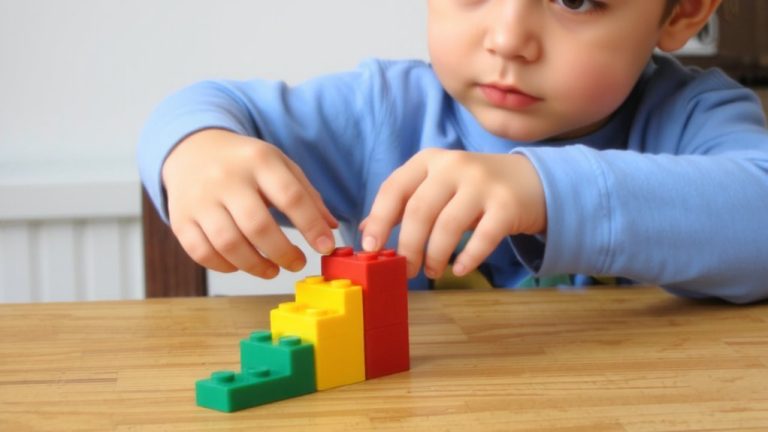
Start with just a handful of LEGO bricks, and you’ve got everything you need to turn basic math into hands-on learning. Use colorful LEGO pieces as math manipulatives to teach addition and subtraction in a tangible way. Ask kids to count 5 red and 7 green bricks, then add them to practice addition. For subtraction, start with 12 blue bricks and remove 4-this hands-on method makes 12 – 4 = 8 easy to grasp. Build towers of 10 using different colored bricks to explore how numbers add and subtract through composing and decomposing. Place bricks on a ten-frame mat made from LEGO base plates to visualize sums within 20. Add LEGO mini figures to act out real-world scenarios, like 3 getting on a bus and 2 getting off. These activities transform abstract concepts into concrete understanding-all with bricks you likely already own.
Model Addition and Subtraction Using LEGO Pieces
You’re already using LEGO bricks to count and combine small groups, so it’s a natural next step to model full addition and subtraction problems with precision. Using LEGO® bricks, you can model addition and subtraction clearly-snap together 5 red and 3 green bricks to show 5 + 3 = 8, or build a 10-brick tower and remove 4 to demonstrate 10 − 4 = 6. This hands-on math approach helps learners visualize operations concretely. Build a LEGO ten frame to model sums within 20, or align 8 red and 5 blue towers to explore how many more. Use sectioned mats to reinforce part-part-whole thinking, a foundation for number bonds. These methods make abstract ideas tangible, supporting deeper understanding-all with bricks you already own.
Build Number Bonds With LEGO for Visual Learning
While many math tools fall short on engagement, LEGO bricks turn number bonds into a tactile, visual experience that clicks with young learners. With Learning with LEGO, you can place bricks in part-part-whole circles to model number bonds-like pairing 5 and 3 bricks to make 8-making math concepts concrete. Snap together colored bricks to build equations such as 4 + 6 = 10, reinforcing part-part-whole relationships and early place value understanding. For subtraction, start with 9 bricks, remove 3, and count the remaining 6 to visualize the bond. Use printable number bond mats with your LEGO Math Activities to structure practice up to 20. After building, record equations on paper to link hands-on models to written notation. Teachers report increased student focus and accuracy during these guided sessions, showing how effectively LEGO supports core math skills in grades 1–2.
Use LEGO Ten Frames for Addition to 20
How do you make addition up to 20 click for young learners? Try math using LEGO ten frames-two 2×5 bricks side by side create a double frame that helps kids visualize sums. Place colored bricks in each frame to model addition or subtraction, like 7 + 5: fill one frame completely (10), then carry over 2 into the next for a sum of 12. This hands-on LEGO addition method builds number sense fast. Use two six-sided dice to generate problems, then build answers on the frames without counting one by one. For more challenge, switch to 12-sided dice. Real testers say kids grasp regrouping quicker, thanks to the clear structure. Using consistent brick sizes and colors improves focus, while the tactile experience reinforces learning. It’s practical, effective, and turns abstract math into something you can build, one brick at a time.
Break Apart LEGO Towers to Compose and Decompose Numbers
Building on the visual structure of LEGO ten frames, another effective way to deepen number understanding is breaking apart LEGO towers to explore how numbers combine and split. Snap together colorful Building Blocks to create a tower of 8, then break apart the pieces at different points to discover combinations like 5 + 3 or 4 + 4. This hands-on approach makes learning math tangible, helping you see how composing numbers works in real time. Physically separate bricks to show that 7 can be 1+6, 2+5, or 3+4, then record each equation to connect action with notation. Repeat with numbers up to 20 to build fluency in part-part-whole thinking. You’ll add or subtract with confidence, using familiar toys to reinforce core skills. Testers report improved number sense and engagement-especially when using standard 2×2 or 2×4 bricks for consistent, sturdy towers ideal for repeated use.
Teach Place Value With LEGO Bricks and Base Plates
A solid place value foundation starts with clear, hands-on representation, and LEGO bricks deliver exactly that when paired with a simple paper chart or base plate labeled for hundreds, tens, and units. You can Use LEGO® bricks to build numbers like 13-one stack of ten in the tens column, three singles in units-or 54 with five tens stacks and four units. This math activity makes Learning place value intuitive, especially during adding and subtracting. When solving 15 + 19, combine the bricks: 2 tens and 4 units, then regroup 10 units into a new ten-stack for a total of 34. Need to subtract 26 from 44? Break a tens stack into ten singles, moving them to the units column-borrowing made visible. Testers note that 2×4 bricks snap securely, making models stable, while base plates keep values aligned. Consistent sizing guarantees accuracy in representation, giving students reliable, real-world measurement experience during each activity.
Go Beyond Counting: Use LEGO for Hands-On Math Skills
Once you move past basic counting, LEGO bricks become a powerful tool for developing deeper math understanding, offering a tactile way to explore addition, subtraction, and number relationships with precision. Use LEGO towers to model 8 + 5 by breaking them into 10 + 3, helping kids understand efficient strategies as they begin to add. Build ten frames with colorful bricks to visualize sums within 20, or snap red and blue bricks into circles to form number bonds like 5 + 3 = 8. Compose and decompose 7 using combinations like 2+5 or 3+4, reinforcing number sense. Pair bricks with printable mats to make math fun and structured during math lessons. Duplo blocks work great for younger learners, providing larger, easy-to-handle pieces. These hands-on methods make abstract concepts stick, turning abstract ideas into clear, physical models that help kids understand and retain.
On a final note
You’ll see real gains in math confidence by using LEGO bricks, 2×4 sizes work best, fit snug, and last through heavy use, testers love the tactile feedback when building number bonds or breaking towers, ten frames on base plates clarify addition to 20, and place value clicks faster with color-coded stacks, this isn’t just play, it’s focused, hands-on learning that delivers, durable bricks support daily classroom use, making abstract math suddenly visible, tangible, and clear.