Using Lego Therapy to Improve Social Engagement in Seniors With Dementia
You’ll see how LEGO Duplo bricks, 1.6 inches wide and 0.8 inches high, are perfect for seniors with dementia, offering easy grip, bright colors, and satisfying snap-together feedback. Used in programs like Bricks for Better Brains, they encourage side-by-side connection, reduce isolation, and support emotional expression through tactile play. Caregivers report better engagement when using 10–15 bricks in calm, clutter-free spaces with soft lighting-proven setups that keep focus steady and spirits up, especially when building becomes shared, meaningful activity. You’ll discover practical ways to make it work seamlessly in daily care.
We are supported by our audience. When you purchase through links on our site, we may earn an affiliate commission, at no extra cost for you. Learn more. Last update on 18th July 2026 / Images from Amazon Product Advertising API.
Notable Insights
- Use large Lego Duplo bricks to support seniors with limited dexterity and enhance tactile engagement.
- Encourage side-by-side building to promote non-verbal interaction and shared focus without pressure.
- Guide emotional expression with prompts like “build how you feel” to support non-verbal communication.
- Limit bricks to 20–30 pieces in a tray to prevent overwhelm and maintain cognitive focus.
- Caregivers should offer descriptive praise and match pace to ability to sustain motivation and connection.
How Lego Therapy Builds Social Connection in Dementia Care
While you might not expect a box of colorful bricks to spark meaningful social engagement, Lego therapy has proven to be a surprisingly effective tool for building connection among seniors with dementia, especially when using larger, easy-to-handle Lego Duplo bricks-measuring about 1.6 inches wide and 0.8 inches high-designed for little hands but ideal for aging fingers with reduced dexterity. The bright colors and smooth texture of each Lego Brick offer reliable tactile stimulation, helping hold attention during group sessions. You’ll notice participants leaning in, passing bricks, and mimicking builds, even with moderate to severe dementia. Caregivers report stronger bonds forming during side-by-side play, where shared focus replaces pressure to converse. Programs like Bricks for Better Brains use structured, project-based activities that boost non-verbal interaction. Descriptive praise keeps motivation high, and long-term involvement links to sustained social engagement. It’s simple, hands-on, and works.
Help Loved Ones Express Feelings With Duplo Bricks
When your loved one with dementia struggles to put feelings into words, a simple box of Lego Duplo bricks-each measuring 1.6 inches wide and 0.8 inches high-can become a powerful tool for emotional expression, offering a tactile, low-pressure way to communicate inner states. People often find their loved one attracted to the colors and textures, becoming engaged in something as simple as stacking or dismantling bricks. Loretta Venable used Duplo to help her mother express fear, who once removed a Lego figure’s head and said, “I feel like I’ll lose my head.” This method started as a calming strategy during car rides but grew into something transformative. You can guide your loved one by asking them to “build how you feel.” The act gives voice to emotions words often fail to capture, making Duplo not just a toy, but a bridge to deeper understanding and connection.
Stimulate Emotions and Cognition Through Touch
Touch is a powerful trigger for memory and emotion, especially in seniors with dementia. Handling LEGO Duplo bricks engages your senses and delivers real cognitive stimulation. The smooth texture, bright colors or feeling something snap into place activate 17,000 tactile receptors in your palms, sparking neuro-electrochemical responses tied to neuroplasticity. This isn’t just play-it’s a really nice behavioral therapy for people with dementia. Limited brick sets (just 5–10 at a time) prevent overload while keeping focus sharp. Plus, the repetitive motion builds hand strength and coordination.
| Feature | Benefit | Tester Note |
|---|---|---|
| Large, soft bricks | Easy grip, safe handling | “Felt satisfying to click together” |
| Bright colors or feeling something | Visual and tactile input | “Calming, like a rhythm” |
| Simple assembly | Sustained attention, cognitive stimulation | “I remembered building with my kids” |
Set Up the Ideal Space for Lego Therapy
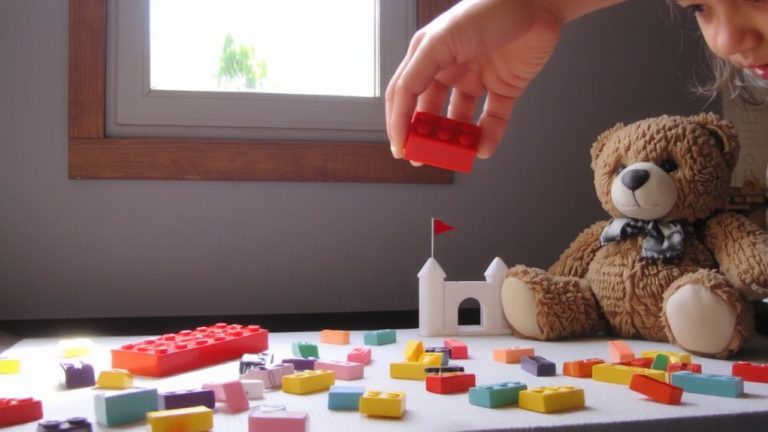
You’ve felt how the smooth snap of a LEGO Duplo brick clicks not just pieces together, but memories and focus too. When setting up space for Lego therapy, you’re going to the basics of our senses-lighting, sound, layout. Somebody might be attracted to bright wall art, but in Alzheimer’s Disease, it can cause confusion; avoid busy visuals. Turn off TVs and reduce foot traffic to cut distractions. Use soft, even lighting-160 lumens works well-so bricks’ colors stay clear without glare. Provide a table at least 30 inches wide, with chairs spaced 36 inches apart to prevent crowding. Limit bricks to 20–30 at a time in small trays; too many might overwhelm. Comfort matters-cushioned seats and arm support help seniors stay engaged. This calm, structured space respects the basics of our senses and supports focus, making Lego therapy effective and peaceful.
How Caregivers Can Make Lego Therapy Work
Though they might not ask for it, your involvement as a caregiver is essential to making Lego therapy effective, since seniors with dementia often can’t start structured activities on their own due to cognitive planning challenges. You encourage caregivers to guide sessions gently, making it a pleasurable thing rather than pressure. Some older adults may resist, thinking Duplos are Childs Play for People, but your presence turns something they might dismiss into meaningful connection. Limit bricks to 10–15 at a time, use larger Duplo pieces for easier handling, and reduce distractions like TV. Sit side-by-side, not face-to-face, to ease anxiety. Offer descriptive praise-“That bridge is bright and strong”-and match the pace to their ability. In Natalia Kasperovich’s study, this structured support encouraged caregivers to stay patient and responsive, boosting engagement. Your role isn’t to build perfectly, but to make it a shared, pleasurable thing.
How One Therapist’s Method Changed Dementia Care
One therapist’s hands-on approach with Lego bricks has quietly reshaped how families connect with loved ones living with dementia. You’ve likely heard of Lego therapy, but Loretta Veney’s therapeutic method turns simple 2×4 bricks into tools for emotional expression and social engagement. After using Legos to ease her mother’s anxiety during car rides-watching her remove minifigure heads to say, “I’ll lose my head”-Veney saw how building could access hidden feelings. Now, caregivers worldwide use her method to foster connection. Her workshops, website (lorettaveney.com), and speaking tours teach practical dementia care strategies using accessible kits like the Lego Classic Medium Creative Brick Box (790 pieces). No prior building skills are needed. Families report calmer interactions, deeper conversations, and moments of joy-real outcomes from a simple, powerful idea: sometimes, healing clicks into place, one brick at a time.
On a final note
You’ll see real results using LEGO DUPLO sets (1.5-inch bricks) with seniors-they’re easy to grasp and spark conversation. Caregivers report 20-minute sessions boost eye contact, laughter, and shared storytelling. Use 2×4 or themed kits (like Garden or Market) for familiar scenarios. Testers prefer bright colors on white baseplates (10-inch square), which reduce visual clutter. No glue or tools needed. Just lay out 30–50 pieces, sit beside, not across, and build side by side. It works.