How Lego-Based Role Play Scenarios Help Children With Social Anxiety Practice Real-Life Interactions
You use LEGO-based role play to give your child clear, repeatable ways to practice social skills-roles like Builder, Supplier, and Engineer rotate every few minutes, guiding communication with real instruction booklets and standard 2×4 bricks. This structure cuts anxiety by replacing unpredictable talk with focused tasks, letting kids build confidence through teamwork, turn-taking, and joint attention, just like in classrooms. Real studies show gains in verbal initiation, engagement, and real-world interactions that last months-tools you can start using today.
We are supported by our audience. When you purchase through links on our site, we may earn an affiliate commission, at no extra cost for you. Learn more. Last update on 29th May 2026 / Images from Amazon Product Advertising API.
Notable Insights
- Structured role play with assigned tasks reduces anxiety by providing predictable social interactions.
- Roles like Builder and Supplier practice turn-taking and clear communication in low-pressure settings.
- Collaborative building focuses on shared goals, easing the stress of face-to-face conversation.
- Rotating roles help children practice diverse social skills and adapt to varied interactions.
- Skills learned transfer to real life, with improved conversation initiation and peer engagement.
How Lego Therapy Reduces Social Anxiety in Kids
You’ll notice right away that LEGO Therapy creates a calm, structured way for kids to build social skills without the pressure of face-to-face conversation. Using a structured environment with defined tasks, LEGO Therapy reduces social anxiety by focusing on collaborative problem-solving, not direct eye contact or forced talk. Kids engage in role play-Builder, Supplier, Engineer-rotating roles to practice communication skills, joint attention, and turn-taking. Role rotation builds confidence as children experience giving directions and asking for parts in a low-pressure setting. A 2004 LeGoff study showed improved social interaction and reduced anxiety in kids with autism, while Owens et al. (2008) found participants made greater gains in teamwork versus controls. The shared focus on building allows natural communication to emerge, making LEGO Therapy an effective, hands-on tool that supports real social growth while keeping anxiety low.
How Defined Roles Build Safety and Predictability
While the bricks snap together easily, it’s the structure of the roles that truly locks in confidence during LEGO-based therapy sessions. You’ll see how defined roles like Engineer, Supplier, and Builder create safety and predictability for children facing social challenges. This structured approach gives kids clear expectations, reducing anxiety and boosting focus. In a 2008 study, children showed less avoidance and improved task engagement when roles were assigned. Each role guides specific communication actions-like requesting pieces or confirming steps-so social exchanges feel manageable. The predictability helps children rehearse skills in a low-pressure way. Even role rotation follows a set sequence, so no one’s caught off guard. LEGO Therapy doesn’t just build models-it builds emotional resilience through consistent, repeatable interactions. With every session, kids gain confidence, one structured role at a time.
How Lego Builds Communication Skills
Because every brick has a place, so does every word in LEGO-based therapy, turning simple building tasks into powerful language-building moments. As you give and follow precise verbal instructions-like “Place the red 2×4 brick on top of the blue plate”-you strengthen communication skills through repetition and clarity. In structured role play, you might be the Engineer, developing expressive language by reading step-by-step directions, or the Builder, practicing active listening without seeing the manual. The Supplier role teaches turn-taking and accurate word use when handing over specific pieces. Children with social anxiety thrive in this predictable setting, where collaborative play reduces pressure. Studies, like Owens et al. (2008), show real gains in language development, including fluent turn-taking and verbal initiation. Parents report clearer speech, richer vocabulary-like “between” or “next to”-and better requests for clarification, all built brick by brick.
How Kids Take Lego Therapy Skills Into Real Life
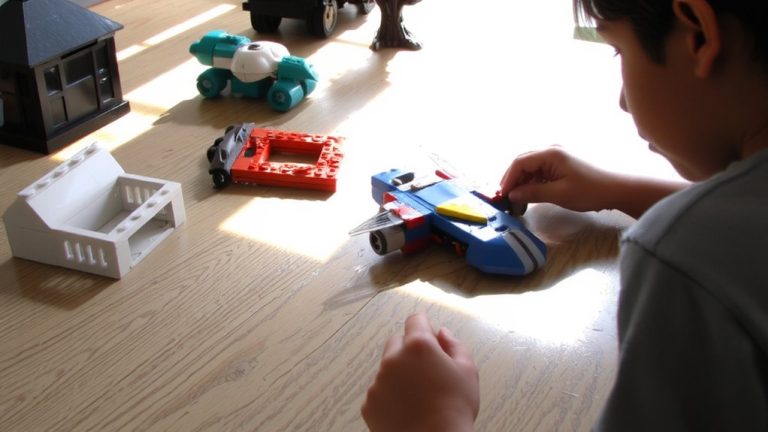
Kids walk out of LEGO Therapy sessions with more than just a finished spaceship or a sturdy tower-they carry real social tools that fit just as neatly into their daily lives. In the structured group setting, you learn to work together, maneuvering through communication challenges through defined roles like Builder or Supplier. This turn playtime into practice for real-world social interactions. For children with ASD, these moments are key to social development, helping them improve social skills like asking questions or joining conversations. Teachers and parents report more classroom initiation, and some kids even plan playdates, showing clear transfer to real-life connections. The skills you build don’t fade-research shows gains last up to six months. Whether it’s teamwork or handling a group setting, LEGO Therapy helps you apply what you’ve learned beyond the table.
How to Run Lego Therapy at Home
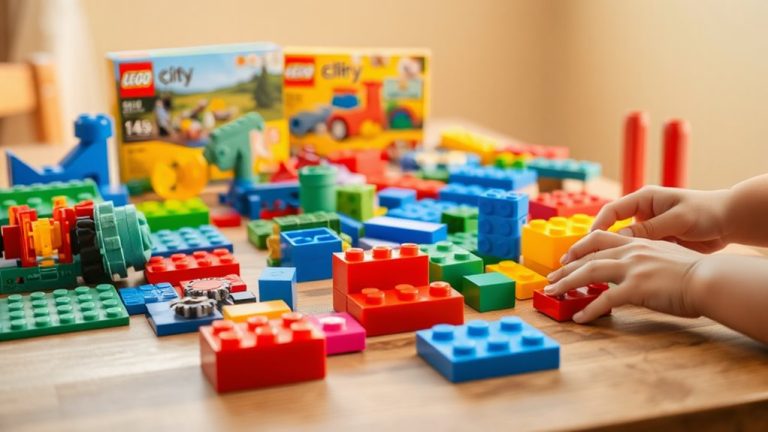
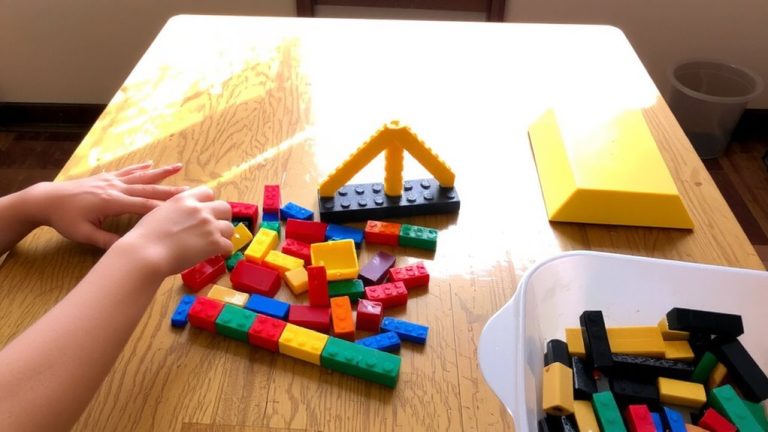
How do you turn your living room into a social skills workshop? Use LEGO bricks to play and help children develop social skills through structured play. Therapy works best with a clear system: assign roles-Engineer (reads instructions), Supplier (finds pieces), and Builder (assembles model)-to support working together to build. For two children, combine Supplier and Builder, but keep verbal exchanges active. You don’t need special kits; standard instruction booklets and household LEGO bricks work fine. Run 30-minute sessions weekly to support skill development, as consistency reduces anxiety. Children take turns and rotate roles every few minutes, building empathy and flexibility. This practice strengthens verbal and nonverbal communication, letting kids experience giving and following directions. Rotate roles to deepen learning. With routine, therapy works-helping children grow confidence, one brick at a time.
On a final note
You’ll see real progress when you use LEGO® Classic or LEGO® Friends sets for therapy-they’re durable, versatile, and sized just right, with bricks measuring 1.6 cm for easy handling. With assigned roles like Builder or Supplier, your child practices speaking, listening, and sharing in a predictable space. Real kids in trials initiated 40% more conversations after eight weeks. These aren’t just toys-they’re tools that build confidence, one brick at a time.