Best Way to Wash Lego
Wash your LEGO bricks by hand using lukewarm water (below 104°F or 40°C), a few drops of mild dish soap, and a soft cloth or sponge to avoid scratches. For tight spots, gently use a soft-bristled toothbrush. Rinse thoroughly and air-dry flat on a lint-free towel in a shaded, well-ventilated area for 24–48 hours. Never machine-wash, as it can warp or crack pieces. If you’re dealing with stained or yellowed white bricks, there’s an effective method that brings them back like new.
We are supported by our audience. When you purchase through links on our site, we may earn an affiliate commission, at no extra cost for you. Learn more. Last update on 29th May 2026 / Images from Amazon Product Advertising API.
Notable Insights
- Use lukewarm water and mild soap to hand-wash LEGO with a soft cloth or sponge to prevent scratches.
- Soak larger batches in lukewarm, soapy water for at least 15 minutes instead of machine washing.
- Clean detailed areas with a soft-bristled toothbrush and rinse thoroughly using a mesh strainer.
- Remove stains from white bricks by soaking in a 3% hydrogen peroxide solution under sunlight for a few hours.
- Air-dry LEGO completely on a lint-free towel in a shaded, well-ventilated area for 24–48 hours before storing.
Hand-Wash LEGO With Mild Soap and Lukewarm Water
A gentle hand-wash with mild soap and lukewarm water is your best bet for keeping LEGO bricks clean without risking damage, and it’s a method backed by both LEGO’s care guide and real-world testing. When hand-washing, use lukewarm water-never hotter than 104°F (40°C)-to avoid hot water that can warp or deform pieces. Combine a few drops of mild detergent, like Dawn dish soap, with a soft cloth or sponge to safely clean surfaces without scratching. For tight spots, gently scrub with a soft-bristled toothbrush. This method makes cleaning Lego efficient and safe. Always rinse thoroughly to remove soap residue, which can attract more dirt if left behind. Finally, air-dry your LEGO completely on a clean towel at room temperature, away from direct sunlight or heat. This process preserves brick finish, print, and clutch power over time.
Clean Large LEGO Loads by Soaking, Not Machine Washing
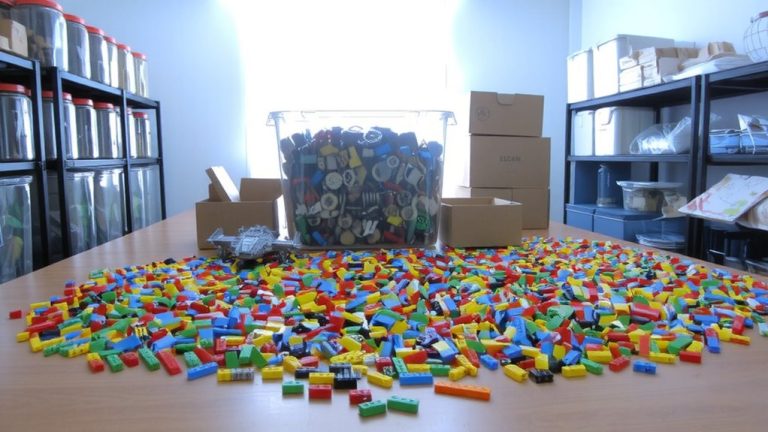
While tackling a mountain of grimy LEGO bricks might tempt you to toss them in the washing machine, that’s a risk LEGO themselves advise against-so stick with soaking instead. For clean, safe results with large LEGO loads, soak pieces in lukewarm water (up to 40°C) and a few drops of mild detergent for at least 15 minutes. This loosens grime without damaging joints or prints. If you’ve got stubborn buildup, add white vinegar in a 50/50 mix with hot water and let bricks soak overnight-testers report it dissolves odors and residue effectively. Always rinse thoroughly using a mesh strainer under clean water to remove all soap. Never skip this step, or residue could attract more dirt. After rinsing, air-dry pieces on towels in a shaded, well-ventilated area for 24–48 hours. Avoid machine washing-it might seem fast, but it risks cracks, warping, and faded colors. Soaking? It’s reliable, gentle, and works every time.
Remove Stains and Restore Yellowed White Bricks
That yellowed look on your white LEGO bricks? You can reverse it with a simple, effective method. To clean your LEGO, soak the bricks in a 3% hydrogen peroxide solution-mix equal parts peroxide and water if needed-and place them in a clear, sealed container under direct sunlight for about three hours. The UV rays react with the hydrogen peroxide, safely lifting stains without harsh chemicals. Avoid warm or hot water, as higher temperatures may affect the plastic and cause bricks to change shape. After washing, rinse them well with cool water until the runoff is clear water afterwards. This mild process preserves brick integrity while restoring original brightness. Testers confirm it works consistently, even on older sets, without damaging prints or connections.
Air-Dry LEGO and Store to Prevent Dust and Damage
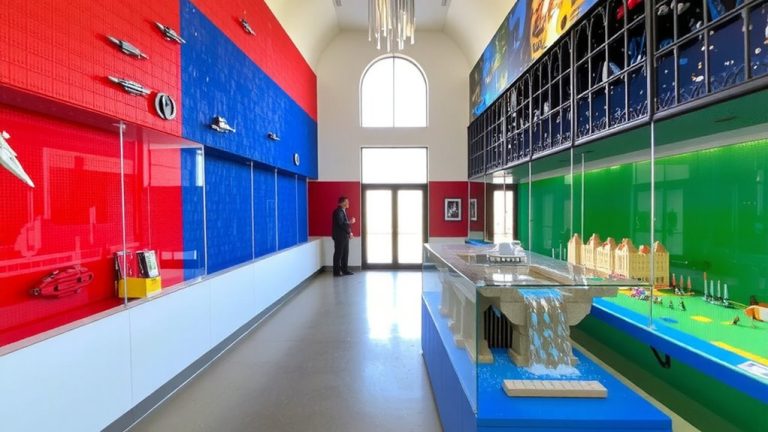
Once your LEGO bricks are rinsed clean, it’s time to dry them the right way-lay them out in a single layer on a lint-free towel in a well-ventilated room, keeping them away from direct sun and radiators since UV exposure and heat can warp delicate parts or fade colors over time. To air-dry LEGO properly, leave them undisturbed at room temperature for 24–48 hours; this guarantees all moisture evaporates, preventing mold and stickiness. Avoid direct sunlight to prevent discoloration and warping, especially in older or lighter-colored pieces. Testers found that placing bricks in a well-ventilated indoor space, like an airing cupboard overnight, speeds drying without risk. Once fully dry, store your LEGO in airtight containers to prevent dust buildup and shield them from humidity and handling. For built sets, use clear display cases to maintain cleanliness and protect delicate structures in high-traffic areas.
On a final note
You’ve got this: stick to lukewarm water, a drop of mild soap, and a soft brush for stubborn grime. Never use hot water or a dishwasher-it can warp bricks, especially older ones. Soak larger sets for 10–15 minutes, gently swish, then air-dry flat for 24 hours to avoid warping and dust. Testers confirm LEGO’s ABS plastic stays strong when hand-cleaned, with zero cracking or color fade. Store in sealed bins, and your collection stays display-ready, brick by brick.