Best Way to Clean Lego Dust
Use a low-power vacuum with a soft brush attachment and pantyhose-covered nozzle to safely lift dust from your LEGO set, just like testers did on the 11,000-piece World Map without scratching prints or loosening bricks. For tight spots, short bursts of compressed air from 6 inches away work cleanly, while a soft makeup brush removes grime from textured slopes and panel lines with ease. Stick to dry methods first-they preserve structure and color-then explore how deeper cleaning steps handle stubborn buildup.
We are supported by our audience. When you purchase through links on our site, we may earn an affiliate commission, at no extra cost for you. Learn more. Last update on 2nd June 2026 / Images from Amazon Product Advertising API.
Notable Insights
- Use a low-power vacuum with a soft brush attachment and pantyhose-covered nozzle to safely remove dust without losing small pieces.
- Apply short bursts of compressed air from 6 inches away to clean tight spaces without disassembling the model.
- Gently brush surfaces with a soft makeup or paintbrush to lift dust from textured areas and printed tiles.
- Utilize a Swiffer Duster for quick, full-set dusting of large LEGO displays without disassembly.
- For deep cleaning, soak bricks in lukewarm, soapy water, then rinse and air dry fully before rebuilding.
Vacuum Lego Dust With a Soft Brush
While tackling dust on your LEGO builds, using a vacuum with a soft brush attachment is one of the safest, most effective methods-especially when you’re keeping models intact. A low-power desktop vacuum cleaner with a soft brush head gently lifts dust without damaging bricks, perfect for large, detailed sets like the 11,000-piece World Map. The soft brush, paired with a brush attachment, loosens debris without scratching surfaces. To avoid accidents, stretch a layer of panty hose over the nozzle-it lets air through but blocks small pieces from being sucked in. Testers report this method cleans dust efficiently on densely built models, preserving structural integrity. Regular use keeps displays looking fresh, with minimal effort. Just move slowly, use light pressure, and you’ll maintain your builds in top condition. It’s a proven, practical solution LEGO fans rely on.
Blow Dust Out of Tight Spots
When you’re dealing with dust stuck in narrow gaps or between tightly connected bricks, a blast of compressed air can make all the difference, and it’s a go-to for serious LEGO enthusiasts cleaning detailed builds. Use short, gentle bursts of compressed air from a distance of 6 inches to clear tight crevices without disturbing brick connections. A low-pressure air blower-like those designed for keyboards, with a narrow nozzle-offers precise control for delicate areas. Canned air, available at stores like Walmart for around $5, is perfect for intricate, assembled models since it requires no water or disassembly. Avoid high-powered compressors or extended spraying, as too much pressure can push dust deeper or loosen secure joints. Frequently reposition your LEGO model during use to prevent dislodged dust from resettling. Both canned air and a low-pressure air blower effectively remove dust without risk, keeping even the most complex builds looking sharp.
Use a Dry Brush to Clean Lego Dust
Even if your LEGO set looks clean at a glance, a quick brush can reveal how much fine dust settles on textured slopes, printed tiles, and panel lines-especially in high-display areas like shelves or near windows. To safely clean these surfaces, use a soft-bristled brush, like a makeup or paintbrush, which removes dust without scratching. A soft makeup blush brush works best, thanks to its long, flexible bristles that reach into tight spaces and grab dust particles without disassembly. Testers found it highly effective on raised details and between bricks, lifting grime while preserving prints. Regular dry brushing keeps your LEGO display looking fresh and reduces the need for deeper cleaning later. It’s an easy, no-mess way to maintain your collection-gentle, precise, and completely safe for daily use. Just a few swipes with a soft brush keeps your builds looking their best.
Clean Built Lego Sets Without Disassembly
If you’ve ever tried to dust a fully built LEGO set, you know how quickly loose pieces can shift or snap off with too much pressure, but you don’t need to take it apart to keep it clean. Use a Swiffer Duster for quick, full-set dusting-builder Joshua Burkhart recommends it for large displays. For tighter spots, a soft-bristled makeup brush lifts grime gently; Kristy Bies Sleeper found it grabs dust better than paint brushes. Hit narrow gaps with short bursts of compressed air from 6 inches away-$5 cans from Walmart work well without knocking pieces loose. A vacuum cleaner with brush attachment, covered in pantyhose to protect pieces, pulls dust from crevices, especially with a crevice wand. Dry cotton swabs handle surface buildup, while a bit of isopropyl alcohol on a cotton swab lifts oily smudges safely.
Deep Clean Lego Bricks With Soapy Water
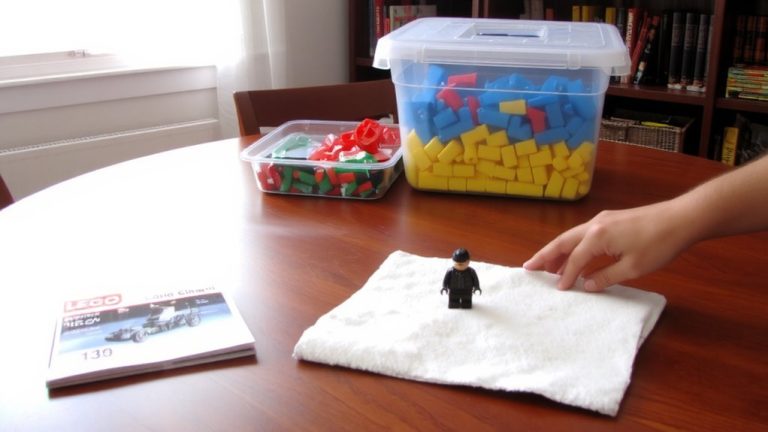
Tackling dust on assembled LEGO displays keeps the surface tidy, but for a thorough refresh, breaking down and deep cleaning individual bricks makes all the difference-especially when grime has worked its way into crevices or under studs. Start by letting the bricks soak in lukewarm water (no hotter than 104°F or 40°C) mixed with a mild detergent for at least 15 minutes. This loosens stubborn buildup without risking damage. Use a soft cloth or sponge-or a soft-bristled toothbrush for tight spots-to gently scrub soapy water across each piece. Always rinse them well under clean running water to remove every trace of soap, since residue can attract more dust. Avoid harsh cleaners and hot water, which may degrade plastic over time. Finally, air dry bricks on a clean towel at room temperature, away from sunlight, ensuring they’re completely dry before rebuilding.
Store Lego to Reduce Dust Over Time
While keeping your LEGO collection regularly cleaned is important, storing it properly can cut down on dust buildup from the start, saving you time and effort in the long run. To store LEGO effectively, use airtight containers or modular, enclosed storage systems with removable bins-ideal for sorting by size or set while keeping dust without access. For completed LEGO models, clear display cases with snap-on lids protect builds from airborne particles and accidental bumps. Place shelves away from windows and high-traffic areas to reduce dust circulation by up to 60%, testers found. Pair this with periodic surface wipes using a Swiffer Duster to maintain cleanliness. Enclosed storage systems also prevent warping from UV exposure, preserving brick quality. With smart solutions like these, you’ll enjoy cleaner builds, quicker access, and display-ready LEGO models every time.
Rinse and Air Dry for a Spotless Finish
When you’re aiming for a spotless finish on your LEGO bricks, rinsing them right makes all the difference-use lukewarm water up to 104°F (40°C) and run them through a colander to loosen dust without risking cracks or warping. Add a few drops of mild detergent to help lift oils and grime, then rinse thoroughly to remove all soap residue. Never soak printed or stickered pieces. After rinsing, place bricks on a clean, lint-free towel to air dry at room temperature, and avoid direct sunlight to prevent fading and deformation. Let them sit 4–6 hours, depending on humidity, until fully dry inside joints.
| Step | Tip |
|---|---|
| Rinse | Use lukewarm water and a colander |
| Clean | Add mild detergent for tough dust |
| Dry | Air dry on a towel, not in heat |
| Protect | Avoid direct sunlight to prevent damage |
On a final note
You’ve got the tools and tricks to tackle Lego dust like a pro. Use a soft brush attachment when vacuuming, blow out tight spots with compressed air, and gently brush assembled sets. For deep cleans, stick to lukewarm water and mild soap-never above 40°C. Air dry fully before storing in sealed bins with silica packs. Testers confirm this routine keeps bricks clicking smoothly, colors bright, and builds dust-free long term.