How Lego Pirates Blended Comedy and Adventure Before Being Retired in the Late 1990s
You got swashbuckling adventure and laugh-out-loud fun with every 1989–1990s LEGO Pirates set, from the 40 cm Black Seas Barracuda to Governor Broadside’s stern scowl and Captain Redbeard’s parrot-led chaos. Unique minifig faces, playful packaging comics like *The Golden Medallion*, and U.S. play prompts mixed drama with humor, while Islander escapades and stop-motion ads kept tones light. It’s a legacy built on action, character, and smart, buildable storytelling you’ll want to explore next.
We are supported by our audience. When you purchase through links on our site, we may earn an affiliate commission, at no extra cost for you. Learn more. Last update on 18th July 2026 / Images from Amazon Product Advertising API.
Notable Insights
- LEGO Pirates combined adventure and humor through expressive minifigures with scowls, eyepatches, and quirky traits like parrots and lipstick.
- The comic *The Golden Medallion* introduced a lighthearted tone with swashbuckling quests and comedic rivalries between Captain Redbeard and Governor Broadside.
- Play prompts on U.S. packaging encouraged imaginative scenarios blending daring raids with silly, character-driven moments.
- Imperial Guards’ bumbling portrayal contrasted with their authoritative red uniforms, adding comedic relief to their role as antagonists.
- Stop-motion TV ads featured exaggerated movements and playful narration, enhancing the theme’s adventurous yet humorous spirit.
The Birth of LEGO Pirates: 1989 Adventure Begins
When LEGO launched Pirates in 1989, it wasn’t just another theme drop-it was a leap into storytelling with bricks, giving you swashbuckling action rooted in real play-driven design. This theme marked the first major expansion beyond Town, Castle, and Space, centering on the original LEGO Pirates‘ clash between rogue crews and Imperial forces. You got four foundational sets, including the iconic 6285 Black Seas Barracuda-Captain Redbeard’s massive pirate ship loaded with hidden treasure and cannon defenses. The set measured 40 cm long, with room for six minifigs, realistic rigging, and a fold-out base for stable display. Opposing him was the 6276 El Dorado Fortress, a fortified Imperial outpost. From the first wave, you saw deep narrative packaging and the comic *The Golden Medallion*-proving LEGO could blend adventure, lore, and brick-built drama like never before.
How LEGO Pirate Minifigures Changed the Game
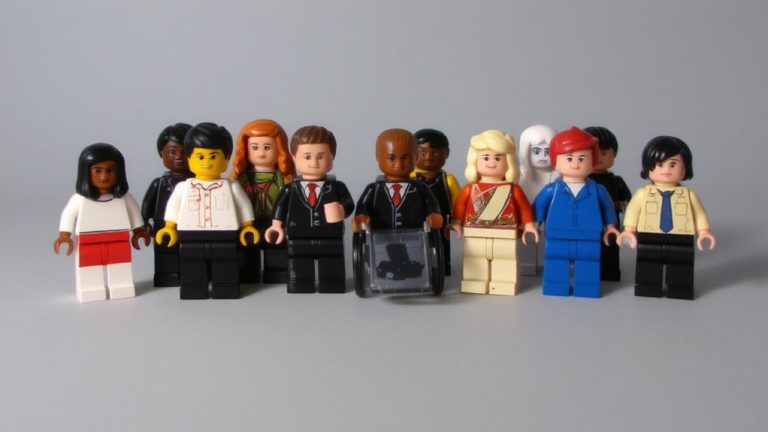
While LEGO had stuck to cheerful, one-expression faces since 1978, the Pirates theme in 1989 flipped the script with minifigures that actually looked like characters, not just bricks with smiles. The LEGO Pirates theme introduced the first minifigures with unique facial expressions-think scowls, eyepatches, and even lipstick. You got real personality: Captain Redbeard, the ultimate pirate captain, came with a hook hand, peg leg, parrot, and bicorn hat. Governor Broadside brought authority with his stern gaze, proving minifigures could tell stories through design. New molds expanded customization like never before.
| Feature | Before Pirates | After Pirates Theme |
|---|---|---|
| Facial Expressions | Smiley only | Unique facial expressions |
| Accessories | Generic | Hook hand, peg leg |
| Character Depth | Flat | Captain Redbeard, Governor Broadside |
| Creature Variety | None | Parrot, later skeletons |
| Thematic Realism | Low | High, with bicorn hat details |
LEGO Pirate Ships: Design, Drama, and Detail
Though they started simple, LEGO pirate ships quickly evolved into elaborate, detail-rich builds that brought real seafaring drama to your living room. Your first Lego Pirate Ship, like the 1989 Black Seas Barracuda (set 6285), set the tone with two masts, six cannons, and a unique middle hull design. By 1993, the Skulls Eye Schooner (6286) became the flagship set-bigger, with three masts and eight cannon ports. Its sailing ship profile, complete with fabric sails on undersized rigging bars, added realism never seen before. Decades later, the 2010 Imperial Flagship (10210) topped them all at 75 cm long, over 2,000 pieces, and cannons under a crown-truly the largest and most detailed. Whether docked or battle-ready, these sets deliver build complexity, display appeal, and lasting play value.
Governors, Guards, and Islanders: Factions That Built the World
If you’ve ever staged a battle between scallywags and soldiers on your living room floor, you’ve likely clashed with the Imperial faction, the blue-coated Governors who first stood against the pirates as the lawful enforcers of the LEGO seas, led by Governor Broadside and armed with muskets, small outposts like 6275 Coconut Cove, and modest patrol boats. These Imperial Soldiers, representing the marines of the colonial era, patrolled the waves to protect the Imperial Trading Post and flagship vessels like the 6280 Armada Flagship. By 1992, they were rebranded as the Imperial Guards, now in red, under Admiral Woodside, adding a variety of different build and play options. In 1994, the Islanders introduced a neutral, Polynesian-inspired culture centered on 6278 Enchanted Island, expanding the world beyond the colonial era conflict and giving you even more factions to explore, clash with, or ally in your seafaring adventures.
The Comics, Books, and Ads Behind LEGO Pirates
You’ve lined up the Imperial Guards in their red coats, sent the Governors scrambling from Coconut Cove, and watched the Islanders defend Enchanted Island with tiki-torch bravado-now see how those characters leapt beyond the bricks into stories, comics, and animated ads that shaped the LEGO® Pirates theme. The comic book entitled *The Golden Medallion* (aka *The Golden Sovereign*) launched the adventure in 1989, setting up treasure hunts and rivalries. Ladybird Books published storybooks like *Will and the Gold Chase* and *Captain Rogers Birthday*, blending humor and action for young readers. German fans got audio tapes with voice-acted lore for the 1989 and 1994–1995 waves. Stop-motion animation brought swashbuckling fun to television commercials-the brand’s first use of the technique. U.S. packaging included play prompts on flaps, sparking scenarios with Captain Redbeard and Governor Broadside. Each medium deepened immersion, turning sets into lived adventures.
LEGO Pirates: Decline, Revival, and Legacy
What ever happened to the golden age of LEGO Pirates? After a steady decline in the mid-90s-fueled by underwhelming releases like 6281 Pirates Perilous Pitfalls-the theme was retired in 1997. But fans kept the flame alive. In 2009, its 20th anniversary sparked a revival, headlined by the massive 75 cm-long 10210 Imperial Flagship, the biggest LEGO pirate ship ever. A brief second revival in 2015, with sets like 70413 The Brick Bounty, didn’t stick. Still, the legacy endured. Adult fans pushed for comebacks, leading to 21322 Pirates of Barracuda Bay via LEGO Ideas, a detailed modular tribute to the 1989 classic. Then in 2023, 10320 Eldorado Fortress arrived under LEGO Icons, reimagining the original with modern precision. These releases prove LEGO Pirates isn’t just nostalgia-it’s a lasting cornerstone of adventurous building, refined for today’s collectors.
On a final note
You got adventure and humor perfectly balanced in LEGO Pirates, with 753 pieces building sturdy ships like the Forbidden Fortress, tested for durability and display. Minifigures featured dual expressions, compasses, and parrots, adding storytelling depth. Real fans praise chunky gold coins and anchor elements for play value. Though retired, sets remain affordable secondhand. For modern builds, grab LEGO Ideas or modular sets-they keep the spirit alive, detailed, and display-worthy, just like ’90s classics.