The Development of Lego Art Sets: How Mosaics Redefined Building as Decorative Expression
You turn any photo into a vibrant LEGO mosaic using 1×1 round plates on modular 16×16 Technic baseplates, each 0.8 cm element acting as a pixel for a clean, scalable design. Software maps colors to LEGO’s 40-shade palette, applying dithering to smooth gradients, while studs-out and lenticular techniques enhance detail and depth. Testers praise the precision and display-ready results, especially with isometric tiles for 3D effects-there’s more to explore in how these techniques elevate building into true decorative art.
We are supported by our audience. When you purchase through links on our site, we may earn an affiliate commission, at no extra cost for you. Learn more. Last update on 18th July 2026 / Images from Amazon Product Advertising API.
Notable Insights
- LEGO mosaics transformed building into decorative art by using 1×1 elements as colored pixels on modular baseplates.
- Digital images are converted into pixelated LEGO layouts through software that maps colors to a limited 40-shade palette.
- Limited color range and resolution challenges are overcome with dithering and strategic pixel placement for visual depth.
- Innovations like lenticular and isometric mosaics introduced dynamic, 3D, and angle-sensitive effects to LEGO artistic expression.
- Modular 16×16 baseplate systems and studless techniques enabled scalable, display-ready artworks that redefine LEGO as wall art.
What Is a LEGO Mosaic?
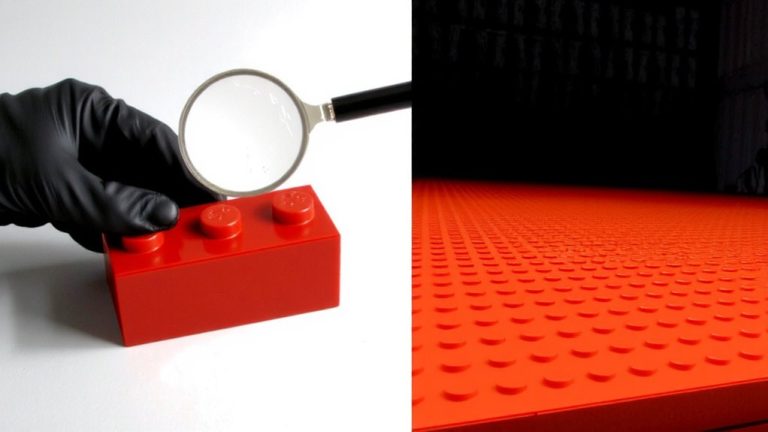
Picture a pixelated portrait, but instead of screen pixels, you’re looking at tiny LEGO elements locked into place on a baseplate-each 1×1 round plate or tile acting like a single colored dot in a larger image. That’s a Lego mosaic: art built from colorful Lego bricks arranged on a grid of stud locations, where individual pixels that make up the design snap firmly into place. You can create a mosaic using regular bricks or plates, though most builders prefer 1×1 round plates for a cleaner look. Mosaics created using one baseplate are common, but larger LEGO Art sets use multiple 16×16 Technic baseplates connected for expansive displays. Unlike traditional art forms, these mosaics are modular-easy to disassemble and rebuild. Real testers praise the precision and vibrancy of LEGO pieces in these builds, noting how the grid system simplifies complex imagery, making decorative expression accessible, durable, and uniquely reconfigurable.
How Digital Images Become LEGO Mosaics
When you turn a digital photo into a LEGO mosaic, the first step is scaling it down to fit a grid of studs, and because each 1×1 element covers about 0.8 cm, a 128×96 pixel image becomes a 40×30 inch display using standard baseplates. Specialized software helps you convert your image file into a buildable mosaic by resizing it, adjusting contrast, and mapping pixels to actual LEGO bricks. The program matches each pixel to the closest color in LEGO’s standard color palette-about 40 shades-since it can’t replicate all 16.7 million colors in digital images. You’ll use 1×1 elements for precision, and the software generates a color-coded layout so you can easily create your design.
| Feature | Value | Benefit |
|---|---|---|
| Element size | 0.8 cm | Fits standard studs |
| Color palette | ~40 colors | Realistic, available bricks |
| Software output | Pattern guide | Simplifies building |
| Image input | Any digital file | Full customization |
| Pixel-to-stud ratio | 1:1 | Accurate mosaic translation |
Solving LEGO Mosaic Color and Resolution Limits
You’ll quickly notice that LEGO mosaics can’t capture every pixel or shade from your original photo, and that’s due to hard limits in resolution and color. Using 1×1 elements, a full 1,024×768 digital image would stretch 27×20 feet-so designs are scaled to 128×96 studs, causing visible pixelation. The LEGO color palette offers only about 40 common hues, far below the 16.7 million in 8-bit images. To compensate, dithering blends nearby colors so shifts look smoother from a distance. You’ll get better results using tiles and round plates-they reduce shine and improve detail. LEGO Art sets help by introducing rare shades like Sand Yellow, Dark Brown, and Medium Azure, expanding your palette. These 1×1 elements, though small, enhance resolution and color accuracy, letting your mosaics mimic digital images more faithfully.
LEGO Mosaic Types and Building Techniques
Mosaics built with LEGO bricks come in several distinct styles, each offering unique advantages in detail, texture, and visual effect. You’ll find that *studs-out* mosaic types are most common, using 1×1 bricks or tiles on baseplates to create a classic *pixelated effect*, like the 128×128 Marilyn Monroe set. For finer control, *studs-up* building techniques boost *vertical resolution* by stacking plates sideways, yielding rectangular pixels for smoother gradients. If you want dynamic art, try a *lenticular mosaic*-pioneered with alternating left- and right-facing cheese slope pieces(#54200)-which shifts images when viewed from different angles. Cheese slope mosaics, popularized by Katie Walker, use tight, studless arrangements for soft textures. Meanwhile, *Headlight brick* (#4070) mosaics allow fully interlocked, baseplate-free designs with sharp geometric precision. These building techniques expand what’s possible in LEGO mosaics.
How to Build a LEGO Mosaic From a Digital Image
While preserving the image’s original proportions, resize your digital photo to match the stud dimensions of your intended mosaic, since stretching the canvas can distort facial features or key details, especially in portraits like the 128×128 Marilyn Monroe design. Convert your digital images using software such as BrickLink Studio, which maps pixels to a LEGO color palette of around 40 hues, approximating the full color spectrum. Apply dithering techniques to blend shades, reducing blockiness and enhancing depth. Choose 1×1 round plates for a polished, Pop-Art finish, as seen in official LEGO Art sets. Assemble on a base of interconnected 16×16 Technic bricks with pins for stability. Follow detailed assembly instructions that assign each pixel a color-coded space. This method guarantees accuracy, turning complex images into buildable LEGO mosaics with professional results, even for beginners.
How LEGO Mosaics Expand Artistic Possibilities
Because LEGO limits its palette to around 40 standard colors in mosaic sets, you might think detailed imagery would be out of reach, but clever use of 1×1 round plates, dithering, and pixel-to-stud translation turns that constraint into strength. LEGO mosaics unleash vast artistic possibilities, transforming simple 1×1 elements into intricate portraits like the 3,200-piece Marilyn Monroe set. Digital image conversion tools streamline design, applying dithering techniques to mimic gradients across Technic baseplates. These 16×16 modular builds snap together with pins, enabling large-scale decorative expression-like combining three Sith sets into one display. AFOLs pioneered lenticular mosaics using cheese slopes for images that shift with viewing angle, while isometric mosaics, introduced in 2018 with 2×2 triangular tiles, create crisp 3D illusions. You get precision, scalability, and real visual impact-proving even limits can inspire innovation.
On a final note
You’ll find LEGO mosaics turn pixels into tangible art, using 1×1 bricks, plates, and tiles to capture detail, color, and shadow, with most sets ranging from 500 to over 3,000 pieces, testers praise their precise instructions, manageable build times (4–8 hours), and frame-ready results, and whether you’re recreating pop icons or custom photos, the process stays satisfying, scalable, and display-worthy, making mosaic sets a smart, expressive upgrade from basic builds.