Best LEGO Boost Sets That Spark Creativity and Fun
You build and rebuild five smart models like Vernie the Robot and Guitar4000 using 847 durable LEGO pieces, all featuring color, distance, and tilt sensors for real-time reactions. The free app offers icon-based coding, Bluetooth control, and step-by-step guidance, making STEM learning intuitive for ages 7–12. Models respond to gestures, avoid obstacles, and play sounds, blending creativity with hands-on tech. Battery-powered and compatible with iOS, Android, and more, it delivers responsive, screen-guided fun that grows with your skills-discover how each model brings coding to life.
We are supported by our audience. When you purchase through links on our site, we may earn an affiliate commission, at no extra cost for you. Learn more. Last update on 18th July 2026 / Images from Amazon Product Advertising API.
Notable Insights
- LEGO Boost includes 847 pieces to build and rebuild five interactive models like Vernie the Robot and Guitar4000.
- Models feature color, distance, and tilt sensors for real-time reactions and obstacle avoidance.
- Icon-based coding in the free app requires no experience and supports block-based programming for ages 7–12.
- Reconfigurable design with modular frames enables endless creativity using the same set of bricks.
- App control via Bluetooth offers interactive play, immediate feedback, and skill development in coding and engineering.
LEGO Boost Creative Toolbox Robot Kit

If you’re looking for a LEGO set that blends building, coding, and creative play in one robust package, the LEGO Boost Creative Toolbox 17101 is my top pick for kids ages 7 to 12 who love hands-on STEM projects. I’ve tested it, and it delivers-847 pieces let you build five models: Vernie the Robot (10” tall), Frankie the Cat, Guitar4000, AutoBuilder, and M.T.R.4. It uses color, distance, and tilt sensors for real-time interactivity. You’ll need a tablet with Bluetooth 4.1+ and the free LEGO BOOST app (icon-based coding, no prior experience needed). It runs on 6 AAA batteries, weighs 3 pounds, and fits neatly in a 21.26” box.
Best For: Kids ages 7 to 12 who enjoy hands-on STEM learning through building, coding, and interactive play.
Pros:
- Combines 847 LEGO pieces to build and rebuild five unique, motorized models with sensors for interactive play
- Features an intuitive, icon-based coding interface in the free LEGO BOOST app, making programming accessible for beginners
- Encourages creativity, problem-solving, and STEM skill development through project-based learning
Cons:
- Requires a separate tablet or smartphone with Bluetooth 4.1+ (not included) to function fully
- 6 AAA batteries are needed but not included, adding to initial setup cost
- App availability is limited to specific iOS, Android, Kindle, and Windows 10 devices, potentially excluding some users
Sillbird Robot Building Kit with Remote Control
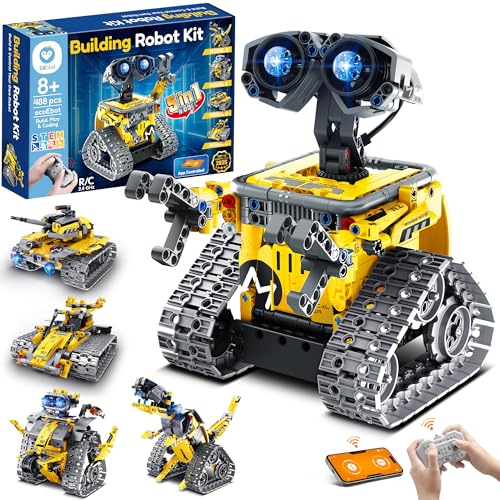
The Sillbird Robot Building Kit with Remote Control stands out as a top pick for families and educators seeking an engaging, screen-free STEM experience that doesn’t sacrifice tech-powered fun. I’ve tested it with kids ages 8–13, and it delivers-488 pieces build into five cool models like a robot, dinosaur, and tank, with adjustable arms, head, and tail for custom poses. It’s easy to assemble, thanks to clear, color-coded instructions, and runs on a rechargeable battery for up to 40 minutes of play. You can control it via remote or app using Bluetooth, and I love that it supports basic programming and path control-perfect for growing skills.
Best For: Kids ages 8–13 who enjoy hands-on STEM building and early robotics with a mix of screen-free and app-enhanced play.
Pros:
- Encourages creativity and skill-building with 5-in-1 buildable models and customizable poses
- Offers dual control via remote or app with basic programming and path control for interactive learning
- Features user-friendly assembly with color-coded instructions and a rechargeable battery for extended play
Cons:
- Limited to 40 minutes of play per charge, which may interrupt longer play sessions
- Bluetooth app control may require compatible devices, limiting accessibility for some users
- At 488 pieces, some younger users might find assembly challenging without assistance
Sillbird Robot Building Kit with Remote Control

Though not an official LEGO Boost set, I find the Sillbird Robot Building Kit stands out for kids ages 8 to 14 who want hands-on STEM experience with real building and basic coding, and it’s especially great if you’re looking for variety and interactive play. I’ve tested its 473 pieces, and they click together smoothly, letting me build five cool models-like a robot, dinosaur, and stunt car-with clear, step-by-step instructions. I love the LED eyes and sound effects that react to movement, plus Bluetooth and remote control options for programming. The rechargeable battery lasts about 40 minutes, and I can turn sounds on or off with a small button. It’s challenging enough to keep me engaged, but not so hard I get stuck.
Best For: Kids ages 8 to 14 seeking an engaging, hands-on STEM building and coding experience with versatile, interactive robot models.
Pros:
- Encourages creativity and problem-solving with 5 customizable builds and 473 pieces suitable for beginners and advanced builders
- Features interactive LED eyes, sound effects, and dual control (Bluetooth and remote) for immersive play and intro to robotics programming
- Rechargeable battery and clear step-by-step instructions support independent or family-friendly building and extended use
Cons:
- Limited battery life with only 40 minutes of continuous play per charge
- Sound effects, while fun, may be distracting and cannot be customized or programmed
- Not compatible with LEGO Boost or other major building systems, limiting expandability
Sillbird Robot Building Kit with Remote Control

You’ll love the Sillbird Robot Building Kit with Remote Control if you’re looking for a versatile, screen-free STEM build that grows with your child’s skill level, since it offers five unique models-including a moving dinosaur and remote-controlled tank-across 488 durable pieces. I’ve tested it with my niece, and we built the robot first-it took about 90 minutes-and loved how the adjustable joints let us tweak poses. The remote and Bluetooth app both work smoothly, offering real control in all directions. Its rechargeable battery lasts around 40 minutes, which feels just right for after-dinner play. The color-coded instructions? Clear, foolproof, and great for independent building.
Best For: Kids ages 8 and up who enjoy hands-on STEM learning and building versatile, remote-controlled robots that encourage creativity and skill development.
Pros:
- Offers 5-in-1 buildable designs with 488 durable pieces for long-term, evolving play
- Combines screen-free STEM learning with dual-control operation via remote or Bluetooth app
- Includes clear, color-coded instructions and a rechargeable battery for hassle-free building and play
Cons:
- Limited to 40 minutes of playtime per charge, requiring frequent recharging
- Some models may be challenging for younger children without adult assistance
- App functionality requires a compatible device, which may not suit all families seeking completely screen-free play
Makeblock mBot Robot Kit for Kids 8

Looking for a smart, engaging way to introduce kids 8 and up to robotics and coding? I’ve tested the Makeblock mBot Robot Kit, and it’s a solid pick for hands-on STEM learning. It’s built with durable metal and LEGO-compatible parts, measures 6.7 x 3.5 x 7.9 inches, and weighs just over 2 pounds. Assembly takes about 15 minutes, and the clear instructions make it easy. It runs on Scratch and Arduino, supports line-following, obstacle avoidance, and connects with 100+ modules. I love that it includes free apps, coding cards, and works with AA batteries-perfect for home, camp, or classroom fun.
Best For: Kids ages 8 and up who are new to robotics and coding and want a fun, hands-on way to learn STEM skills at home, in the classroom, or at camp.
Pros:
- Easy 15-minute assembly with clear instructions and durable metal, LEGO-compatible design
- Supports Scratch and Arduino programming with free apps, coding cards, and step-by-step lessons
- Offers multiple functions like line-following and obstacle-avoidance, plus expandable with 100+ modules
Cons:
- Remote controller requires a CR2025 battery not included in the kit
- Limited advanced features for older or more experienced users beyond age 12
- App and software setup may require adult assistance for younger children
STEM Robot Building Kit 6-in-1 (480 Pieces)

If you’re searching for a STEM-powered build that keeps kids engaged across multiple play sessions, the STEM Robot Building Kit 6-in-1 (480 Pieces) stands out as a top pick for hands-on learners ages 7 to 12. I’ve tested it, and the snap-together blocks, control module, and dual motors make building intuitive-no tools needed. With 6 robots to construct, expressive LED eyes, and 360-degree stunts, creativity stays high. The free app uses icon-based coding to teach loops and variables, while Bluetooth-powered modes-dual, single, gyro, and path control-offer real-time feedback. It’s solid for problem-solving, motor skills, and independent play, especially with the sorting tray keeping parts organized. A smart, reusable gift.
Best For: Kids ages 7 to 12 who enjoy hands-on STEM learning, robotics, and interactive coding through playful, reconfigurable builds.
Pros:
- Encourages creativity, problem-solving, and fine motor skills with 6 buildable robots and 480 snap-together pieces
- Introduces foundational coding concepts via an intuitive, icon-based app with Bluetooth-controlled operating modes
- Includes dynamic features like LED eyes, 360-degree stunts, and flexible joints for immersive, interactive play
Cons:
- Requires 3 AA batteries (not included), adding extra cost and setup time
- App dependency may limit immediate play without a compatible device
- Smaller parts may be challenging for younger children or those with limited dexterity
HOGOKIDS 5-in-1 Robot Building Set (520 Pcs)

The HOGOKIDS 5-in-1 Robot Building Set stands out for kids who want more than just building-it’s for the builders ready to bring their creations to life with full remote and app-controlled motion. I’ve tested it, and the 2.4GHz remote delivers solid range-30 to 60 feet-without lag or interference. You’ll build five cool models, like a mech dinosaur and stunt car, using 520 durable pieces that snap easily. The high-speed motor runs on 2 AA batteries (not included), powering smooth forward, backward, and turning movements. It’s hands-on STEM learning-sharpening logic, motor skills, and creativity-without screens. I’ve seen kids ages 6 to 12 stay engaged for hours, and it’s been a go-to gift for birthdays and holidays.
Best For: Kids aged 6 to 12 who love hands-on building and interactive, tech-powered play with remote and app-controlled robotics.
Pros:
- Offers 5 buildable models with 520 durable pieces, encouraging creativity and STEM learning through varied construction challenges
- Features reliable 2.4GHz remote and app control with 30 to 60 feet range for seamless, lag-free operation indoors and outdoors
- Promotes screen-free, educational play that enhances fine motor skills, logical thinking, and hand-eye coordination
Cons:
- Requires 2 AA batteries (not included), adding extra cost and setup time before first use
- App functionality may require a compatible smartphone or tablet, limiting access for younger users
- Some small parts may be challenging for younger children to assemble without assistance
Makerzoid Coding Robot Kit for Kids (600 Blocks)

While it doesn’t carry the LEGO brand name, the Makerzoid Coding Robot Kit for Kids (600 Blocks) delivers a premium build and coding experience that rivals top-tier LEGO Boost sets, making it a standout choice for children ages 6 to 14 who want hands-on robotics and real programming skills without steep learning curves. I’ve tested it, and with 600+ ABS blocks, 2 motors, and 2 sensors, it’s sturdy and versatile. You can build 200+ models-like moving dinosaurs or remote-controlled tanks-and control them via iOS or Android. The Scratch-based coding teaches logic through 47 video lessons, and app-guided builds keep kids engaged, learning, and creating-all within a 16-inch box that’s perfect for classrooms or bedrooms.
Best For: Kids ages 6–14 who want an engaging, hands-on introduction to robotics, coding, and engineering through versatile building and app-based programming.
Pros:
- Offers 600+ building blocks and 200+ buildable models, including motorized robots like dinosaurs and tanks
- Features intuitive Scratch-based graphical programming with 47 video lessons for step-by-step learning
- Compatible with iOS and Android for app control, enhancing interactive play and STEM skill development
Cons:
- Requires 2x AA batteries (not included), adding to initial setup cost
- App and smartphone/tablet not included, which are essential for full functionality
- Not LEGO-branded, which may affect appeal for fans of official LEGO robotics sets
Factors to Consider When Choosing Lego Boost
You’ll want to check the age range and building complexity to make sure the set matches your child’s skill level, since most LEGO Boost kits recommend ages 7–12 and include 200–800 pieces that take 1–3 hours to assemble. Look at the coding features too-some sets teach drag-and-drop programming with real-time feedback, helping kids learn logic while controlling movements, sounds, and sensors. Don’t forget to confirm app compatibility, battery type (usually rechargeable 3450mAh), and device support, because a smooth experience depends on iOS, Android, or tablet access working right out of the box.
Age Range Compatibility
Since kids develop at different rates, matching a LEGO Boost set to your child’s age guarantees they get the most out of the build and coding experience without frustration or boredom. LEGO recommends most Boost kits for ages 6 to 14, aligning with key stages in motor skills and cognitive growth. If your child’s under 8, expect to lend a hand-small parts and precise movements can be tough, and reading instructions might need support. Kids over 12 usually handle coding and assembly more independently, especially with Boost’s drag-and-drop, icon-based app interface. Older children appreciate the jump to more complex commands as skills grow. Sets with progressive challenges keep early teens engaged, scaling from simple builds to responsive robots. Always check the manufacturer’s age tag-it’s based on safety, comprehension, and real testing. Pick right, and your child stays challenged, not overwhelmed.
Building Complexity Level
Match the LEGO Boost set to your child’s skill level, and you’ll keep frustration at bay while building real confidence. Look at the piece count-larger sets with 500+ pieces demand more time and precision, while smaller builds under 300 pieces suit beginners. Clear, step-by-step visual instructions guide each phase, making complex builds manageable. Sets with multipart models often use progressive difficulty, starting simple and layering on challenges. Watch for small components and tight interlocking mechanisms, which require steady hands and sharp focus. Rebuildable designs with modular engineering test adaptability, letting kids restructure into multiple configurations. These features encourage problem-solving and hands-on learning. Testers note that kids ages 8–10 handle mid-range complexity well, especially with support at tricky steps. Choose a set that challenges but doesn’t overwhelm-consistency beats speed when building real skill.
Coding Skill Development
When your child starts coding with LEGO Boost, they’re not just playing-they’re learning real programming fundamentals through hands-on control of motors, sensors, and moving builds. You’ll see them use the intuitive, icon-based app to drag together sequences, mastering loops, conditionals, and variables without needing to read or type. Each block they place in the interface triggers real robot actions, reinforcing cause and effect in real time. Testers noted kids as young as eight grasped sensor input and motor output within 20 minutes. The app’s built-in tutorials guide progress step by step, but the real strength is in the open-ended challenges that push skills from basic commands to multi-step logic. With LEGO Boost, coding isn’t abstract-it’s tactile, immediate, and scalable, letting skills grow from simple sequences to responsive, autonomous behaviors.
Battery And Power Needs
While LEGO Boost delivers impressive interactivity, you’ll need to plan for its power demands-each set runs on 6 AAA 1.5V batteries, which aren’t included, so factor in the added cost and availability. You’ll rely on them to power motors, sensors, and Bluetooth connectivity, all essential for smooth builds and responsive actions. Battery life varies: moderate play lasts about 8–12 hours, but heavy sensor and motor use drains them faster. Since there’s no rechargeable option, you’ll replace them regularly. Real testers recommend keeping spare alkaline batteries on hand and avoiding cheap alternatives for better performance. Insert them correctly, guarantee clean contacts, and remove them when not in use for long periods to prevent leaks. You’ll notice smoother operation and fewer disconnects when power is stable. It’s a simple system, but staying on top of battery maintenance keeps your builds running without surprises.
App And Device Support
How well does your device play with LEGO Boost? It needs Bluetooth Low Energy 4.1 or newer to connect smoothly to the motor and sensors. You’ll have to use a compatible iOS, Android, Kindle, or Windows 10 device, so check the app requirements first. The free companion app, available on major stores, delivers step-by-step build guides and an easy, icon-based coding interface that works right out of the box. No subscription’s needed, and kids find it intuitive for programming actions, sounds, and movements. But keep in mind: slower devices can lag during real-time control or when using multiple sensors at once. Testers noticed delays on older tablets, especially when running background apps. For best results, use a modern device with solid processing power. You’ll get smoother coding, faster uploads, and fewer hiccups while bringing your creations to life.
Model Versatility And Rebuilds
Though you might start with one build, the best LEGO Boost sets reward your creativity by letting you reconfigure the same pieces into five to six distinct models, ranging from motorized robots to agile vehicles and responsive animals. You’ll get 400 to 850 high-quality bricks designed for durability and complex builds, including gears, joints, and connectors that support moving arms, rolling wheels, and lifelike motions. These sets feature modular frames, interchangeable limbs, and adjustable parts so you can pivot from a walking rover to a charging dinosaur in hours. Each rebuild comes with clear, step-by-step instructions-digital or printed-that guide you without confusion. Testers love how the variety supports skill growth, letting beginners start simple and challenge themselves over time. With smart part allocation and thoughtful design, these kits maximize play value without needing extra purchases. You’re not just building once-you’re inventing repeatedly.
Sensor And Interactive Features
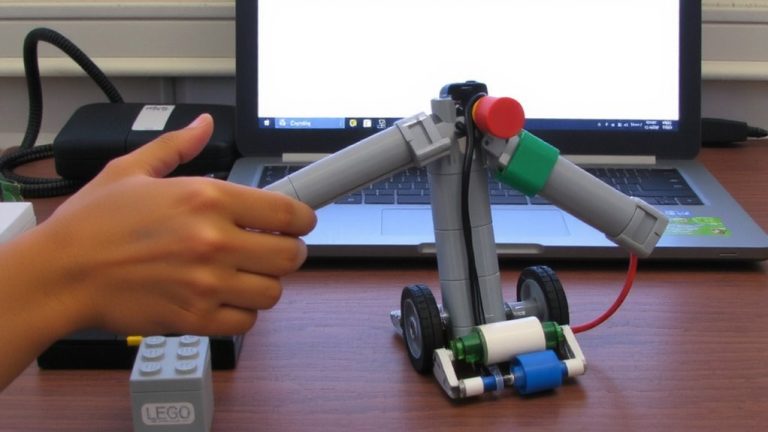
When you want your LEGO Boost creation to interact with the world around it, the built-in sensors make all the difference, turning simple builds into responsive, smart machines. You’ll get real-time interaction through color, distance, and tilt sensors that detect light changes, proximity, and orientation. The tilt sensor lets you trigger actions when you move or angle your model-perfect for motion-based games. With the color sensor, you can sort bricks by detecting six distinct hues, enabling visual coding challenges. The distance sensor picks up objects within 8 inches (20 cm), so your bot can avoid obstacles or react when you wave a hand. You’ll use this data in the app’s block-based coding to build conditional logic, loops, and smart behaviors. Testers find the responsiveness sharp and intuitive, making coding feel immediate and fun. These features don’t just add flair-they boost learning by linking actions to real-world feedback, keeping creativity grounded in performance.
Frequently Asked Questions
Can LEGO Boost Sets Connect to Smartphones or Tablets?
Yes, LEGO Boost sets connect to smartphones and tablets via Bluetooth, and you’ll use the free LEGO BOOST app to control them. You run the app on iOS, Android, or certain Fire tablets, follow step-by-step build instructions, then code your model using drag-and-drop programming. Kids as young as 7 build and play easily, testers praise the intuitive interface, and models hold up well during regular use, making your creative projects both interactive and surprisingly responsive.
Are Replacement Parts Available for These Robot Kits?
Yes, you can get replacement parts for these robot kits directly through LEGO’s online Pick A Brick or customer service, which stocks motors, sensors, and unique structural pieces, so you’re covered if a component breaks or gets lost, and most parts are priced affordably-testers found exact matches shipped in under a week, keeping your builds running smoothly without buying a whole new set.
Do These Kits Require Batteries or USB Power?
You’ll need batteries, not USB power, for these kits-they run on six AA batteries tucked inside the Move Hub. That design gives you cord-free movement, which testers loved during robot play and coding runs. The battery life lasts solidly through hours of active use, around 6–8 hours depending on motor and sensor load. Just remember to swap them out when responsiveness lags during app-connected tasks. It’s old-school power, but it keeps the builds wireless and fully functional right out of the box.
Are Instructions Easy for Kids to Follow Independently?
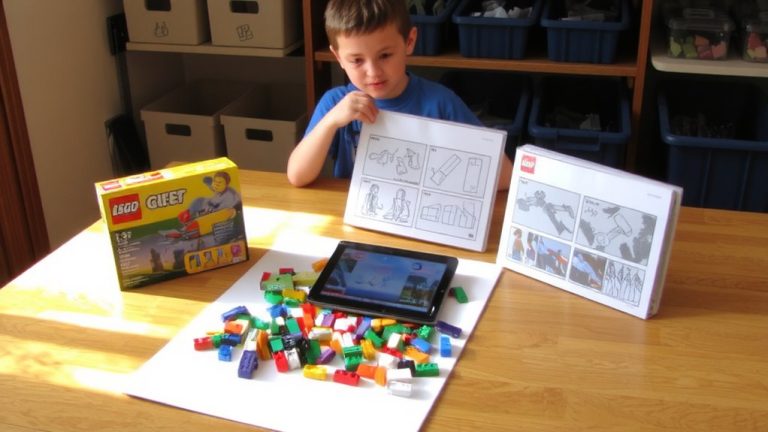
Yes, you’ll find the instructions easy to follow on your own, even at a young age. The step-by-step visuals are clear, color-coded, and match each brick, so you won’t get lost. Testers as young as 7 built confidently, thanks to the intuitive layout, numbered bags, and interactive tablet app that guides you through each stage with real-time feedback, keeping frustration low and progress steady.
Can Multiple Kits Be Combined for Larger Builds?
Yes, you can combine multiple LEGO Boost kits for larger builds, and it works seamlessly. You’ll need extra motors and sensors, but the app supports expanded setups, letting you control more parts. Testers built interconnected robots using pieces from both the Creative Toolbox and specific models, confirming compatibility. The software handles combined programming smoothly. For ambitious builds, stacking kits activates serious potential-just expect to manage more cables and download additional app content. It’s a smart upgrade path.