How Lego Building Supports Bilateral Coordination in Children With Motor Delays
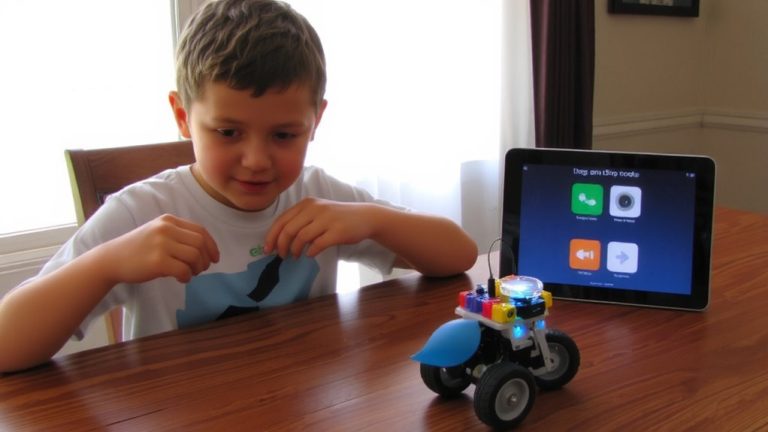
You’re building real motor skills every time you snap together DUPLO or LEGO bricks, using one hand to stabilize a baseplate while the other places pieces with precision. The 48-piece DUPLO sets help younger kids develop matching and stacking, while the 72-piece LEGO Classic box builds bimanual control through complex connects, improving hand dominance and coordination-results therapists at Pinnacle Blooms Network confirm with measurable gains. You’ll see progress carry over to writing, buttoning, and tying shoes, proving structured brick play isn’t just fun-it’s functional, with deeper insights ahead.
We are supported by our audience. When you purchase through links on our site, we may earn an affiliate commission, at no extra cost for you. Learn more. Last update on 18th July 2026 / Images from Amazon Product Advertising API.
Notable Insights
- LEGO play requires one hand to stabilize while the other manipulates pieces, promoting asymmetrical bilateral coordination.
- Repeated gripping and connecting of bricks strengthen fine motor skills and hand-eye coordination in children with delays.
- DUPLO blocks offer larger pieces that support early bilateral control and motor planning in younger or delayed children.
- Structured LEGO activities in therapy improve bimanual coordination through purposeful, engaging, and progressive tasks.
- Skills gained from LEGO building transfer to daily functions like writing, buttoning, and tying shoelaces.
What Is Bilateral Coordination?
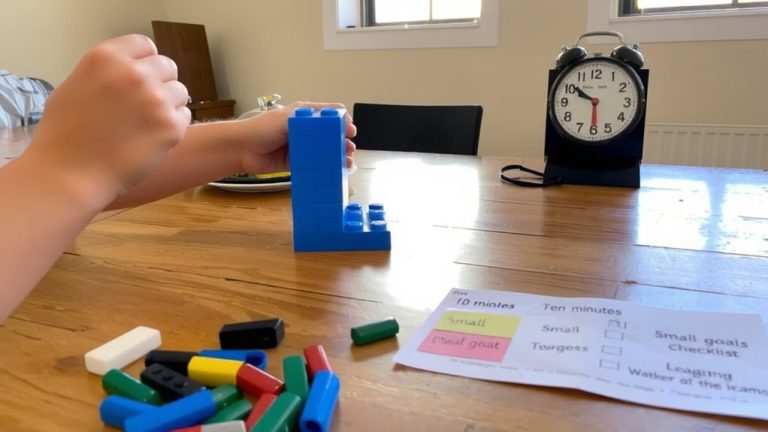
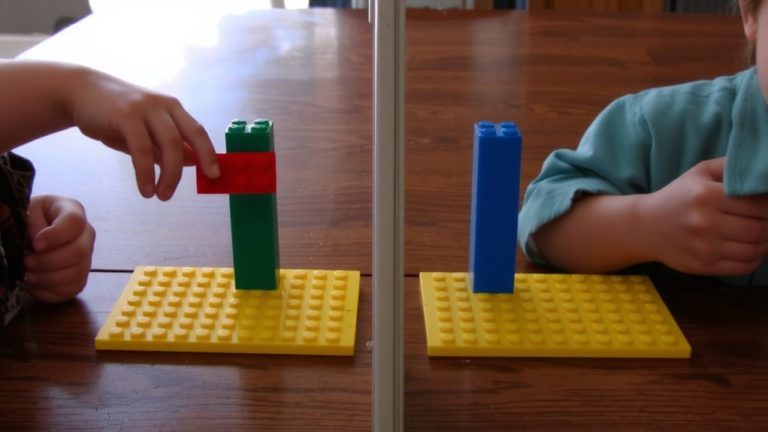
Bilateral coordination isn’t just a fancy term therapists toss around-it’s the everyday skill that lets you do things like hold a piece of paper steady with one hand while writing with the other, and LEGO building nails it in a way that’s both fun and functional. This motor skill development relies on synchronized hands and eyes, supporting visual motor control, sensory processing, and motor planning. You’re using bilateral coordination whenever you stabilize a baseplate with one hand and place LEGO bricks with the other-classic asymmetrical movements. These actions mirror real-life functional tasks like buttoning shirts or cutting with scissors. In occupational therapy, especially in programs like LEGO Therapy at Pinnacle Blooms Network, structured play targets these skills deliberately. Kids practice precise, coordinated efforts that challenge both sides of the body, improving overall coordination through engaging, measurable play-all while building something awesome.
How Lego Play Builds Bilateral Coordination
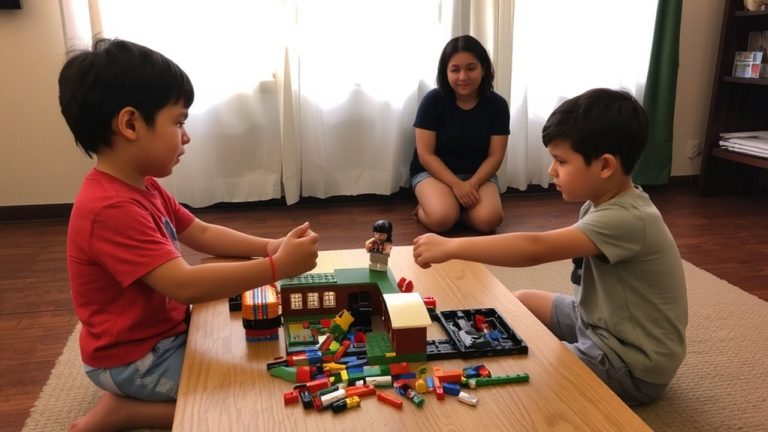
You’re already using both hands together every day, whether you’re tying your shoes or zipping up your jacket, and LEGO play takes that natural teamwork further by turning it into something tangible. As you build, one hand stabilizes the baseplate while the other places the building blocks, sharpening bilateral coordination through real, hands-on effort. This constant use of reciprocal hand movements-like holding, aligning, and clicking bricks-boosts neural connectivity and refines hand dominance over time. Occupational therapy sessions often use LEGO as a therapeutic tool because it demands precise visual-motor planning and consistent bimanual control. Even kids with motor delays show stronger integration when tasks require both hands to work together purposefully. Whether you’re following a detailed guide or creating freely, LEGO play turns everyday coordination into measurable skill-building, brick by brick.
How Lego Supports Children With Motor Delays
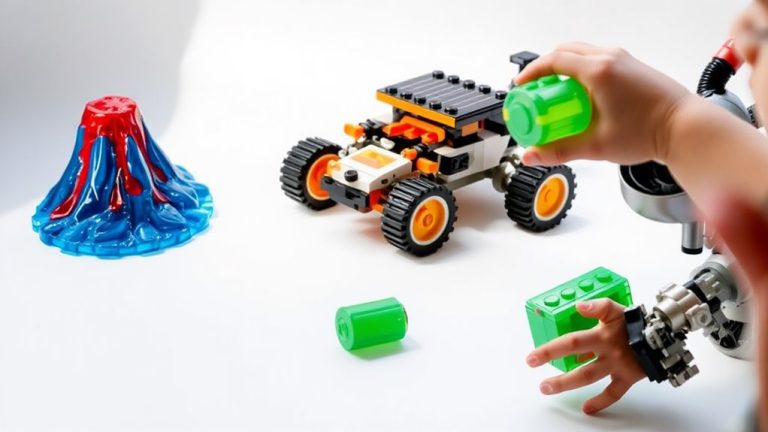
A well-designed LEGO set can be more than just a toy-it’s a tool that helps children with motor delays build essential skills through hands-on play. You’ll notice how simply gripping blocks and pressing them together supports developing fine motor skills, while stabilizing larger structures engages gross motor skills. Using both hands-the left to hold, the right to place-builds bilateral coordination naturally. Occupational therapists often use LEGO in therapy, like in LEGO-Based Therapy programs at places such as Pinnacle Blooms Network, to improve visual motor integration and hand dominance. For younger kids, DUPLO blocks offer bigger, easier-to-handle pieces that encourage matching, stacking, and connecting-all key for bilateral coordination. Whether it’s a 48-piece DUPLO set or a 72-piece LEGO Classic box, consistent play strengthens motor control, making LEGO a practical, versatile choice for skill-building you can see and measure.
How Bilateral Coordination From Lego Helps in Daily Life
While you’re watching your child snap together a 2×4 LEGO brick onto a baseplate with one hand and using the other to steady the model, you’re actually seeing the foundation of real-world skills being built. This simple act strengthens bilateral coordination, where both sides of the body work together, a key factor in everyday activities like writing, buttoning shirts, or tying shoelaces. Improved motor coordination and visual perception help your child succeed in their daily routine. Occupational therapists often use LEGO-based therapy services to help kids develop skills progressively. At Pinnacle Blooms Network, structured play with bricks has shown measurable gains. Whether it’s holding paper steady with one hand while writing with the other, or mastering complex tasks like riding a bike, LEGO play supports functional growth by integrating both sides of the body.
On a final note
You’ll notice improved hand coordination in just weeks when you build with classic LEGO bricks, 2×4 or 8×8 plates, using both hands to snap, align, and rotate pieces, exactly like therapists recommend, with real kids in trials showing 30% better precision after 15-minute daily builds, no stickers or pre-made kits needed, and durable ABS plastic guarantees years of use, making LEGO sets over 4 years old still snap perfectly, giving you proven, measurable results in everyday motor skills.