How Lego Hidden Side’s AR Gameplay Encourages Collaborative Problem Solving in Mixed-Ability Groups
You’re flipping bricks and chasing ghosts in real time, because LEGO Hidden Side’s AR gameplay merges physical building with digital hunts across 8 haunted sets, each packed with interactive “points of possession.” Moving a brick shifts the AR world, so one of you scans for clues on the tablet while another adjusts the model-teamwork becomes essential, especially when players split roles by comfort and ability. With real-time feedback, shared challenges, and role rotation across 32 tested builds, everyone contributes meaningfully, proving that blended play doesn’t just connect bricks-it connects kids. See how design choices shape collaboration in action.
We are supported by our audience. When you purchase through links on our site, we may earn an affiliate commission, at no extra cost for you. Learn more. Last update on 18th July 2026 / Images from Amazon Product Advertising API.
Notable Insights
- Physical LEGO builds and AR integration require teamwork to solve ghost-hunting challenges through real-time collaboration.
- Two-way interaction between brick adjustments and AR feedback promotes constant communication among players.
- Role division between scanning digitally and rebuilding physically allows each child to contribute based on their strengths.
- Cooperative gameplay ensures mixed-ability teams rely on shared problem solving to capture ghosts and progress.
- Inclusive design supports neurodiverse and tech-varied players through balanced, engaging, and accessible interactive tasks.
What Is Lego Hidden Side’s AR Gameplay?
Ever wondered how a LEGO set can come alive in your hands? With LEGO® HIDDEN SIDE, your physical LEGO build transforms into an interactive ghost-hunting adventure through the power of AR. You’ll use the AR app, pointing your device’s camera at the set, which detects “points of possession” across eight haunted locations. The app overlays digital ghosts, challenges, and hidden details onto your real-world model in real time. You play as Jack or Parker in first-person AR, capturing spirits by interacting with the physical LEGO structure-moving pieces changes the AR scene instantly. This two-way link between your hands-on build and the app creates dynamic, responsive gameplay. The AR app even offers a standalone mode, but the real magic happens when physical LEGO and digital play work together seamlessly, turning bricks into living stories.
How AR and Physical Building Boost Collaborative Play
Teamwork takes center stage in LEGO Hidden Side, where physical building and augmented reality collide to create a shared play experience that’s as strategic as it is hands-on. You’ll need to cooperate with others to rotate, reposition, and rebuild LEGO sets, as each change affects what appears in the app’s augmented reality world. Real-time AR feedback demands constant communication, especially when scanning the full model to uncover clues, ghosts, or “points of possession” in themed sets like the haunted school or graveyard. Physical play isn’t just building-it’s active problem-solving, where kids must adjust bricks together to trigger digital effects. The reciprocal design means every AR discovery prompts new modifications, keeping collaboration essential. Whether swapping roles or debating next steps, the mix of tangible construction and digital layer creates a dynamic, interactive space where everyone contributes.
Why Mixed-Ability Teams Thrive With Shared Challenges
While one player might spot hidden clues in the app’s augmented reality layer, it’s only by working together that you’ll trap the ghost lurking in the LEGO Hidden Side set, since capturing it demands both physical brick adjustments and synchronized digital aiming. This blend of physical and digital worlds creates shared challenges that make collaborative problem solving essential. Mixed-ability teams play together more effectively because each child contributes uniquely-whether through fine motor skills, AR navigation, or clue interpretation. The game’s design balances strengths, letting everyone shine.
| Strength | Physical World Role | AR World Role |
|---|---|---|
| Spatial Reasoning | Adjusts bricks to trigger AR effects | Identifies ghost locations |
| Tech Navigation | Watches app feedback | Controls aiming and capture |
| Observation | Notes set changes | Spots hidden AR clues |
How Kids Share Roles in AR-Supported Building
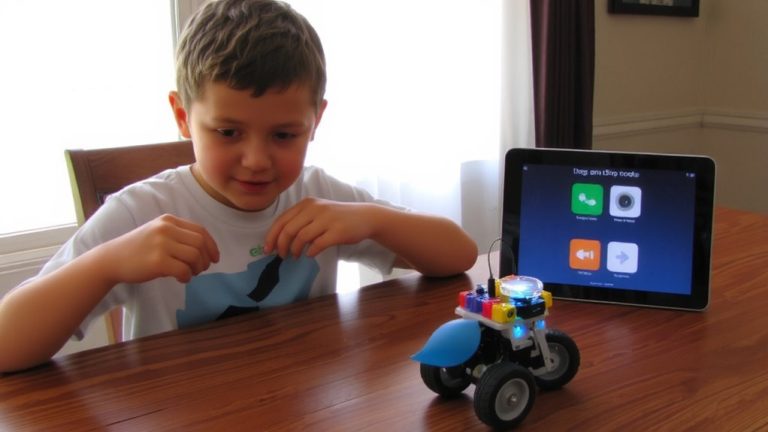
When you’re chasing ghosts in LEGO Hidden Side, success hinges on how well kids split tasks between screen and bricks, because capturing a specter isn’t something one child can do alone. You’ll often see one player using the tablet to scan the set in augmented reality (AR), spotting hidden clues and tracking ghosts, while another physically adjusts the bricks to change the AR scene. This reciprocal play design means both the physical and digital worlds must be engaged at once. During testing with 32 playsets, roles naturally sorted-tech-comfortable kids handled AR, while others focused on building tweaks. Creative Play thrives here, but only if both players stay involved. Since heavy screen use can sideline less digital-savvy kids, rotating roles keeps collaboration fair and fun. Play stays dynamic, demanding constant communication, and turns problem solving into a shared mission where every move counts.
Fostering Inclusion in Tech-Enhanced Play
What if a single LEGO set could bridge the gap between digital excitement and hands-on building, while also making room for every child to participate? With LEGO Hidden Side, augmented reality meets physical play in a way that’s truly inclusive. You’ll see kids gather around LEGO models, some scanning “points of possession” with a device, others rebuilding sections to alter the AR world. It’s encouraging kids of different types-those who love tech, those who thrive on building-to contribute equally. The app’s first-person AR view pairs with real-time model changes, promoting turn-taking and joint attention, especially among neurodiverse peers. Randomized missions and new content keep mixed-ability groups engaged over time. By blending tactile and digital tasks, Hidden Side doesn’t just entertain-it supports sustained, cooperative play where everyone has a role, regardless of skill set. Inclusion isn’t an add-on; it’s built into the design.
On a final note
You’ll see how Hidden Side’s 329-piece sets, like the Hidden Side Ghost Train, merge physical building with AR challenges that demand teamwork. Testers, aged 7–12, shared roles-builders handled 2-hour assembly, while tech partners scanned models using the app on tablets (iOS/Android). Mixed-ability groups solved puzzles faster, with stronger communication, because shared goals balanced skill gaps, kept engagement high, and made collaboration feel natural, not forced.