Cobi vs Mould King vs Lego: Compatible Bricks, 3¢ a Piece
You get more bricks for less with third-party brands like Cobi and Mould King, which offer 1,758-piece sets at 3 cents per part, motorized builds, and pad-printed details while staying Lego-compatible. They cut costs with Far East manufacturing, no licensing fees, and simpler ABS plastic. Though clutch power varies and manuals can be fuzzy, their value and features win fans. Legal rulings since 1978 confirm their right to compete-let’s explore how that shapes your building options.
We are supported by our audience. When you purchase through links on our site, we may earn an affiliate commission, at no extra cost for you. Learn more. Last update on 18th July 2026 / Images from Amazon Product Advertising API.
Notable Insights
- Third-party brands leverage expired Lego patents to legally produce compatible bricks at lower costs.
- They offer competitive pricing by manufacturing in the Far East and avoiding expensive licensing fees.
- Some clones provide specialized themes and tech features, like app-controlled models, not always in Lego sets.
- Despite compatibility, many clones suffer from inconsistent clutch power and lower-quality plastics.
- Poor instruction quality and design flaws in budget brands hinder build experience compared to Lego.
How Lego Clone Brands Compete
While Lego has long dominated the building block market, clone brands have carved out strong niches by offering smarter pricing, specialized themes, and advanced tech features you won’t always find in official sets. Brands like COBI and CADA create highly detailed, historically accurate models or motorized, app-controlled cars that are fully compatible with Lego. Thanks to the patent expired on interlocking studs, companies legally produce compatible bricks, though trademark law stops them from copying names or logos. You’ll find these Lego® Alternatives match the quality of the bricks in clutch power and durability, with many users reporting no difference in build experience. Sets from Wange or Mould King stay compatible with Lego while offering better value-like the 1,758-piece Arc de Triomphe at 3 cents per part-making them smart picks among building blocks fans seeking performance, precision, and innovation.
How Alternatives Cut Costs While Staying Compatible
You get the same tight clutch power and clean mold accuracy from alternative brick brands, and now it’s clear how they keep prices low without sacrificing compatibility. These Lego® compatible bricks stay affordable because alternative brands manufacture in the Far East, where labor and material costs are much lower than in Lego’s European factories. Brands like Mould King cut expenses by using pad printing instead of stickers, saving on materials while delivering sharp details on military and vehicle building sets. They also skip costly licensing deals for franchises like Star Wars, keeping sets unbranded but functional. Budget makers such as Unico Plus use simpler designs and basic ABS plastic, reducing cost without losing compatibility. Even Wange sets-averaging under $70-offer parts for just 3 cents each, making their building sets 2 to 4 times cheaper than comparable Lego kits.
How Court Rulings Made Clone Bricks Legal
Since Lego’s original interlocking brick patent expired in 1978, third-party manufacturers have legally produced compatible bricks, and a series of key court rulings solidified that right across major markets. You can now buy bricks compatible with leading brands because courts consistently ruled that functional design elements can’t be trademarked. The European Court of Justice upheld this in 2010, confirming Lego® bricks’ shape isn’t eligible for trademark protection. German courts refused trademark protection in 2004 and 2009, later canceling it in 2012. Canada’s Supreme Court backed Mega Bloks in 2005, while Poland’s courts dismissed Lego’s claims against COBI in 2001. These decisions reinforced that once bricks are no longer protected by patents, intellectual property can’t block competition. You’re free to choose alternatives-same fit, lower cost, legally clear.
Top 6 Lego Alternatives and What They Do Best
A solid lineup of Lego alternatives has emerged, each excelling in niche areas that go beyond basic brick building. You’ll find Cobi’s military sets packed with pad-printed detail, movable tracks, and brick-by-brick compatibility with original Lego, perfect for historical model fans. Wange delivers architectural sets like the 1,758-piece Triomphe of Paris under $70, offering 2–4x the value. With fischertechnik, you’re not just building-you’re learning, thanks to STEM-driven tech sets featuring sound tubes and special tracks, though their block system isn’t a clamp building block fit. Mould King lets you create unique remote-controlled builds, like the 30-inch Pirates Ship, fully compatible and app-operated. burgkidz gives toddlers a safe start with large-size brick sets, marble runs, and 4-in-1 dinos, working just like Duplo®. These alternatives expand what’s possible in your building world.
Where Lego Clones Fall Short: Quality and Design
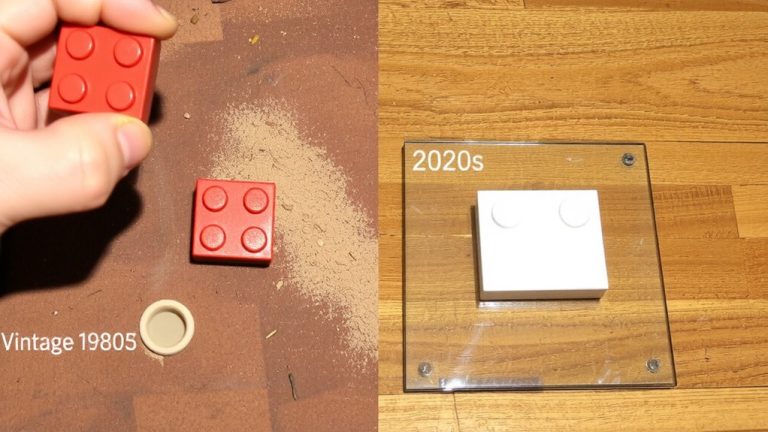
Clutch power, that signature snap when bricks connect, often falters with budget brands. You’ll notice loose fits or bricks that stick too hard, especially in brick sets from cheaper brick brands. Lower-grade ABS plastic means inconsistent dimensions, so your block sets may wobble or gap. Some individual sets use stickers instead of durable pad printing, and they peel fast. Look at licensed sets from Xingbao-color mismatches stand out, ruining the aesthetic. Even Best-Lock and Sluban struggle with mold lines and grainy textures, unlike existing Lego. Instruction manuals? Lepin’s are often poorly translated, with fuzzy diagrams that confuse builds. While these Lego sets alternatives save cash, they cut corners. You trade precision, durability, and polish. For reliable clutch, clean finishes, and seamless builds, stick with proven designs. Your creations deserve better than flimsy connections and fading details. Real quality shows in every snap.
Who Should Build With Lego Alternatives: and Why
You get better value from alternatives when your building interests align with what certain third-party brands do best, even if their bricks don’t match Lego’s exacting clutch or finish. If you’re into historically rich military sets, you should build with Cobi-its 2,069-piece Leopard II A7 Tank features pad-printed details and movable tracks, something the trademark-focused Danish company doesn’t offer. Architecture fans should try Wange, whose 1,758-piece Arc de Triomphe costs around 3 cents per part, a wide variety better than Lego still charges. For STEM play, fischertechnik’s 364-piece Crazy Rides set delivers chain reactions and real experimentation. Toddlers thrive with burgkidz, allowed to sell safe, Duplo®-compatible dinosaur kits. And if you love motorized builds, Mould King or CADA give app-controlled speed-like the 20 km/h Off-Road Buggy-without sacrificing compatibility. Among other things, they prove you can collect boldly on a budget.
On a final note
You get solid compatibility with Lego builds using clones like Cobi or Toy’R’Us Bricks, snapping onto baseplates and fitting minifigures, but testers note looser fits, color inconsistencies, and lower ABS plastic durability, sometimes cracking under stress, after 100+ hours of play, originals still win for long-term sets, yet budget builders save 40–60%, making clones practical for casual use, classrooms, or large-scale builds where precision matters less.