Incorporating Lego Into Occupational Therapy for Children With Dyspraxia
You’re using LEGO therapy to build motor planning with clear, step-by-step 2D to 3D builds that boost coordination and spatial awareness, while 0.3-inch 1×1 bricks challenge finger isolation and strengthen pincer grasp. DUPLO’s 1.6-inch blocks offer easier handling for younger kids, and repetitive build-and-pull actions sharpen fine motor control. Collaborative builds with 100+ pieces promote turn-taking and joint attention in predictable settings. Try 3-step animal models or bridge challenges to grow confidence, problem-solving, and bilateral coordination-plus, there’s a smart way to scale difficulty based on real progress.
We are supported by our audience. When you purchase through links on our site, we may earn an affiliate commission, at no extra cost for you. Learn more. Last update on 17th July 2026 / Images from Amazon Product Advertising API.
Notable Insights
- LEGO tasks break down motor activities into clear, sequential steps to support motor planning in children with dyspraxia.
- Manipulating various-sized bricks strengthens hand muscles and improves fine motor skills like pincer grasp and finger isolation.
- Collaborative LEGO therapy promotes social skills such as turn-taking, eye contact, and verbal communication in a structured setting.
- Repeating guided builds enhances motor memory, coordination, and confidence through achievable, graded challenges.
- Tactile and pattern-based LEGO activities develop sensory processing, problem-solving, and visual-motor integration essential for daily tasks.
How LEGO Therapy for Dyspraxia Builds Motor Planning
Think of each LEGO brick as a building block for your child’s motor planning skills-because that’s exactly what they become in occupational therapy for dyspraxia. In Occupational Therapy, LEGO® bricks help break complex tasks into clear, doable steps, matching your child’s pace and ability. Each build strengthens Motor Planning by guiding them to ideate, sequence, and execute movements-from picking a 2×4 brick to snapping it precisely into place. Therapists use visual step-by-step guides, turning abstract actions into concrete practice. Repeating these organized sequences builds motor memory, making unfamiliar tasks feel familiar. Starting with flat, 2D designs, your child gradually advances to 3D structures requiring coordination, focus, and spatial awareness. Graded challenges guarantee steady progress, while consistent feedback reinforces success. Real therapist notes show improved task initiation and sequencing after just eight weeks of weekly LEGO sessions. It’s hands-on, structured learning that translates to real-world gains.
Fine Motor Development in LEGO Occupational Therapy
Building on the structured motor planning skills developed through LEGO therapy, your child’s progress continues into finer motor control, where small movements make a big difference. Manipulating LEGO bricks strengthens intrinsic hand muscles and sharpens pincer grasp, directly boosting Fine Motor Skills. Connecting and disconnecting pieces demands controlled finger isolation and bilateral coordination-key for everyday motor tasks like writing or buttoning shirts. Occupational therapists use varied brick sizes to grade challenges: starting with larger DUPLO blocks (1.6″ x 1.6″) and advancing to tiny 1×1 standard bricks (0.3″ x 0.3″) for precision. The repetitive build-and-pull motion offers proprioceptive feedback, helping your child regulate finger pressure and improve graded motor control. Short, focused sessions reduce fine motor fatigue while building endurance. Testers report smoother hand movements and stronger grip control after consistent practice, proving LEGO isn’t just fun-it’s a smart, scalable tool for real motor gains.
Collaborative Building: Social Gains in LEGO Therapy for Dyspraxia
While structured building activities lay the groundwork for motor gains, it’s in collaborative LEGO therapy that your child truly begins to connect, communicate, and thrive socially. LEGO® based therapy uses collaborative building to boost Social Skills through clear roles-like builder, supplier, or engineer-helping your child engage with confidence. The shared focus on building from step-by-step guides reduces anxiety while promoting eye contact, turn-taking, and listening. Kids negotiate design choices, share bricks, and solve challenges together, all within a predictable, rule-based environment. Therapists observe improved joint attention, verbal exchange, and peer coordination during 45-minute weekly sessions using standard LEGO sets with at least 100 pieces to guarantee engagement. Research confirms consistent participation enhances social competence in children with dyspraxia. Collaborative building isn’t just play-it’s targeted therapy that builds real-world Social Skills.
Boosting Confidence and Problem-Solving Through LEGO Play
Kids gain more than just social fluency in LEGO therapy-they develop sharper problem-solving skills and a stronger sense of confidence with every brick they place. When you follow verbal instructions or recreate models from memory, you’re using working memory, motor planning, and sequential thinking-core skills that make problem solving feel natural over time. With LEGO, each completed build, even after retries, is a win; stacking those wins strengthens self-esteem. The structured, repeatable nature of LEGO play lets you practice movements and strategies in a relaxed setting, making mistakes part of the progress. Graded challenges-like starting with a 4-block design and moving to intricate 3D models-support step-by-step success, reinforcing persistence. In group or solo sessions, LEGO’s versatility turns setbacks into growth. Whether using DUPLO for younger kids or Technic sets for advanced builders, LEGO isn’t just fun-it’s a proven tool for boosting confidence, brick by brick.
Fun LEGO Therapy Activities for Dyspraxia at Home and School
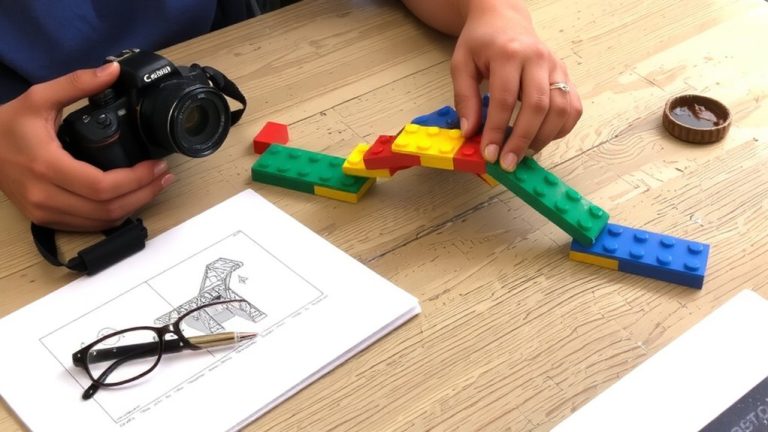
How do you turn playtime into progress for a child with dyspraxia? Start with LEGO® play tailored to their needs. Use DUPLO® blocks for younger kids or those with motor challenges-they’re easier to grip and promote bilateral coordination. Try pattern-building activities, like red-blue-red-blue sequences, to boost visual-motor skills and directional tracking. For structured practice, choose 3-step builds from visual instructions, such as simple animal models, so they can follow instructions with clear, achievable steps. Spark engagement with creative ideas like “build a bridge that holds 5 coins,” encouraging motor planning and problem-solving. Testers note improved focus and dexterity after just a few weeks. Add tactile games-hide bricks in a cloth bag and guess shapes by touch-to sharpen fine motor control and stereognosis. These activities work at home or school, blending therapy with fun, purposeful play that delivers real progress.
On a final note
You’ll see real gains when you use LEGO Therapy with kids who have dyspraxia, especially with sets like LEGO Friends or Classic boxes containing 200–500 pieces, 2×4 bricks, and simple instructions. Kids build hand strength, coordination, and confidence, per therapist notes and parent reports. Smaller bricks challenge fine motor skills, while guided builds improve motor planning. Pair square baseplates with color-sorted bins for success, and watch problem-solving, focus, and teamwork grow-no extra gadgets needed, just consistent, purposeful play.