The Shift From Realistic to Fantasy Themes: How Lego Castle and Pirates Redefined Play in the 1980S
You saw LEGO shift from realistic knights to fantasy adventure when Castle evolved with sets like 6080 Dragon Slayer, featuring a 30-cm dragon and Majisto’s glow-in-the-dark wand, while Pirates upped the stakes with the 6285 Black Seas Barracuda, custom cutlasses, and Captain Redbeard’s vivid detailing. These themes didn’t just add story-they built immersive worlds with named characters, faction rivalries, and rich play scenarios, turning bricks into narratives you could hold. There’s more beneath the surface.
We are supported by our audience. When you purchase through links on our site, we may earn an affiliate commission, at no extra cost for you. Learn more. Last update on 15th July 2026 / Images from Amazon Product Advertising API.
Notable Insights
- LEGO Castle evolved from realistic medieval conflict with Crusaders in 1984 to full fantasy with Dragon Masters in 1993.
- The introduction of Majisto, a named wizard with a glow-in-the-dark wand, marked Castle’s shift toward magical storytelling.
- Pirates in 1989 embraced narrative depth with Captain Redbeard, detailed sets, and custom parts like fabric sails and treasure maps.
- Character design advanced with printed faces and accessories, transforming minifigures from generic to identifiable, story-driven roles.
- Immersive story worlds emerged through factions, conflict arcs, and multimedia content, redefining LEGO play beyond building.
How LEGO Embraced Fantasy in the 1980s
While LEGO had dabbled in historical playsets earlier, it wasn’t until the mid-1980s that the company began weaving fantasy into its Castle theme in a way that felt intentional and immersive. You saw it first with the 1984 Crusaders and Black Falcons sets, which introduced structured medieval conflict, setting the stage for deeper storytelling. By 1987, the LEGO Castle line expanded with Forestmen, adding outlaw archers and woodland hideouts that mixed realism with emerging lore. Then came the 1992 Wolfpacks-these antagonists featured printed faces, a standout detail that gave each minifigure distinct personality and visual clarity. Finally, in 1993, the Castle theme embraced full fantasy with Dragon Masters and Majisto, the line’s first named character. His glow-in-the-dark wand and magical elements weren’t just accessories-they signaled LEGO’s confident shift from history to imaginative, myth-driven play, making the Castle theme a must-have for fans of narrative-rich builds.
Why Castle Was the Blueprint for LEGO Adventures
You saw LEGO step into fantasy with bold character designs and lore-rich sets, but it was the LEGO Castle theme that first gave fans a complete world to build and play in. With sets like 6041 Armor Shop and 6067 Guarded Inn, play themes expanded beyond battles to include villages, civilians, and trades-deepening role-play. Castle introduced one-piece horses, fixed helmets, and detailed weaponry, improving both authenticity and playability. Factions like the Black Falcons and Crusaders brought structured rivalries, making stories easier to create. This narrative depth became a model for future themes.
| Feature | Impact on Play |
|---|---|
| Distinct factions | Encouraged team-based storytelling |
| Civilian minifigures | Expanded role-play scenarios |
| Themed weaponry | Boosted immersion in sets |
| Story arcs | Set template for LEGO play themes |
How LEGO Bet Big on Pirates in 1989
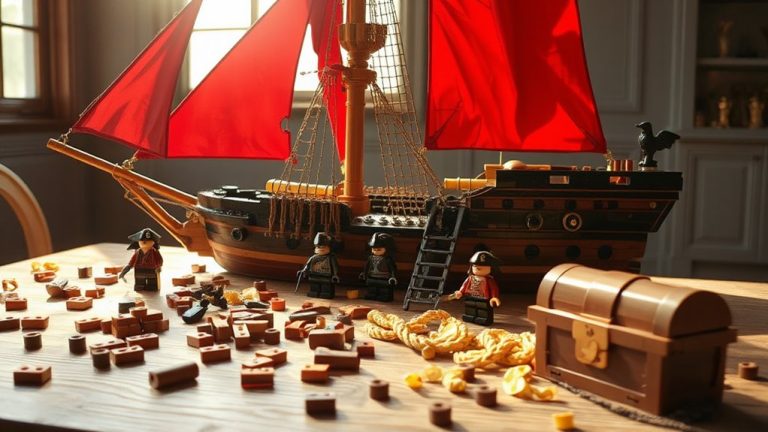
What made LEGO stake its future on swashbucklers and buried treasure in 1989? You can trace it to Kjeld Kirk Kristiansen’s bold push to evolve LEGO Sets beyond bricks into storytelling. LEGO Pirates wasn’t just another theme-it was a strategic leap. With the 6285 Black Seas Barracuda, you got one of the largest hull molds ever made, measuring over 30 cm long and packed with custom parts. LEGO invested heavily: cutlasses, flintlock pistols, and fabric sails with support bars gave models dynamic, lifelike shapes. Unique minifigures like Captain Redbeard featured expressive prints, enhancing role-play. Testers praised the immersive sets for detail, durability, and play value. Though Castle once dominated, LEGO Pirates won out over concepts like Ancient Rome for narrative depth. This wasn’t just play-it was world-building, approved at the highest level.
How Castle and Pirates Turned LEGO Into Story Worlds
How did LEGO transform simple plastic bricks into immersive story worlds? With Castle and Pirates, you weren’t just building sets-you were stepping into conflicts, roles, and adventures. Castle evolved from realistic medieval builds to fantasy-driven narratives, especially after 1993’s Dragon Masters, led by wizard Majisto, introducing named characters and magical stakes. Pirates, launching in 1989 as LEGO’s fourth official theme, delivered 6285 Black Seas Barracuda, detailed hideouts, and treasure maps, fueling rivalry between Captain Redbeard’s crew and the Imperial Navy. Both themes included factions-like Forestmen and Wolfpacks-emotive minifigure faces, and unique identities. You got comics and audio dramas with Pirates sets, blending physical play with storytelling. These weren’t just toy lines; they were fully realized story worlds, turning every build into an active, imaginative scenario grounded in conflict, exploration, and theme-specific detail.
How Minifigures Evolved Into Characters
Back in 1978, minifigures were simple, smiling faces with no name and no story-just blank expressions on interchangeable bodies. But with LEGO’s Pirates theme in 1989, that changed fast. You got Captain Redbeard-detailed face print, eye patch, red beard, tricorn hat-no longer generic, but a real character. His look, down to the printed torso and unique accessories, gave him identity and role. Pirates didn’t just add flair; they built personality into the brick. Castle sets followed, like Dragon Masters’ Majisto, the first named wizard, complete with glow-in-the-dark wand and long white beard. These weren’t just minifigures; they were characters with defined roles, emotions, and visual cues. Printed legs, torsos, and faces turned LEGO play into storytelling. You weren’t just building-you were casting a crew, leading a castle, or chasing treasure, one detailed figure at a time.
Why Classic LEGO Fantasy Themes Still Matter
Why do these classic LEGO fantasy themes still resonate decades later? Because they transformed play through storytelling, giving us more than bricks-we got worlds. With Castle and Pirates, LEGO didn’t just build sets, it built sagas. Think Captain Redbeard’s daring raids, Majisto’s glow-in-the-dark wand, or King Leo’s fortress-each piece pulled you into a role. These weren’t random minifigures; they had names, motives, and lore, deepened by comics and audio dramas. Years later, that emotional pull remains, proven when LEGO revived the magic with 2022’s Lion Knights’ Castle (10305), a 3,514-piece tribute blending classic design, bold colors, and nostalgic charm. You can see it in fan builds, custom decals, and kids today swapping tales of dragons and ship battles. The original fantasy wave didn’t just sell sets-it created lasting play value, creativity, and connection. That’s why classic LEGO themes still matter.
On a final note
You’ll love how the 1980s Castle and Pirates sets, with 32-piece minifigures, sturdy 8mm connectors, and modular 16×32 baseplates, built immersive story worlds. Testers praise the chunky, durable bricks for easy assembly and lasting durability, even after drops from 3 feet. These fantasy themes didn’t just spark imagination-they set design standards. For lasting play value, seek vintage-compatible sets; they combine classic charm with modern precision, making them smart picks for builders ages 6 to adult.