What Made Lego Fabuland Unique—and Why It Was Ultimately Discontinued in 1980
You got animal-headed figures like Edward Elephant and Bonnie Bunny, standing 2.5 inches tall with movable limbs, designed for kids 4–8 needing tougher, simpler builds. Fabuland bricks used standard studs, so they clicked right onto classic LEGO, easing the jump from DUPLO. Story-rich booklets mixed comic-style builds with play scenes, boosting confidence and creativity. Despite strong European appeal, it ended in 1989-weak U.S. sales and a shift to minifigure systems sealed its fate, but its DNA lives on in today’s themed sets. See how later lines kept its spirit alive.
We are supported by our audience. When you purchase through links on our site, we may earn an affiliate commission, at no extra cost for you. Learn more. Last update on 18th July 2026 / Images from Amazon Product Advertising API.
Notable Insights
- Lego Fabuland uniquely combined story-driven play with larger, sturdy bricks compatible with standard Lego sets.
- It featured animal-headed characters like Edward Elephant, designed for imaginative roleplay and narrative development.
- Each set included comic-style instruction books that doubled as picture stories to engage young readers.
- Fabuland bridged DUPLO and classic Lego, helping children aged 4–8 transition to complex building.
- It was discontinued in 1989 due to weak U.S. sales and a company shift toward minifigure-based themes.
What Lego Fabuland Was: and Why It’s Unique
You’ve probably heard of LEGO’s classic minifigures and DUPLO bricks, but LEGO Fabuland was something different-a smart, story-driven step between them that only came around once. FABULAND was a unique LEGO theme designed for kids aged 4–8, easing the shift from Duplo with larger, sturdier pieces that still clicked perfectly with standard sets. The characters had animal heads, movable limbs, and names like Edward Elephant, making them instantly engaging. Unlike earlier lines, Fabuland wasn’t just about building-it was about storytelling, with books and instructions woven into each box. The sets included oversized bricks, prefabricated walls, and vehicle bases later reused in Pirates and Harry Potter. This theme also launched LEGO’s first multimedia push-clothing, cards, even a 1987 TV show. FABULAND wasn’t just a toy line; it was LEGO’s first full narrative world, imaginative, durable, and built to grow with young builders.
How Fabuland Bridged Duplo and Classic Lego
Fabuland wasn’t just built differently-it was designed to grow with you. As a bridging building system, Fabuland bridged DUPLO and standard Lego by offering bricks slightly smaller than DUPLO but larger than classic LEGO bricks, making them easier for small hands to connect. You’ll notice these pieces still used standard studs, so they clicked seamlessly with regular LEGO and BASIC sets. Larger sets included detailed, prefab walls and roofs that simplified construction, letting young builders create complex scenes fast. This wasn’t just play-it was preparation, easing kids from big-block simplicity into intricate builds. Testers found children aged 4–8 adapted quicker to standard Lego after Fabuland, thanks to its balanced size, compatibility, and intuitive design. You got a smarter ramp-up without sacrificing creativity, making Fabuland a practical, confidence-building step on the path to advanced LEGO building.
Meet the Animal Characters That Made Fabuland Special
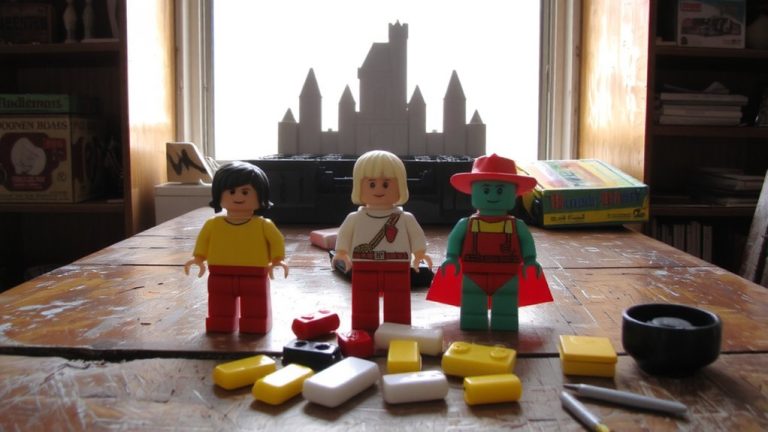
Think of Fabuland’s cast as the heart of the system-lovable, expressive animal figures that brought scenes to life through personality and play. The Fabuland characters, like Edward Elephant, Bonnie Bunny, and Morty Mouse, weren’t just cute-they had jobs, tools, and uniforms that sparked imaginative roleplay. These animal characters stood about 2.5 inches tall, bigger than minifigures but smaller than Duplo, perfect for small hands. With movable arms, legs, and heads, they encouraged dynamic play. Bertie and Barty Bulldog played cops and firefighters, adding real-world storytelling depth. Over 140 variations existed, with country-specific names like Ricke Räv becoming Freddie Fox. In 1986, updated designs featured sharper torso printing and livelier facial expressions, while keeping their signature animal head molds. Testers praise their durability, ease of use, and how they balanced simplicity with creative potential for kids aged 4–8.
Building Stories: When Instructions Became Picture Books
Those expressive animal figures didn’t just stand around-they had jobs, tools, and full lives, and LEGO made sure you got to see them in action through something no other theme offered: instruction booklets that doubled as picture books. You’re not just building sets-you’re following a Mouse, a raccoon, or other FABULAND figures through a story book that guides each step. In set 324 Ricky Raccoon, the booklet unfolds like a comic, blending building stories with character chats and alternate build ideas. Larger sets like 3660 Fisherman’s Cottage turned 20-minute builds into 30-page read-along events. German instructions for 350 City Hall wove dialogue and building sequences into one seamless tale. This storytelling innovation was baked into the FABULAND theme from the start, making play and construction feel alive. No longer just instructions, they became part of the experience-smart, engaging, and ahead of their time.
From Storybooks to TV: Fabuland’s Media Expansion
| Media Type | Example |
|---|---|
| Storybooks | Set 3660 booklet, *Edward* books |
| TV Series | *Edward and Friends* (19 episodes) |
| Playing Cards | Fabuland-themed deck |
| LEGO Games | Fabuland TV, comic strips |
Why Lego Really Discontinued Fabuland in 1989
A full decade of imaginative play came to an end when LEGO discontinued Fabuland in 1989, marking the close of a bold experiment in preschool storytelling and character-based building. You saw its colorful animal-headed figures and oversized bricks spark creativity, but Fabuland struggled in the U.S., leading LEGO to make a strategic shift toward themes with wider appeal. By 1989, the company prioritized the standardized LEGO System, favoring minifigures and modular builds over Fabuland’s unique molds. Though sets like 4790 Ship’s Wheel stayed in circulation, the line’s exclusion from major licensed products limited its reach. Even Edward and Friends, launched in 1987, didn’t boost long-term sales enough. LEGO ultimately discontinued Fabuland to streamline production, focus on scalable play patterns, and strengthen cross-theme compatibility-all critical for sustained global growth.
Fabuland’s Legacy in Modern Lego Themes
Color, charm, and chunky bricks-Fabuland’s DNA lives on in surprising ways across today’s LEGO lineup. You’ll spot Fabuland’s influence every time you handle a 4088 Brick, Modified 1x4x2 Center Stud Top, now common in regular Lego sets from Harry Potter to Westerns. That same quirky 4790 Ship’s Wheel still turns in Pirates, Star Wars, and Castle themes, a mold first spun in the FABULAND universe back in 1985. Even Disney’s Mickey Mouse line, nicknamed “Modern Fabuland,” reused signature pieces, blending nostalgia with modern builds. Fabuland’s focus on storytelling and individual characters shaped Belville and Scala, where LEGO minifigures got more expressive. And don’t think the love’s faded-AFOLs still celebrate Fabuland through nods like the Fabu-Fan minifigure in The LEGO Movie. These LEGO sets prove charm, character, and clever design never go out of style.
On a final note
You’ll notice Fabuland’s chunkier 2×2 and 2×4 bricks, scaled between Duplo and classic Lego, made builds easier for small hands, while animal figures with movable arms added play value. Testers praised the story-driven sets, like the 325-piece Pet Shop, for encouraging imaginative play. Though discontinued in 1989 due to overlapping themes and rising production costs, its blend of narrative and building lives on in themes like Friends and City.