Using Lego to Model Historical Architecture in Social Studies Units on Ancient Civilizations
You can recreate ancient ziggurats, Greek homes, and Roman temples with LEGO using Stud.io and references like the Atlas of Ancient Rome, scaling builds to 1:650 for accuracy. Students at Kempsey Primary used tan bricks and 2-stud-wide staircases to model Mesopotamian temples, while SPQR project builds leveraged the Forma Urbis Romae for urban precision. Microscale aqueducts tilt at 1° for gradient realism, and cheese slopes detail temples. This hands-on approach turns history into something you can build. There’s more to explore when you start constructing.
We are supported by our audience. When you purchase through links on our site, we may earn an affiliate commission, at no extra cost for you. Learn more. Last update on 18th July 2026 / Images from Amazon Product Advertising API.
Notable Insights
- LEGO models of Greek houses and Roman aqueducts integrate architectural accuracy with history, art, and engineering in social studies units.
- Students use archaeological plans and resources like the Atlas of Ancient Rome to build historically accurate microscale dioramas in LEGO.
- Building Mesopotamian ziggurats with tiered designs and ceremonial staircases teaches urbanization, religion, and ancient construction techniques.
- Classroom projects align with curriculum standards by connecting LEGO builds to cultural practices, map analysis, and primary source research.
- Students share LEGO history projects through digital media, school fairs, and interdisciplinary activities like mosaic art and historical reenactments.
Use Lego to Teach Ancient Architecture
While you’re exploring ways to bring ancient architecture to life in the classroom, LEGO offers a surprisingly precise and engaging solution. Using a LEGO brick, students reconstruct Greek houses from archaeological plans, guided by tools like LEGO Digital Designer for accurate 3D modeling. The Grand Designs in Ancient Greece project blends history, art, and engineering, letting you build Classical structures with classroom-tested precision. At Kempsey Primary, students crafted LEGO mosaics for androns, linking design to cultural practice. For Rome, Rocco Buttliere’s 1:650 microscale diorama-built in Stud.io with references like the *Atlas of Ancient Rome*-shows how detail and scale (Colosseum at 20 cm wide) enhance authenticity. When teaching Mesopotamian ziggurats, kits using 3–5 tiers and 2-stud-wide staircases mirror temples to Nanna. Each LEGO build reinforces spatial reasoning, historical context, and craftsmanship-making ancient design tangible, brick by brick.
Research Real Ancient Sites With Students
How do you turn a LEGO build into a real archaeological journey? You start by using LEGO bricks to research real ancient sites, grounding your models in evidence. Study the Great Ziggurat of Ur-100 feet tall, dedicated to moon god Nanna-and map its tiers accurately. Tap into Rocco Buttliere’s SPQR project, which uses the 1901 Forma Urbis Romae at 1:650 scale, blending historical cartography with brick builds. Reference Italo Gismondi’s Plastico di Roma Imperiale at 1:250 for urban planning precision. Use Andrea Carandini’s *Atlas of Ancient Rome* (2017) to verify artifact placement and architectural details. Analyze Buttliere’s Forbidden City or Jerusalem dioramas to replicate structural orientation and material choices. Students don’t just stack bricks-they test layouts, revise proportions, and align each model with archaeological data, turning speculation into informed, tactile learning with every build.
Build Roman Aqueducts and Temples With Lego
You’ve studied the sites, now it’s time to build them-starting with Roman aqueducts and temples that mirror real engineering and design. In LEGO History, Roman Empire structures shine through precise arches, each spanning 3–4 studs to match landmarks like the Pont du Gard. Use wedge plates at 14° angles to reflect ancient Rome’s irregular city layout, just like the misalignment near the Forum Romanum. For aqueducts, tilt segments to show a 1-foot drop per 1,000 feet-this gradient highlights Roman engineering precision. Microscale temples, like the Temple of Claudius in Rocco Buttliere’s SPQR, PHASE I, use cheese slope louvers and minifigure hands as Nike statue wings, all at 1:650 scale. Reference the Atlas of Ancient Rome for accurate column placement, temple orientation, and local materials. These builds aren’t just fun-they’re functional lessons in architecture, urban planning, and the enduring legacy of the Roman Empire.
Connect Lego Builds to History Standards
A well-built LEGO model isn’t just a display piece-it’s a teaching tool that fits right into your curriculum when you align projects with history standards. When you use LEGO to reconstruct a ziggurat, you align with educational standards by exploring Mesopotamian urbanization, religion, and tiered mudbrick design. Building the Great Ziggurat of Ur at 3–5 tiers supports Common Core through map analysis and writing about Nanna’s role in Sumerian life. With Ancient Greek homes, you use LEGO to examine domestic layouts and gender roles, connecting to civic standards. Creating SPQR Phase I at 1:650 microscale challenges students to use Rodolfo Lanciani’s Forma Urbis and Gismondi’s Plastico for accuracy, sharpening historical thinking. Rebuilding the Colosseum or Temple of Claudius means digging into primary sources like the Atlas of Ancient Rome (Carandini, 2017), ensuring your project meets world history benchmarks while staying hands-on, precise, and standards-aligned.
Share Student Lego History Projects
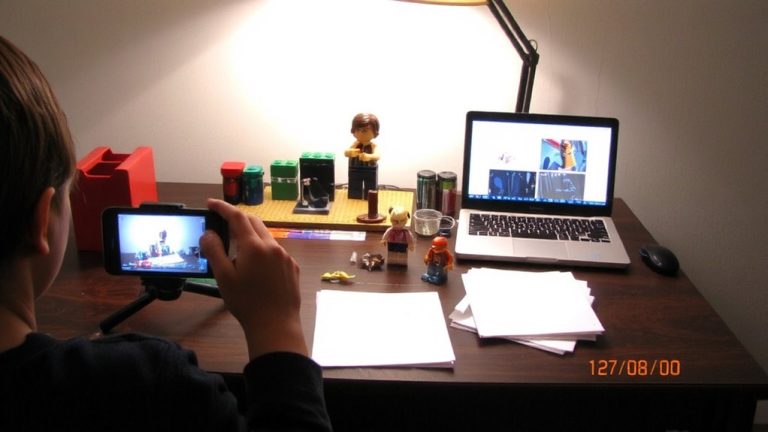
What happens when history steps off the page and into your hands? You’ll see students light up as they share LEGO history projects that blend creativity with curriculum. At Kempsey Primary School, kids always enjoyed building 3–5 tiered ziggurats with 2-stud wide staircases, accurately modeling Mesopotamian religious architecture using tan, white, or yellow bricks. Others designed LEGO mosaics for Ancient Greek androns, combining art, math, and history. Third graders even assigned monetary values to bricks while constructing houses, reinforcing financial literacy. Using LEGO Pirates and Kingdoms Chess Sets, they reenacted the Siege of Jerusalem and Fall of Rome with precision. A microscale LEGO movie set of Fair Haven’s past invited tactile storytelling. Share these builds digitally or at school fairs-don’t forget to include your class email address for collaboration requests. Real student engagement, measurable results.
On a final note
You’ll see how 6×8 Lego baseplates, classic bricks, and tan and white pieces make accurate aqueducts and temples at 1:100 scale, matching state history standards, while students report better recall after building, and teachers confirm improved engagement during units on Rome or Mesopotamia, so invest in bulk sets like Lego Education Classic 45004 for flexibility, durability, and real classroom impact-no digital distractions, just hands-on historical modeling that works.