Incorporating Lego Into Financial Literacy Units by Simulating Business Startups and Product Design
You can use LEGO bricks to teach financial literacy by simulating real startups, building prototypes like $50 dog houses or micro skyscrapers in minutes using 50-brick budgets, tracking inventory with FIFO or LIFO, and calculating contribution margins-like a $20 rocket with $8 costs yielding $12 profit per unit-the hands-on way teachers say boosts engagement, especially for first-gen students, while using kits like LEGO Serious Play with 219 consistent pieces for reliable, repeatable financial simulations that make cost discipline tangible; real classrooms prove it works.
We are supported by our audience. When you purchase through links on our site, we may earn an affiliate commission, at no extra cost for you. Learn more. Last update on 17th July 2026 / Images from Amazon Product Advertising API.
Notable Insights
- Use LEGO bricks to simulate product design under budget constraints, teaching cost estimation and resource allocation.
- Assign student roles in startups to track costs, manage inventory, and record transactions like sales on account.
- Apply FIFO and LIFO methods with physical bricks to visualize inventory valuation and financial reporting accuracy.
- Calculate contribution margin by subtracting brick-based variable costs from sale prices in mock product launches.
- Host investor pitch simulations using LEGO prototypes to develop financial communication, creativity, and adaptive thinking.
Why LEGO Boosts Financial Literacy
While abstract financial concepts can feel out of reach, LEGO bricks turn them into something you can hold, move, and build with-making learning stick in ways textbooks often don’t. With LEGO-based simulations, students learn by doing, assigning bricks as inventory, tracking transactions, and role-playing as customers or consultants. In the Brick-by-Brick Accounting Simulation, real-world scenarios-like launching a sustainable product-help you grasp inventory valuation and accounts receivable. These hands-on tasks align with core managerial accounting learning objectives, including revenue forecasting, cost estimation, and contribution margin analysis. Even in K–5 programs, LEGO challenges-like building a dog house under a $50 material limit-teach budgeting and resource allocation. You’re not just playing; you’re practicing financial decision-making. Teachers report higher engagement, especially among first-generation students, proving LEGO isn’t just for play-it’s a practical tool that turns complex ideas into clear, lasting understanding.
Build a Product Prototype in Minutes
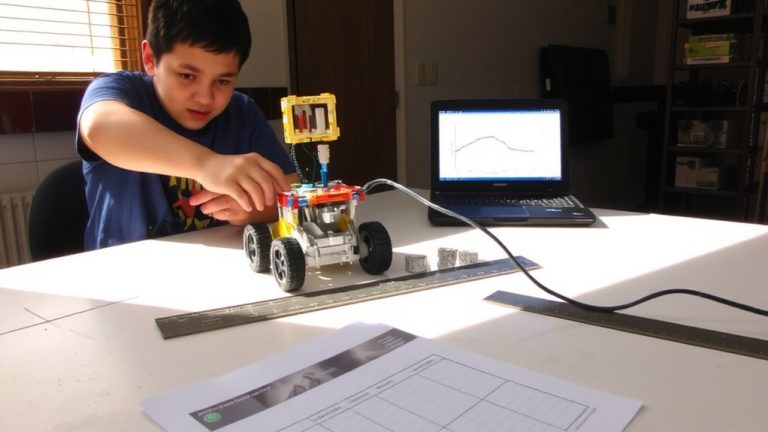
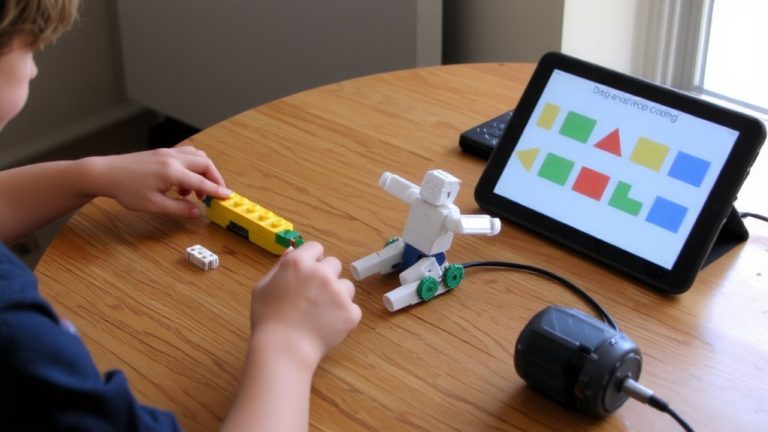
You’ve seen how LEGO turns abstract money lessons into something you can touch and test, and now it’s time to put those concepts into action by building real product prototypes in minutes. Students use LEGO Serious Play kits-packed with 219 bricks, figures, and connectors-to build a product prototype in minutes, like a micro skyscraper or dog house, under real design limits. In one test, a 60-second duck challenge with six bricks showed 14 of 15 designs were unique, proving fast creativity. Classic LEGO sets, paired with mini-figures, cut costs while keeping speed. In classrooms, kids physically assemble models to simulate inventory, production, and sales. The Serious Play Starter Kit stands out, offering consistent parts that snap together smoothly, making idea iteration reliable. Testers noted how quickly students shift from sketch to 3D, using bricks to visualize concepts, not just play. It’s hands-on, fast, and sharpens real-world design thinking without delay or clutter.
Set Budgets and Track Costs Like a Real Business
When you’re building a business model with LEGO, it’s not just about snapping bricks together-it’s about making every piece count, literally. You’ll set budgets based on real-world financial constraints, just like actual startups. Each team gets 50 bricks to design a micro skyscraper, forcing smart choices and trade-offs. You track costs at every stage-acquisition, assembly, and sale-using FIFO or LIFO methods to value inventory. Roles like retailer or consultant require precise recordkeeping, including receivables and doubtful accounts. Financial limits aren’t suggestions; they’re fixed, mimicking real capital restrictions. You’ll calculate contribution margins, project income, and adjust plans-all while staying within budget. Testers found the strict brick limits boosted focus, making cost discipline tangible. This isn’t just play: it’s hands-on accounting, where every brick has a cost, and every decision impacts your bottom line. You learn fast that tracking costs isn’t optional-it’s essential.
Track LEGO Inventory and Sales Accurately
| Transaction | Inventory Change | Accounts Receivable |
|---|---|---|
| Sale (on account) | -5 bricks | +$10 |
| Return | +2 bricks | -$4 |
| Monthly Close | Adjusted balance | Allowance applied |
You *learn* to value stock using FIFO or weighted average methods, ensuring your reports reflect real-world accuracy, all *using Lego bricks* to visualize cost flows.
Calculate Profit With Contribution Margin
Now that you’re tracking your LEGO inventory and sales with precision, it’s time to focus on what each build actually earns. You’ll calculate profit using contribution margin by subtracting variable costs-like bricks, packaging, and labor-from your selling price. Say your custom LEGO rocket sells for $20, and materials cost $8; your contribution margin is $12 per unit. That’s how much each sale puts toward covering fixed costs-booth rental, ads-and eventually profit. This is real BUSINESS SCHOOL math, but hands-on: you analyze pricing, adjust designs, and forecast break-even points. Testers found students grasped cost structures faster when using physical LEGO units to model decisions. By assigning dollar values to each brick, you isolate variable expenses and make smarter choices. Contribution margin isn’t just theory-it’s your tool for building a viable LEGO business, one profitable brick at a time.
Pitch Your LEGO Business With Confidence
Though your LEGO builds may start as simple brick stacks, they become powerful tools for crafting a convincing business pitch when you treat each piece as part of a larger financial and creative strategy. Using LEGO Serious Play, you’ll boost communication skills and spark a perceived increase in engagement, especially when pitching to peers or mock investors. Rearranging bricks mirrors real-world pivoting, teaching you there’s more than one way to succeed.
| Skill Developed | How LEGO Helps |
|---|---|
| Creative Confidence | 14 duck models from 6 bricks in 60 seconds |
| Financial Clarity | Match build costs to projected profit |
| Team Contribution | Equal focus on ideas, not status |
| Presentation Flow | Build metaphors, then explain them |
| Adaptive Thinking | Reconfigure models to improve pitches |
You’re not just selling a product-you’re telling a story backed by design, math, and teamwork.
Run the Simulation in Any Classroom Format
How do you run a hands-on accounting simulation when half your students are in the classroom and the others are logging in from home? You use the Brick-by-Brick Accounting Simulation, designed to run the simulation in any classroom format. With LEGO Serious Play methods, students physically model inventory, track accounts receivable, and role-play as customers or consultants, whether onsite or virtual. The case study provided shows real gains in engagement and comprehension, especially for first-generation learners. Tactile building with standard LEGO bricks anchors abstract financial concepts in real-world action. The modular design works in 45-minute sessions or extended units. No special tech is needed-just kits you likely already own. Teachers report smoother collaboration, deeper focus, and clearer mastery of startup finances. It’s adaptable, proven, and ready to implement, no matter your setup.
On a final note
You’ll see how LEGO boosts financial learning by building real skills fast, setting budgets, tracking inventory, and calculating profit with precision, all using actual brick counts and unit costs, testers report sharper math confidence and engagement, the sets withstand daily classroom use, perform reliably across group sizes, and fit diverse spaces, making them practical, durable tools that turn abstract money concepts into hands-on wins, no extra training needed, just open the box and start learning.