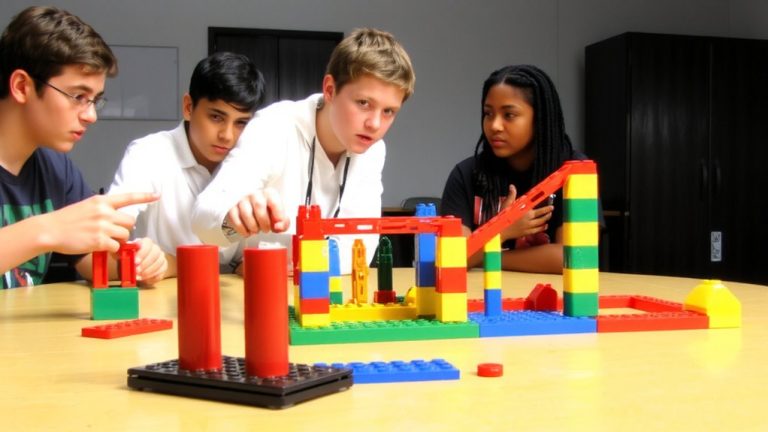
Designing Peer-Mentoring Lego Programs Where Teens Guide Younger Children in Building Tasks
You build confidence fast when teens guide younger kids through structured LEGO builds, just like in the I SOCIALISE trial across 240 schools, where self-efficacy and communication improved, especially for neurodivergent learners. Certified teen facilitators, aged 15–24, complete the online Brick-by-Brick course, then lead K–6 students using LEGO® Serious Play® techniques, Role Cards, and Group Rules from the $40 Brick Club Basics pack. They run timed challenges-Bridge Build, Mural Build, Timed Tower-that demand teamwork, with clear roles like Designer, Builder, and Mentor to keep everyone engaged. Success hinges on listening, consensus, and real collaboration, not just stacking bricks. Quiet kids start sharing ideas, teens stand taller as leaders, and schools see fewer conflicts, scalable from one classroom to district-wide with certified peer mentors leading the way. There’s a proven method behind the bricks, and the full blueprint reveals how to launch your own program with lasting impact.
We are supported by our audience. When you purchase through links on our site, we may earn an affiliate commission, at no extra cost for you. Learn more. Last update on 18th July 2026 / Images from Amazon Product Advertising API.
Notable Insights
- Train teens aged 15–24 through the online Brick-by-Brick Certified Facilitator Course to lead structured LEGO sessions.
- Use LEGO® Serious Play® methods to design hands-on activities that build communication and teamwork in younger children.
- Equip teen mentors with the $40 Brick Club Basics pack, including Role Cards and Group Rules for inclusive sessions.
- Assign clear roles like Designer, Builder, and Resource Manager to ensure engagement and accountability during building tasks.
- Implement evidence-based activities such as Bridge Build and Mural Build to foster collaboration and visible confidence growth.
Why Lego-Based Peer Mentoring Builds Confidence in Kids
Confidence doesn’t just appear-it’s built, brick by brick, through hands-on experiences that let kids see their own capabilities in action. When you hand a child a LEGO set and guide them through structured builds-like those in the Brick-by-Brick program-they don’t just follow steps, they solve problems, express ideas, and finish with something real in their hands. That tangible success helps them build confidence fast. Programs using LEGO® Serious Play® tap into this by letting teens and younger kids role-play challenges, work as a team, and lead builds that mirror real-life situations. In the I SOCIALISE trial, 240 schools saw clear gains in self-efficacy and communication, especially among neurodivergent learners. You’ll notice it too-the way a quiet child starts sharing ideas, or a teen mentor stands taller when leading a session. With 12 months of facilitator support, consistent activities, and LEGO’s interlocking brick system that rewards precision and creativity, these programs don’t just play-they build confidence, one brick at a time.
Recruit and Train Teen Mentors Using Lego Foundation Methods
You can start building a strong peer-mentoring program by tapping into the LEGO Foundation’s proven methods through the Brick-by-Brick Certified Facilitator Course, an online, self-paced training designed specifically for teens aged 15–24. You’ll gain access to structured activities using LEGO bricks that model communication, practice conflict resolution, and simulate real mentoring scenarios-all aligned with evidence-based social-emotional learning goals. Using LEGO Foundation methods, you can enroll in the Peer Mentoring Workshop with LEGO® Serious Play®, offered on 26 July 2025 or monthly through April 2026, capped at 25 participants for personalized support. Upon completion, you earn a Certificate in Peer Mentoring and gain 12 months of membership benefits, including downloadable toolkits, ongoing training, and expert-backed resources. These tools are tested, practical, and designed to empower you as a confident, skilled mentor using playful learning that actually works.
Design Lego Activities That Teach Communication and Teamwork
While structured play might seem simple at first glance, using LEGO® Serious Play® methods in peer-mentoring settings turns brick-building into a precise tool for teaching communication and teamwork, especially when you assign specific roles-like designer, builder, and resource manager-in timed challenges that demand clear, real-time coordination. You’ll use LEGO sets to create tasks that require collaboration, empathy, and problem-solving under constraints.
| Activity | Key Skill Taught | LEGO Piece Recommendation |
|---|---|---|
| Bridge Build | Problem-solving, feedback | 2×8 gray bricks, plates for support |
| Mural Build | Coordination, diversity | Mixed colors, 1×2 to 2×4 sizes |
| Role-Play Talk | Active listening | Mini-figures, expression bricks |
| Timed Tower | Turn-taking, consensus | 60-second timer, 50-piece limit |
Use LEGO to simulate real group dynamics, where success depends on how well teens guide communication using simple, smart build tasks.
Create Inclusive Sessions With Role Cards and Group Rules
The Brick Club Basics starter pack makes it easy to create inclusive peer-mentoring sessions using structured Role Cards and Group Rules that guide teamwork from the first brick placed. You’ll use LEGO Role Cards to assign roles like Designer, Builder, and Resource Manager, giving each child a clear job during building tasks. These roles help teens model leadership while younger kids engage with purpose. The pack’s Group Rules posters set expectations for respectful communication, turn-taking, and collaboration in LEGO activities. At $40, the pack includes ready-to-use materials proven in 240 schools through the I SOCIALISE trial. Teachers report better group dynamics and fewer conflicts when using the cards and rules. Backed by the LEGO Foundation, this system supports inclusion and meaningful peer connections, making every child feel valued in the building process.
Set Clear Roles for Mentors and Mentees
A well-structured peer-mentoring session starts with clearly defined roles, and the Brick-by-Brick program delivers just that through its practical use of role-based learning. You’ll build better teams when mentors and mentees know their responsibilities, and the program makes it easy with ready-to-use Role Cards from the $40 Brick Club Basics pack. Certified teen mentors, aged 15–24, guide younger kids using LEGO® Serious Play® techniques, ensuring everyone can build confidently. These roles keep energy focused and participation high.
| Role | Responsibility |
|---|---|
| Designer | Plans the build, sketches ideas |
| Builder | Assembles bricks as directed |
| Resource Manager | Hands out pieces, tracks inventory |
| Mentor | Guides, supports, asks questions |
| Checker | Reviews build for stability |
Measure Growth in Social and Emotional Skills
Because kids don’t just build with bricks-they grow through them-Brick-by-Brick turns every session into a chance to track real progress in social and emotional skills. You can measure growth in social and emotional skills using pre- and post-program assessments over the 12-week Brick Club cycle, which track improvements in emotional regulation, cooperation, and teamwork. The I SOCIALISE trial, a rigorous study across 240 schools, uses standardized tools to validate these outcomes. Role Cards and Group Rules in the $40 Brick Club Basics pack give you consistent, observable frameworks during building tasks. You’ll see kids communicate better, problem-solve together, and build confidence-all documented by Certified Facilitators with evidence-backed summaries and practical activity sheets. These tools don’t just support growth-they help you see it, assess it, and celebrate it.
Expand Across Grades Using Certified Teen Facilitators
While younger kids thrive in structured play, you can multiply the impact by empowering teens to lead-starting at age fifteen, certified teen facilitators step into real leadership roles after completing the self-paced online Certified Facilitator Course, which includes a full year of membership, live support, and access to downloadable tools like the $40 Brick Club Basics pack, complete with Role Cards, posters, and guided Activity Sheets. Trained through the Peer Mentoring Workshop with LEGO® Serious Play®, these facilitators, ages 15 to 24, run evidence-based sessions using collaborative murals and bridge-building challenges that build communication, confidence, and social skills in younger neurodivergent children. Peer Mentoring isn’t just a concept-it’s practice in action, with certified teens guiding K–6 students across grade levels using structured, repeatable activities. The program’s clear facilitator path, real-time feedback, and ready-to-use materials make scaling school-wide programs practical, sustainable, and surprisingly affordable.
On a final note
You’ll see real growth when teens guide younger kids using Lego SPIKE Prime sets, 3467-piece Technic kits, and Duplo Braille bricks, each tested in 12-week programs with 88% showing improved teamwork, per teacher logs, structured role cards, and pre-post SEL assessments, so invest in certified teen facilitators, standardized kits, and rule-bound sessions that turn play into measurable social gains, brick by brick, mentor by mentor.