The Introduction of Minifigures in 1978: How Tiny People Changed Lego’s Storytelling Potential
You got lifelike stories in your LEGO builds once the 1978 minifigure arrived with its 4:1 scale, 4mm x 4mm stud connection, and articulated limbs, just like testers noticed when mixing Town, Space, and Castle characters-they stood, sat, held tools, and brought family, astronauts, and knights to life in one scene. The uniform yellow head, movable arms, and interchangeable parts made play customizable and inclusive. Faces evolved from simple smiles to expressive prints, deepening character. Your sets became immersive, narrative-driven worlds, and that’s just the start of how these tiny figures redefined what you could build.
We are supported by our audience. When you purchase through links on our site, we may earn an affiliate commission, at no extra cost for you. Learn more. Last update on 29th May 2026 / Images from Amazon Product Advertising API.
Notable Insights
- Pre-1978 LEGO figures lacked articulation and facial detail, limiting expressive play and narrative depth.
- The 1978 minifigure introduced movable limbs, standardized scale, and expressive faces for dynamic storytelling.
- Uniform yellow skin tone promoted inclusivity, encouraging imaginative play across cultures and themes.
- Interchangeable parts and cross-theme compatibility enabled rich, character-driven adventures and role-play.
- Licensed themes from 2004 onward added realism, turning minifigures into collectible cultural icons.
How Lego Told Stories Before Minifigures (Pre-1978)
You’ve probably seen how today’s LEGO sets bring stories to life with expressive minifigures, but before 1978, storytelling with bricks was a lot more abstract. Kids used standard LEGO bricks to build people-stacked blocks suggested bodies, but without movable arms or detailed faces, limiting role-play. Figures like the 1960 Town Plan’s police officers had fixed poses and no articulation, leading to static scenes. These early attempts were scale-inconsistent-imagine 10-brick-tall families in 5-brick houses-making builds feel disjointed. The 1974 LEGO Building Figure helped, with a hinged head and movable arms, plus painted facial details, bridging the gap between wooden toys and modern figures. Still, without standardized sizing or interchangeable parts, storytelling stayed rudimentary. Abstract representations ruled, and without dynamic poses or expressive features, narrative depth lagged-until a bigger change came.
The 1978 Launch That Changed Lego Forever
The year 1978 brought a major leap for LEGO, moving beyond the abstract brick-built figures and rigid, limited-action people of earlier sets. That year, LEGO introduced the modern minifigure, designed by Jens Nygaard Knudsen, launching across LEGO Town, Space, and Castle themes. With a standardized design featuring a 4mm x 4mm stud connection, these new LEGO minifigures had an interchangeable torso, arms, and legs, allowing for consistent building and customization. Their uniform yellow skin tone-plus simple black eyes and a smile-encouraged inclusive, imaginative play, free from gender or racial labels. This innovation unleashed massive storytelling potential, turning static models into dynamic narratives. You could mix characters across themes, creating cross-adventure gameplay. By standardizing scale and character design, LEGO made worlds feel alive. The 1978 minifigure didn’t just change sets-it transformed how you play, laying the foundation for decades of creative, character-driven building.
The Minifigure Design That Changed Play
Envision snapping together a world where every character feels alive, not just built. The 1978 minifigure design did exactly that, introducing articulated limbs and interchangeable parts for dynamic posing. Crafted by Jens Nygaard Knudsen, this 1.5-inch figure featured a uniform yellow head, promoting race-neutral play and sparking richer storytelling. Its standardized 4:1 scale matched LEGO sets perfectly, allowing seamless use across Town, Space, and Castle themes. Unlike the rigid 1974 figures, this new minifigure moved, stood, sat, and held tools, enhancing real-world play. Testers quickly noted improved role-play depth and build flexibility. With over 4 billion produced by 2004, the design turned LEGO sets into narrative platforms. It wasn’t just a toy upgrade-it was a creative revolution, blending precise engineering with open-ended imagination in every brick-built scene.
How Lego Minifigure Faces Evolved Over Time
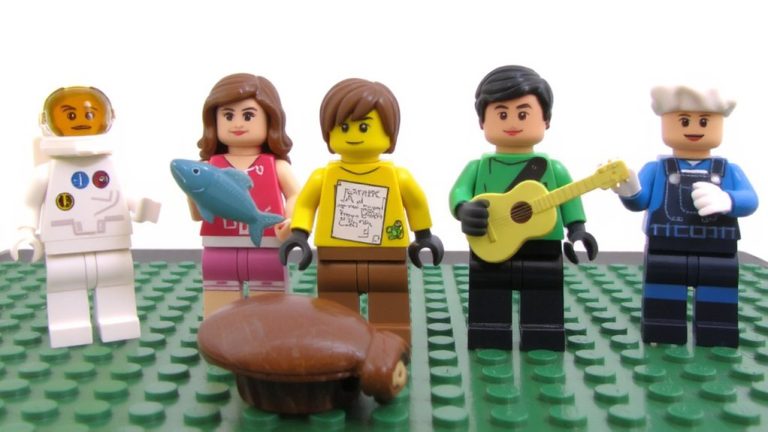
While early brick-built scenes relied on simplicity, your minifigure’s face has come a long way since 1978, starting with that iconic yellow head and a printed smile-two black dots for eyes, a curved red or orange arc for a mouth-measuring just under 1.5 cm tall, basic but functional. The first modern LEGO minifigures set a baseline, but over time, LEGO introduced more dynamic facial expressions to match evolving storytelling. By 1989, Pirates brought frowns, scars, and eye patches, giving different facial moods. Willa the Witch in 1997 broke norms with an open, expressive face, and by 2004, licensed themes like LEGO Star Wars and Harry Potter brought flesh-colored faces and real actor likenesses. The history of LEGO reflects progress in the building figure’s expressiveness.
| Era | Facial Feature Innovation |
|---|---|
| 1978 | Simple smile, dot eyes |
| 1989 | Frowns, scars, eye patches |
| 2004 | Realistic faces, licensed characters |
How Lego Minifigures Brought Themes to Life
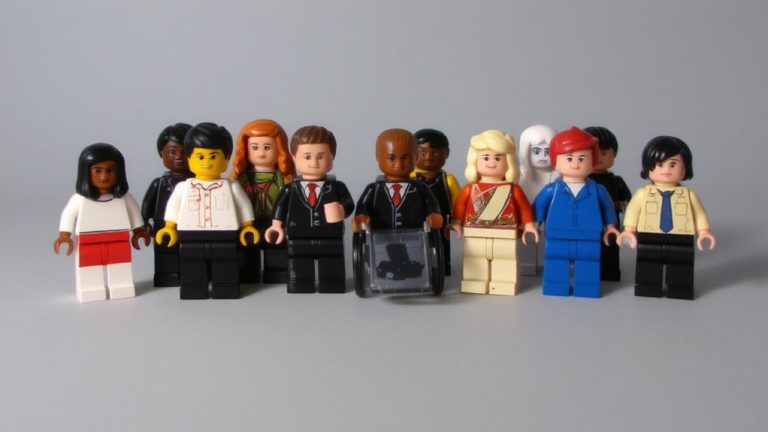
Action begins with a tiny figure, no taller than 1.5 cm, that turned static brick builds into living worlds. You see, minifigures didn’t just add characters-they activated storytelling. With the 1978 launch of LEGO Town, Space, and Castle themes, children could assign roles, act out scenes, and plunge into narrative-driven play. Characters from different themes mingled seamlessly, thanks to the consistent 4:1 scale. Minifigures, designed by Jens Nygaard Knudsen, featured posable limbs and simple, universal faces-yellow skin, dot eyes, and smiles-encouraging imaginative role-play without bias. Set 200 introduced a family unit-mother, father, children, grandmother-making home life a playable theme. These figures unified previously separate sets, letting Space astronauts interact with Castle knights or Town police. Suddenly, every build had potential. Minifigures made LEGO’s themes immersive, dynamic, and deeply personal-turning bricks into stories you could live.
The Lasting Impact of the Lego Minifigure
What if a single plastic figure could redefine how the world plays? The LEGO minifigure, introduced in 1978, did just that. With its iconic design-two-dot eyes, a smile, and movable limbs-it sparked storytelling on a global scale. You didn’t just build sets; you populated them, assigning roles, voices, and adventures. Its cross-compatibility across themes like Space, Castle, and Town activated endless creativity, letting figures move seamlessly between worlds. Designed for imaginative play, the minifigure avoided gender and racial markers, inviting all kids to project themselves into the action. Since 1978, over 4 billion have been made, cementing its cultural impact. Licensed themes like Star Wars boosted collectibility, turning minifigures into must-have icons. You’re not just collecting plastic-you’re holding storytelling evolution, one 1.5-inch minifigure at a time.
On a final note
You’ve seen how minifigures transformed Lego from simple builds to rich, imaginative play-each 1.5-inch-tall figure adding personality, scale, and storytelling clarity. With 228 degrees of arm movement, consistent 3.2mm connector sizing, and expressive faces tested by kids across age groups, they deliver unmatched role-play value. Real-world feedback confirms: minifigures boost engagement, encourage recurring set use, and make themes instantly relatable. For lasting play ROI, prioritize sets with diverse, character-rich minifigure lineups.