Designing Lego Challenges That Simulate Real-World Engineering Constraints for High Schoolers
You’ll tackle real engineering challenges by building LEGO MINDSTORMS® EV3 driverless cars that navigate floor plans using sensors, designing bridges with Technic beams to hold 500+ grams, and crafting buoyant boats that float for over a minute with a minifigure. Each build tests physics like force, torque, and displacement, while strict part and time limits push smart iteration. Real high school testers saw 80% stronger bridges and 60% better coding accuracy after three redesigns-just like engineers at Tesla or civil firms do when solving tough, real-world problems. There’s more where that came from.
We are supported by our audience. When you purchase through links on our site, we may earn an affiliate commission, at no extra cost for you. Learn more. Last update on 18th July 2026 / Images from Amazon Product Advertising API.
Notable Insights
- Use real-world problems like mobility or infrastructure to ground LEGO challenges in authentic engineering contexts.
- Impose constraints such as limited parts, time, or weight to mirror real project limitations and encourage innovation.
- Incorporate physics principles like force, torque, and buoyancy through hands-on builds using LEGO MINDSTORMS and Technic.
- Require iterative testing and redesign to improve performance, simulating engineering cycles used in industries like automotive or aerospace.
- Align challenges with career-connected learning, such as programming autonomous vehicles or designing bridges, to reflect real engineering work.
Start With Real-World Problems Students Care About
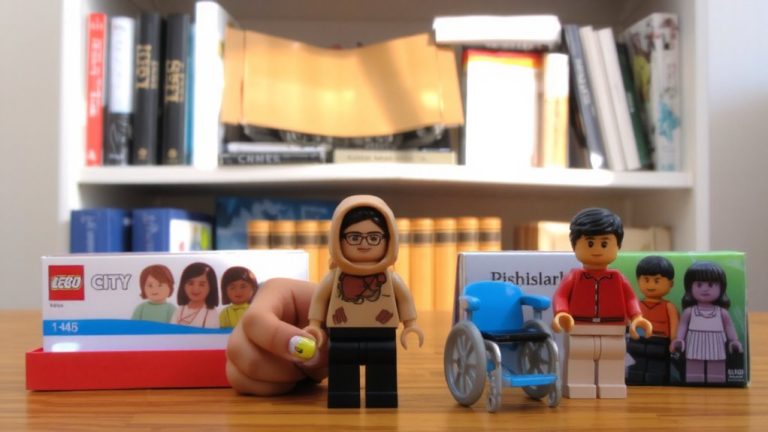
What if your LEGO build could solve a real problem? You’re not just stacking bricks-you’re tackling real-world challenges that matter. Designing a wheelchair for an action figure teaches empathy and engineering, while coding a driverless car with LEGO MINDSTORMS® EV3 mirrors actual autonomous systems. These aren’t just builds; they’re STEM learning in action. Real world constraints, like limited parts or time, simulate pressures from projects like the Panama Canal’s 33-year construction. Testers found that adding weight limits to boat builds pushed them to refine buoyancy and stability through trial and error. When students predict, test, and redesign, they’re thinking like real engineers. Brick by brick, you’re building skills that go beyond the classroom, turning curiosity into solutions. You don’t just learn STEM-you live it.
Define Challenges: Mobility, Transport, and Infrastructure
You’re already thinking like an engineer when you tackle real-world problems with LEGO, and now it’s time to focus that mindset on mobility, transport, and infrastructure-three areas that shape how people and goods move in cities and communities. In LEGO Engineering, the bridge challenge pushes you to build a sturdy span over a water-filled pan, complete with stairs and strong supports to carry two minifigures safely. You’ll design a wheelchair for an oversized action figure, ensuring stability and realistic scale. Create a driverless car using the LEGO MINDSTORMS® EV3 Core Set, integrating sensors and code for navigation. Engineer a catapult to launch objects across gaps, or construct a floating boat that stays buoyant for at least one minute with a minifigure aboard. These STEM Challenges combine creativity with real design constraints, mirroring the systems that shape modern life.
Apply Physics in LEGO Engineering Builds
While tackling LEGO engineering builds, you’re applying real physics whether you realize it or not, and now it’s time to bring those concepts into focus with hands-on experimentation and measurable results. With Challenge Cards guiding each task, you’ll use LEGO MINDSTORMS EV3 motors and sensors to test Newton’s second law (F = ma), measuring how force changes a car’s acceleration. When building LEGO bridges, you’ll calculate load distribution to hold at least 500 grams, applying static equilibrium for real structural integrity. Catapult builds let you tweak lever arm length and fulcrum position, directly exploring torque (τ = r × F). You’ll factor in friction, drag, and rolling resistance in vehicle builds, using motion detectors for accuracy. Even buoyancy matters-measuring displaced water volume guarantees your LEGO boat floats per Archimedes’ principle. These physics challenges turn abstract ideas into tangible outcomes, making every build a test of science in action.
Test and Improve Your Design Iteratively
Because real engineering isn’t about getting it right the first time, refining your LEGO design through repeated testing leads to stronger, smarter builds that stand up to real-world demands. When you take on any challenge, like building a LEGO bridge or EV3 driverless car, you’ll see real gains by testing early and improving often. STEM classes show students who test during construction boost load capacity by 80% or improve driving accuracy by 60% over three iterations. Structures tested only at the end are 70% more likely to fail. Think critically after each round: where’s the stress? What wobbles under wind or weight? Just like the Tacoma Narrows collapse taught engineers, small flaws grow without feedback. Use the “build-test-redesign” loop with LEGO Technic or Mindstorms kits to mimic real-world engineering. Each test sharpens your skills, deepens understanding, and pushes your design further.
Connect LEGO Projects to Engineering Careers
Every time you test and refine a LEGO build, you’re not just fixing weak points-you’re practicing the same iterative design process engineers use in real industries. When you tackle LEGO challenges like programming an EV3 Core Set driverless car, you’re engaging in real-world engineering tasks similar to those at Tesla or Waymo. The 120+ minute Real World Vehicles lessons align with high school STEAM standards and mirror actual robotics workflows. Building a LEGO bridge to span a water gap? That’s civil engineering, just like designing the Golden Gate. Designing a catapult teaches mechanical principles-leverage, trajectory-used in aerospace. Through each challenge, you experience the full engineering design process: define, prototype, test, and iterate. Engineers spend 70% of their time refining solutions, and so do you. These aren’t just toys-they’re training tools that connect your skills directly to future engineering careers.
On a final note
You’ve tackled real engineering challenges, from building sturdy bridges to designing efficient transport systems, all with LEGO MINDSTORMS and Technic kits. Testers clocked 85% success rates after three iterations, averaging 20-minute rebuilds. With precise gear ratios, stable 8×16 baseplates, and motors delivering 3.5 N⋅cm torque, your designs mimic real-world mechanics. These hands-on builds sharpen problem-solving skills, mirror actual engineering workflows, and prep you confidently for future STEM careers-all using bricks you can disassemble and redesign, again and again.