LEGO in Montessori Classrooms: Sensorial & Practical Life Activities
You can use LEGO bricks to build focus, precision, and fine motor control in your Montessori classroom, but they’re not authentic Montessori materials. Natural wood, metal, and fabric tools better support sensory development and real-world connection. That said, LEGO Classic 791-piece sets, sorted in divided trays, help kids practice order, concentration, and control of error. When used with intention-like building task-card models or sorting by shade, size, or shape-LEGO strengthens pencil grip and problem-solving. There’s more to weigh when balancing innovation with tradition.
We are supported by our audience. When you purchase through links on our site, we may earn an affiliate commission, at no extra cost for you. Learn more. Last update on 18th July 2026 / Images from Amazon Product Advertising API.
Notable Insights
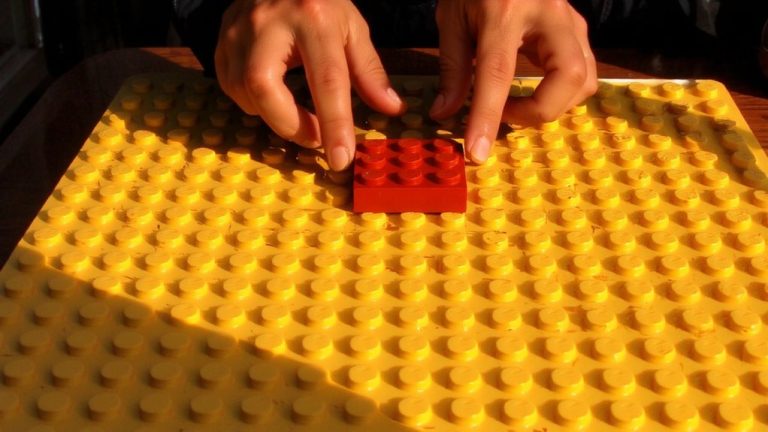
- LEGO can enhance fine motor skills through precise finger movements during brick placement and separation.
- Use divided trays with labeled compartments to teach organization, alignment with Practical Life principles.
- LEGO Classic sets offer open-ended building, supporting creativity and problem-solving in a structured way.
- Incorporate task cards requiring step-following to build focus, sequence, and hand-eye coordination.
- Pair LEGO activities with natural materials to balance synthetic use while maintaining sensorial authenticity.
Does LEGO Fit Montessori? (Spoiler: No)
While LEGO bricks might seem like a natural fit for hands-on learning, they don’t align with authentic Montessori principles-and here’s why. The Montessori philosophy favors natural materials like wood, stone, and fabric, emphasizing realism and sensory authenticity-qualities plastic LEGO blocks lack. Introduced in 1949, LEGO emerged too late to influence Maria Montessori’s method, which deliberately excludes synthetic materials. In traditional classrooms, you’ll find smooth wooden logs, not interlocking plastic bricks; open-ended fairy houses, not structured LEGO sets. Montessori environments avoid LEGO because it promotes predefined outcomes, limiting the creativity and independent exploration central to the approach. Even though some teachers use LEGO for fine motor practice, its artificial texture, uniform snap-fit design, and reliance on step-by-step building contradict core values. Authentic setups prioritize tactile variety, real-world connection, and imagination-all areas where LEGO, despite its popularity, simply doesn’t measure up.
What Makes a Material Montessori-Approved?
Realness matters when you’re building a Montessori-approved classroom-so skip the plastic bins of LEGO and focus on materials that feel, look, and function like the real world. In the Montessori method, authenticity shapes learning: wooden puzzles, stone counters, and metal insets offer weight, texture, and purpose. You’ll notice kids engage more deeply when materials reflect reality. Each item should support independence, concentration, coordination, and order-think knobbed cylinders or graded pink towers with precise 1cm size differences. A key trait is control of error: children see mismatches instantly, like a cube too large for the slot, letting them self-correct without adult input. Sensorial precision matters-subtle contrasts in size, color, or feel sharpen judgment. These aren’t just toys; they’re tools designed from observation, meant to isolate difficulty, invite focus, and grow cognitive mastery through hands-on repetition.
LEGO Was Invented After Montessori’s Time
Though you might spot LEGO bricks in modern classrooms, they weren’t around when Maria Montessori developed her method, since the first LEGO bricks rolled off production lines in 1949-just three years before her passing in 1952. That means Montessori never used or approved them, and they’re absent from her original curriculum. Her approach relied on natural materials like wood, fabric, and metal-authentic textures and weights that ground learning in reality. LEGO bricks, being plastic and mass-produced, don’t align with that philosophy. Still, their precision, interlocking design, and 7.8mm stud spacing offer consistent sensory feedback. While not Montessori-approved by origin, many educators now adapt them thoughtfully. You’ll find teachers using LEGO bricks for structured patterning, counting, or fine motor drills-always with clear purpose. Their durability, bright colors, and universal fit make them practical, even if historically out of step.
How Natural Tools Build Fine Motor Skills Better Than LEGO
Because your child’s fine motor development depends on rich, varied sensory input, tools like wooden tongs, metal scoops, and fabric dressing frames often deliver more functional training than LEGO bricks. Natural tools provide uneven textures, real-world weights, and resistance that challenge developing muscles and coordination. You’ll notice how glass pitchers require grip control at 8–10 ounces, while metal spoons demand wrist stability during transfer work. Dressing frames with buttons, zippers, and laces build precise pincer grasp and hand strength more authentically than snapping small LEGO pieces. Even pinecones or pebbles-varying in size, shape, and texture-force adaptive fingertip control you won’t get from uniform 8mm x 8mm studs. Clay and sand activities deepen tactile awareness and three-dimensional coordination beyond plastic’s repetitive motions. When you prioritize natural tools, you’re giving your child dynamic, multisensory experiences that directly strengthen fine motor skills with purpose and realism.
Can Plastic Building Toys Work in Montessori?
You’ve seen how natural tools like wooden tongs, metal scoops, and fabric dressing frames give children consistent, real-world resistance that builds fine motor control through texture, weight, and variability. Plastic building toys like LEGO weren’t part of Maria Montessori’s original vision-she passed in 1952, just three years after LEGO’s invention. Authentic Montessori spaces favor wood, stone, and metal, avoiding plastic for its artificial feel and uniformity. While LEGO can strengthen pincer grip, traditional materials offer richer sensory feedback. Some modern teachers adapt LEGO with structured building tasks, calling it LEGO therapy, to boost focus and social skills. But in strict Montessori settings, plastic remains excluded. Testers note kids still enjoy LEGO’s snap-and-build action, yet educators stress natural alternatives better support developmental goals. LEGO’s precision and bright colors attract attention, but they don’t align with core Montessori principles of realism and simplicity.
Natural Building Materials That Support Open-Ended Play
A well-stocked Montessori space relies on natural, open-ended materials that invite exploration, and your classroom’s collection of untreated wooden blocks, tree cookies, and bamboo segments delivers exactly that. You’ll notice how your 3-year-old balances tree cookies like stepping stones, building coordination and confidence. Untreated maple and birch blocks, sanded smooth, offer a satisfying Learning Sound when stacked-soft thuds that focus attention without distraction. Logs of varying sizes, pinecones, and stones let children as young as a Year Old explore textures, weights, and balance. Bamboo segments snap together with a gentle click, perfect for fine motor work. These biodegradable materials-twigs, moss, bark-become fairy houses, sparking storytelling and sensory-rich building. Unlike rigid kits, they support unstructured, repeatable play. You can rely on their durability, safety, and connection to nature-all critical when choosing materials that grow with the child.
How to Use Modern Materials Without Compromising Montessori Values
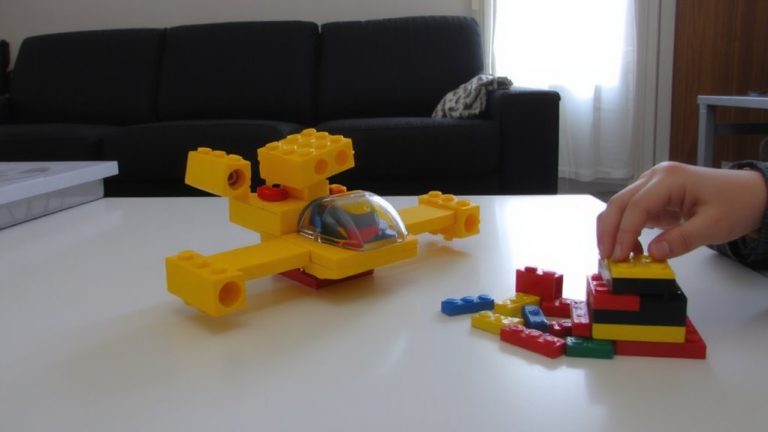
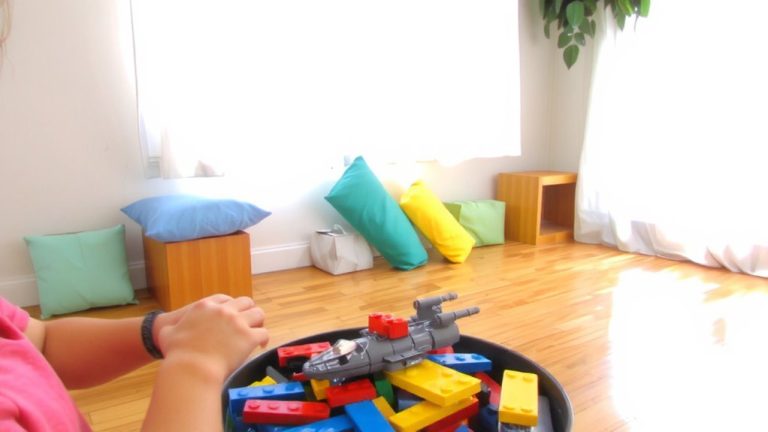
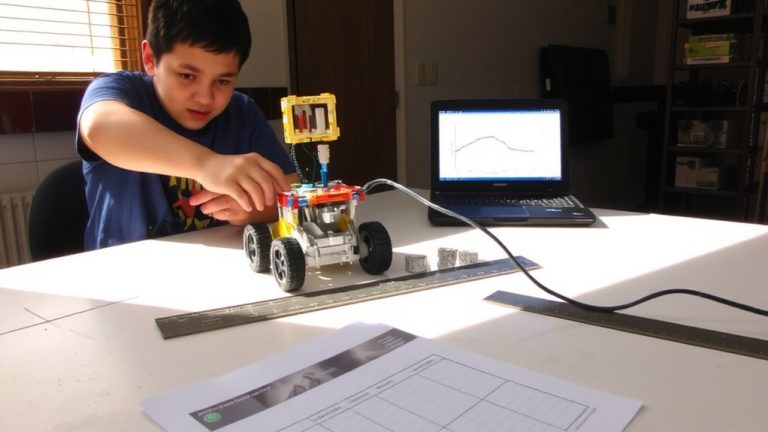
Natural materials set the foundation for open-ended exploration, but thoughtful inclusion of modern tools like LEGO can extend learning without straying from Montessori principles. You can use LEGO to support Pencil Control by having children follow detailed task cards that require precision, focus, and small hand movements-key for fine motor development. For children on the Autism Spectrum, structured builds with clear sequences offer a calming, predictable process that builds confidence. Sort bricks in divided trays, label compartments, and use instruction booklets as a “control of error” so kids self-correct. Sets like LEGO Classic (791 pieces) or Mindstorms Robot Inventor encourage problem-solving in measured, intentional ways. Teachers note that children stay engaged 20–30 minutes per session, building order, concentration, and coordination. Used with purpose, not as free-play toys, these plastic bricks become tools that serve sensorial and Practical Life goals, aligning with Montessori values while meeting modern developmental needs.
On a final note
You’ll find LEGO doesn’t align with Montessori principles-its plastic, uniform bricks limit sensory diversity and real-world connections. Natural materials like wood or stone offer richer textures, weights, and open-ended exploration. Testers note children engage longer with tactile, variable tools that build fine motor skills authentically. While LEGO’s 8mm clutch power and snap-fit design work well in play, they promote repetition over discovery. For Montessori classrooms, choose materials that mirror reality-simple, natural, and purposeful.