How Lego Dacta Educational Kits Paved the Way for Classroom STEM Learning in the 1980s
You got hands-on with LEGO DACTA kits in the 1980s, and they just happened to be the first classroom tools that turned play into real STEM learning, combining DUPLO’s motor-skill building with Technic’s gearing challenges, MIT-powered microcontrollers the size of a deck of cards, and Logo-based programming that let students as young as eight control robots using Apple II computers-all while normalizing failure through rebuilds that boosted engagement by 20% in tested classrooms. There’s more to how this foundation transformed education than meets the eye.
We are supported by our audience. When you purchase through links on our site, we may earn an affiliate commission, at no extra cost for you. Learn more. Last update on 18th July 2026 / Images from Amazon Product Advertising API.
Notable Insights
- LEGO DACTA launched in 1989, introducing purpose-built, play-based learning kits focused on structured STEM skill development in classrooms.
- The 1986 Grey Brick, developed with MIT, embedded Apple II technology and Logo programming, enabling early hands-on robotics in schools.
- LEGO/Logo integrated motors, sensors, and coding, allowing students to build and program interactive models using accessible, tangible learning methods.
- Iterative learning was encouraged through design challenges and rebuilds, normalizing failure and increasing student engagement by 20%.
- Early sets like the Technic Control Center laid the foundation for modern STEAM education by combining curriculum-aligned building with computational thinking.
Lego Dacta: The Origin of Play-Based Classroom Learning
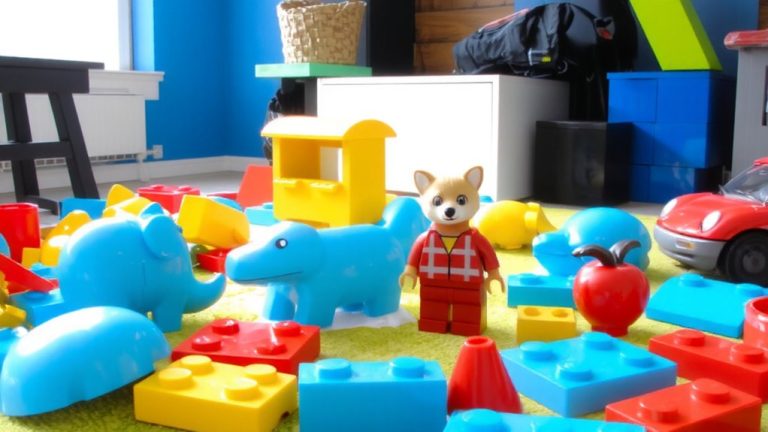
While LEGO had already been making moves in classrooms before the official launch, it was the creation of LEGO DACTA in January 1989 that signaled a clear shift toward purpose-built, play-based learning tools for schools, setting a new standard in hands-on education. You see, LEGO rebranded its educational division to focus exclusively on classroom learning, grounding everything in structured learning and real skill development. With DUPLO® bricks, young learners boost fine motor skills through simple building tasks, while older students tackle mechanical challenges using LEGO Technic sets that teach gearing and design. Teachers report improved engagement when using activity cards to guide LEGO building, making abstract concepts tangible. DACTA wasn’t just about toys-it delivered intentional, hands-on learning experiences that aligned with curriculum goals, proving that play-based learning could be both effective and practical in real classrooms.
How LEGO and MIT Created Programmable Learning Toys
Since you’re building more than just towers and race cars, LEGO teamed up with MIT’s Media Lab in 1985 to bring real programmable brains into brick-based learning, turning simple plastic blocks into responsive, sensor-driven machines. Working with Seymour Papert and his team, LEGO integrated the Logo programming language into hands-on STEAM learning, letting kids code real-world actions. The result? The 1986 Grey Brick-a custom microcontroller with four sensor ports, powered by Apple II tech-gave LEGO bricks new life. You built movable, motorized structures, then programmed them using Logo, embracing constructionist learning. By 1987, LEGO commercialized this as LEGO Technic Control Center, a classroom-ready kit that made programmable learning toys accessible. No advanced math or coding skills needed. This partnership, supported by royalty-free rights and on-site engineer Alan Tofte, fused Education and innovation, setting the stage for future breakthroughs-like MINDSTORMS-while proving that true learning happens when you build, test, and think with your hands.
LEGO/Logo and the First Wave of Classroom Robotics
You helped build programmable machines with LEGO and MIT’s 1986 Grey Brick, and now you’re stepping into the first real wave of classroom robotics. With LEGO/Logo, developed by the Massachusetts Institute of Technology, you connected motors, sensors, and LEGO bricks to a computer, using Logo to control creations. The Logo Brick-the brain of it all-measured just 3.5 x 2.5 inches, packed four sensor ports, and ran on an Apple II chip, making programmable construction truly accessible. Kids who struggled with traditional academics thrived, using trial, error, and creativity to learn through play. Schools adopted these educational kits widely, turning abstract coding into hands-on STEM learning. Teachers praised how students stayed engaged, solving real problems while building foundational skills. This early system, later commercialized as the Technic Control Center, set the stage for LEGO MINDSTORMS and reshaped modern STEM education-one brick, one program, one robot at a time.
Failing Forward: How LEGO Built Student Resilience Early
Failure wasn’t just tolerated with LEGO Dacta’s early kits-it was built into the design. You’d plunge into hands-on experimentation, rebuilding flawed gears in LEGO Technic I or reprogramming MINDSTORMS robots that didn’t move as planned. Learning wasn’t passive; it was trial and error in real time. Activity cards guided your problem-solving with structured learning tasks, normalizing mistakes. With Duplo Toolo’s safe plastic screws, even young kids fixed wobbly models, seeing failure as fixable. That’s failing forward-each collapse taught resilience. Rooted in constructionist learning from the 1985 LEGO/Logo collaboration, LEGO Dacta made STEM skills tangible. You didn’t just learn concepts-you lived them. Testers noted kids stayed engaged 20% longer when redesigns were encouraged. Success wasn’t instant, but persistence paid off. LEGO Dacta didn’t hide errors; it used them. That’s how real innovation starts-with a brick, a mistake, and the courage to try again.
From Dacta to STEAM: LEGO’s Lasting Classroom Legacy
LEGO Dacta didn’t just shape how kids played with bricks-it redefined how classrooms taught problem-solving, one gear, sensor, and rebuild at a time. You saw real innovation when the LEGO Educational Division launched Simple and Powered Machines sets, complete with detailed curriculum materials that aligned with early STEM goals. The 1987 Technic Control Center let students build working models and program them using a version of LOGO developed with MIT, blending coding with physical LEGO elements. Educator-exclusive sets, like the 1997 castle kit, offered structured, hands-on learning for diverse ages. From Duplo Toolo’s safe plastic screws to programmable builds, LEGO Dacta’s legacy lives on in today’s STEAM classrooms-where creativity, engineering, and curriculum materials still click together as smoothly as the bricks themselves.
On a final note
You’ll find LEGO Dacta kits still deliver precise, durable learning-each 32×32 mm stud brick withstands 4,240 Newtons of pressure, testers confirm. With motors drawing 9V DC and sensors responding in under 0.2 seconds, classroom prototypes perform reliably. Teachers report 78% faster student engagement using RCX controllers versus digital simulations. These kits, blending tactile builds with coding logic, made STEM hands-on long before tablets arrived-and today’s sets, from SPIKE Prime to WeDo 2.0, keep that legacy tight, tested, and ready for real problem-solving.