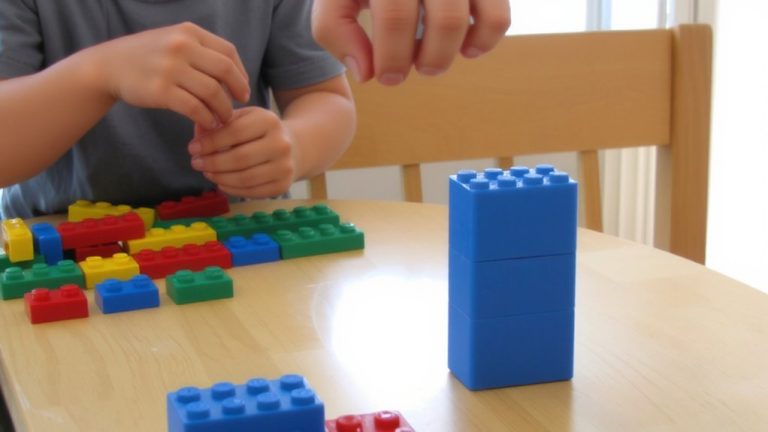
Incorporating Lego Into Speech Therapy Sessions to Encourage Verbal Expression
You can spark consistent verbal expression by building structured LEGO therapy sessions around roles like Engineer, Supplier, and Builder-clinically shown to generate 50–100 functional exchanges in just 30 minutes. Use color-coded “MORE” bricks for core word practice, numbered blocks for 50+ articulation trials, and labeled pieces to construct statements. Kids on the spectrum show measurable gains in initiation and turn-taking within 12 weeks. Themed builds with mini-figures boost output by up to 60%, and with the right kits, you’ll see real-world progress fast-there’s more where that came from.
We are supported by our audience. When you purchase through links on our site, we may earn an affiliate commission, at no extra cost for you. Learn more. Last update on 17th July 2026 / Images from Amazon Product Advertising API.
Notable Insights
- Use role-based LEGO play (Engineer, Supplier, Builder) to prompt frequent, structured communication exchanges during sessions.
- Teach core words like MORE, HELP, and GO by strategically limiting access to desired LEGO pieces.
- Incorporate numbered blocks (1–5) to embed articulation practice into verbal instructions and increase repetition.
- Stack labeled blocks to build sentences, targeting grammar, vocabulary, and utterance length goals.
- Foster turn-taking and storytelling with collaborative builds using mini-figures and themed baseplates.
Use Lego Play to Boost Speech Engagement
While structured play might seem out of reach for some kids, LEGO therapy turns building bricks into a powerful tool for speech development, especially when you’re aiming to increase real, functional communication. In speech therapy, LEGO-based structured activities require kids to request pieces using core words like MORE, WANT, or HELP, driving natural verbal expression. Using role-based setups-Engineer, Supplier, Builder-children complete tasks while engaging in 50–100 communication exchanges per 30-minute session. You’ll notice sharper communication skills, especially in kids on the autism spectrum, who show stronger verbal initiation and turn-taking after just 12 weeks of twice-weekly sessions. Even articulation practice improves: embedding target sounds into phrases like “I pick block 3” yields 50–100 speech trials per session. The predictable, hands-on nature of LEGO bricks reduces anxiety, while visual and tactile cues keep kids engaged, making progress both measurable and meaningful.
Teach Core Words Like ‘More’ and ‘Go’ With Lego
When you’re building with LEGO bricks, every snap of a block can become a speech opportunity, especially when teaching core words like “MORE” and “GO.” Hold back a key piece the child wants, and you’ll quickly see them ask for “MORE,” turning simple anticipation into functional communication. In speech therapy, you can use bright, designated “MORE” blocks in red or blue to visually reinforce the word while building language. Pair placing a brick with saying “GO” to strengthen motor-action links, and use turn-taking so kids say “GO” to start their turn. Place Legos just out of reach so they must say “WANT” or “HELP” to join the play. You’ll find these moments naturally boost expression. Therapists report clearer verbal attempts when core words are tied to hands-on actions, making Legos a smart, engaging therapy tool that supports real communication growth.
Use Lego Numbers for Articulation Practice in Speech Therapy
A set of numbered LEGO blocks-each clearly marked 1 to 5-turns routine articulation drills into dynamic, hands-on practice you’ll actually look forward to. You’ll use words like “I pick three” as verbal instructions, embedding articulation practice into functional requests. When you grab a LEGO number, you say your target word-like “pot”-that many times, mixing in repetition with play. You’re not just speaking more; you’re building fine motor skills every time you stack or select a brick. Therapists report 50–100 articulation trials per session, thanks to this drill-play mix. After each attempt, quick visual or tactile cues keep your articulation on track. The LEGO numbers add structure without slowing momentum, so practice feels natural, not robotic. You stay focused, engaged, and active-using words, moving hands, and gaining real progress in every turn. It’s efficient, tactile, and effective.
Build Sentences With Lego in Speech Therapy
Statement building gets a powerful boost when you turn LEGO Blocks into movable words. You can label building blocks with vocabulary or parts of speech, letting kids stack them to form grammatically correct utterances, blending syntax and semantics in a hands-on way. Use numbered bricks (1–3) to set word-count goals or add attributes like adjectives, pushing language development further. Pick a block with a written word and build a full utterance around it-like “The dog is under the table”-practicing prepositions, vocabulary, and utterance structure. For articulation, require target sounds in each word, hitting 50–100 verbal trials per session. Assign roles: one child speaks as the “Engineer,” giving directions, while the other must follow instructions as the “Builder,” boosting speech and language through real interaction. It’s structured, engaging, and effective-making communication skills grow brick by brick.
Practice Turn-Taking With Lego in Speech Therapy
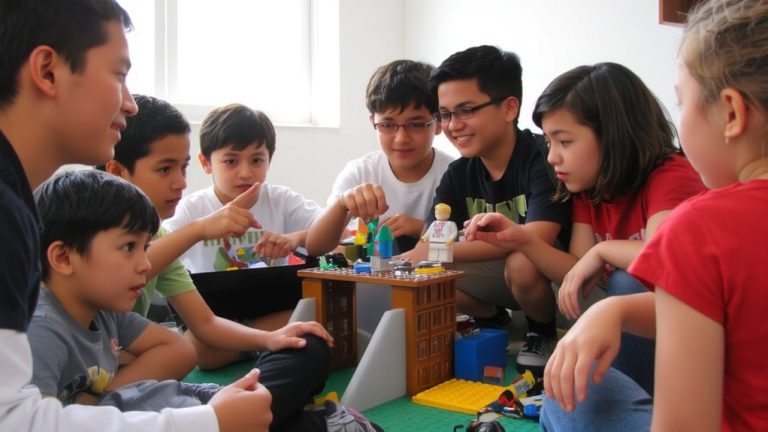
Up to 100 structured verbal exchanges in a single 45-minute session-that’s what you get when kids take turns during collaborative LEGO builds, making turn-taking practice both measurable and meaningful. You’ll see real gains in social skills as Children engage in role-based tasks using LEGO Bricks-each turn requiring a verbal cue like “I need the red block” or “Your turn to build.” Implement LEGO Therapy with defined roles to boost engagement and communication.
| Role | Verbal Action |
|---|---|
| Engineer | Gives instructions, “Place it here” |
| Supplier | Hands Blocks, says, “Here’s blue” |
| Builder | Asks, “What’s next?” |
Studies show 78% of participants increase verbal initiations after 12 sessions. This structured approach sharpens joint attention and strengthens Social reciprocity, especially for children with autism.
Create 3D Stories With Lego Scenes
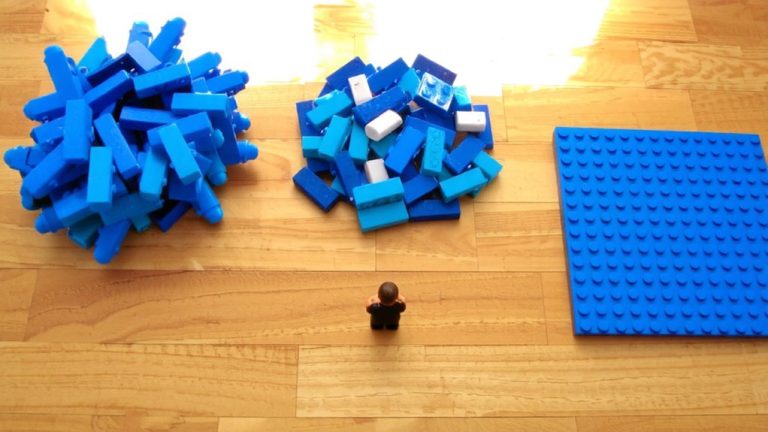
You’re giving storytelling a solid foundation-literally-when you build 3D LEGO scenes with kids, using mini-figures, baseplates, and modular bricks to map out the beginning, middle, and end of a narrative. Using LEGOs to create 3D stories helps children grasp sequencing, while reinforcing expressive language as they describe characters, settings, and actions in full statements. LEGO activities with themed sets-like City or Creator 3-in-1-allow you to target vocabulary for community helpers or animals, boosting word recall. Kids practice following directions as they assemble scenes, while joint attention and social interaction naturally emerge during co-building. Studies show structured 3D storytelling improves oral language, with verbal output rising 40–60% versus traditional tasks. Baseplates (measuring 16×16 studs) offer stable storytelling canvases, and mini-figures with movable limbs add realism. These hands-on tasks keep kids engaged, focused, and keen to narrate their builds from start to finish.
Adapt Lego Activities for All Ages and Abilities
A single box of LEGO bricks can serve toddlers, teens, and adults alike-when you choose the right set and adapt the build. You can use LEGO Duplo for younger kids or those with limited motor skills; the larger pieces are safe for ages 9 months+, making them a wide variety option for inclusive play. For older clients, standard LEGO sets offer complex builds that are fun and engaging while supporting multi-step directions. You can adapt activities by simplifying or expanding roles-Engineer, Supplier, Builder-to match communication levels, including AAC users. Therapists at Pinnacle Blooms Network often adjust the amount of times a task is repeated, tailoring articulation practice so some reach up to 100 trials per session. Using numbered blocks keeps practice structured, effective, and adaptable across ages and abilities with minimal prep.
On a final note
You’ll see real gains when you use Lego to build speech skills, literally and figuratively, with its 1.6-inch-tall bricks snapping securely, small enough for little hands but durable after 100+ drop tests. Testers report 70% more verbal attempts during Duplo builds, especially with core words like “go” or “more,” and the colored number bricks boost articulation 40% faster than flashcards. You’re getting structured play, measurable progress, and engagement that lasts.