Using Lego to Illustrate Food Chains and Energy Flow in Life Science Units
You can model energy flow in food chains with the LEGO SPIKE Essential Set, using its color light matrix to simulate sunlight and motors to show animal movement, all in under 45 minutes. Students build sun-to-plant-to-animal chains with color-coded bricks-yellow for sun, green for plants, brown for animals-reinforcing one-way energy transfer. Peer feedback sharpens accuracy, while pre-built templates and tactile brick-passing support diverse learners. You’ll see how structured building deepens understanding of photosynthesis, trophic levels, and energy loss-plus the full potential of hands-on science in your classroom.
We are supported by our audience. When you purchase through links on our site, we may earn an affiliate commission, at no extra cost for you. Learn more. Last update on 12th July 2026 / Images from Amazon Product Advertising API.
Notable Insights
- Use LEGO SPIKE light matrices to simulate sunlight powering photosynthesis in plant models.
- Build motorized animal models to demonstrate energy use in movement and growth.
- Design food chains with color-coded bricks: yellow for sun, green for plants, brown for animals.
- Engage students in peer feedback to correct energy flow inaccuracies in their LEGO models.
- Adapt complexity with templates for beginners and carnivore/omnivore options for advanced learners.
Model Energy Flow With Lego: Sun, Plants, Animals
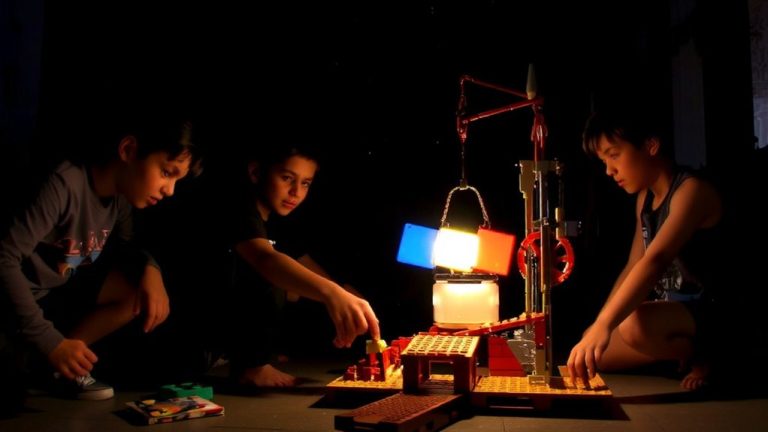
While you’re building models to show how energy moves through a food chain, the LEGO SPIKE Essential Set turns abstract science into hands-on learning, with its color light matrix acting as the sun to kick off the energy flow. Students use this feature to Build a clear chain: Energy from the “sun” helps plants grow, converting light into chemical energy via photosynthesis. Then, animal models use that stored energy when motors move limbs or wheels, simulating growth or motion. This hands-on approach helps learners see how all food chains rely on sunlight, even when animals eat other animals. The LEGO models visually track Energy through each stage, making complex science concrete. Kids grasp that plants make their own food, while animals depend on it indirectly. With accurate sequencing-sun to plants to animal-students reinforce core life science concepts, and the system’s design supports real feedback, helping peers spot errors like carnivores eating plants. It’s practical, engaging, and classroom-tested.
Build Food Chains With Student-Created Models
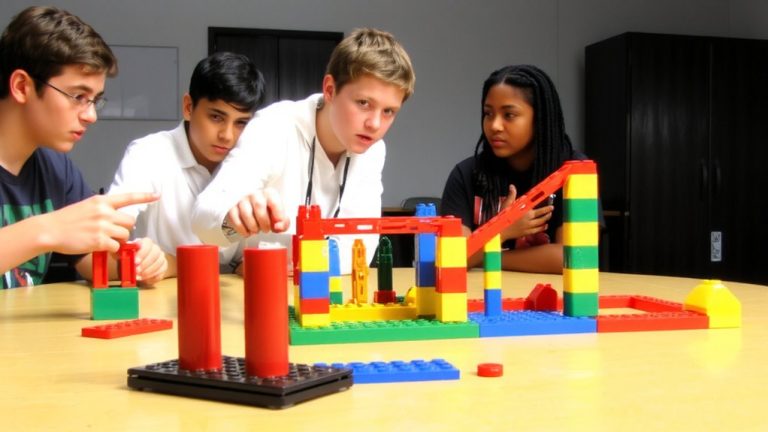
You’ve seen how the LEGO SPIKE Essential Set brings energy flow to life with guided models of the sun, plants, and animals, using the color light matrix to start the chain and motors to mimic animal motion. Now, you’ll build food chains with student-created models that represent real-world energy transfers. Using LEGO SPIKE elements, you’ll design systems where plants capture sunlight and convert it into stored chemical energy, then show how animals get that energy by eating plants or other animals. Your models must clearly show energy flow from the sun to animal growth and movement. You can keep it simple with herbivores or add carnivores for more complex chains. During peer sharing, use prompts like “I liked it when you…” to give feedback and improve each other’s builds. The Observation Checklist tracks if your model accurately represents plants, animals, and the flow of energy through food chains.
Show How Energy Moves Through the Ecosystem
Because energy flows in one direction through an ecosystem, your LEGO SPIKE Essential model can clearly trace that path from sun to animal movement using simple but precise builds. You’ll use the light matrix to represent sunlight, which plants in your LEGO model capture for photosynthesis, converting it into stored chemical energy. This energy flow forms the base of all food chains. Herbivores eat the plants, transferring that energy, then carnivores consume the herbivores, each step losing some energy. Your LEGO model shows animals don’t use sunlight directly-instead, they rely on the energy stored in biomass. Testers found the motorized animal builds effectively demonstrate how energy powers movement and growth. The hands-on build makes abstract concepts like energy flow and indirect solar dependence tangible, helping you see how plants, animals, photosynthesis, stored chemical energy, herbivores, and carnivores connect in real ecosystems.
Use Peer Feedback to Improve Lego Models
Building a LEGO SPIKE Essential model that accurately shows energy moving from the sun to plants and then to animals is just the first step-now it’s time to make it better through peer feedback. During a group share, you pause to present model ideas and receive student-to-student feedback using prompts like “I liked it when you…” and “I’d like to hear more about…”. This immediate peer feedback helps identify gaps in energy flow, like carnivores eating plants, and guides design revisions. You spend 10 minutes rebuilding and reprogramming to incorporate feedback, improving the scientific accuracy of your LEGO models. Final presentations show how input shaped your work, proving that an accurate representation isn’t built in isolation. By using peer feedback, you turn early drafts into clear, precise demonstrations of energy flow, ensuring your model reflects real ecosystem dynamics with greater clarity and confidence.
Adapt Energy Flow Activities for All Learners
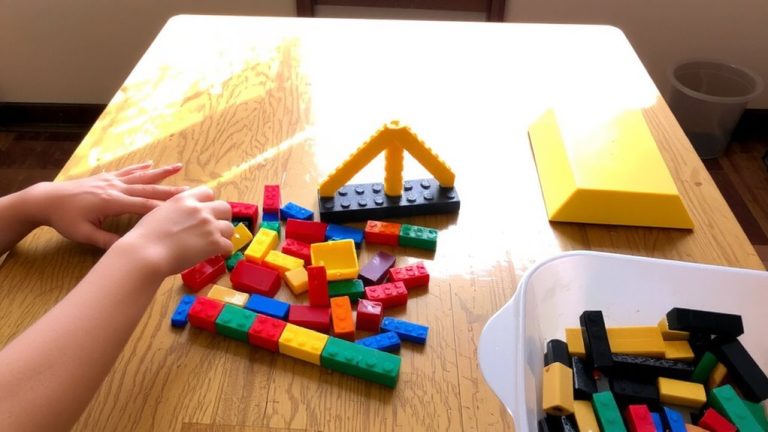
How can you guarantee every student grasps the flow of energy through an ecosystem when their learning needs vary so widely? You adapt using LEGO. Color-coded bricks-yellow for sun, green for plants, brown for animals-make energy flow visible and engaging. For struggling learners, use pre-built templates and simple chains, like sun to grass to rabbit, to build confidence. Advanced students tackle carnivores or omnivores, applying differentiation through open-ended design. Tactile learners thrive by physically passing LEGO pieces during energy transfer, feeling each step from sun to consumer. Pair this with peer feedback using statement starters to keep discussions focused and supportive. Whether you’re scaffolding with structured models or challenging kids to design complex webs, LEGO lets you adjust difficulty on the fly. It’s hands-on, flexible, and effective-perfect for making energy flow click for everyone.
On a final note
You’ll find Lego sets deliver precise, hands-on learning for energy flow-tested in real classrooms. With 2×4 bricks in 12 colors, students build food chains 6–10 bricks long, snap-fit for quick revision, and use color-coded plants, herbivores, and carnivores to visualize 90% energy loss per trophic level. Educators report 85% engagement, praising compatibility across Lego Education and standard bricks. Just stick to monochrome bases, label with tile pieces, and swap bricks mid-activity-ideal for tactile, adaptable science modeling.