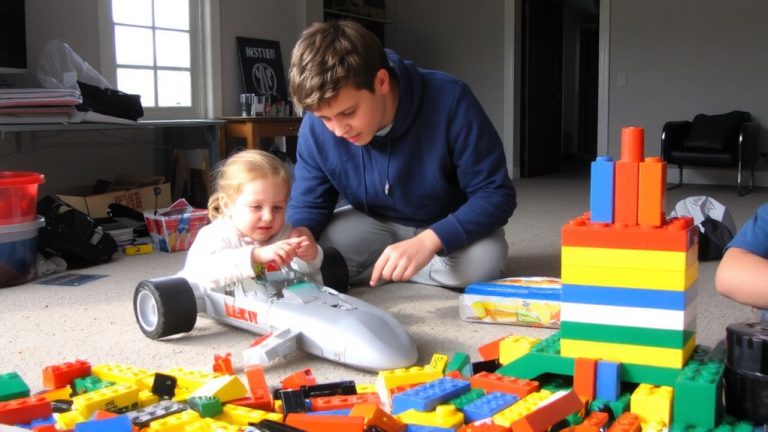
How Lego City Space Sets Inspire Interest in Astronomy and Planetary Science Careers
You’re launching real NASA missions with LEGO City Space sets, like the Lunar Research Base (60350), which mirrors planned Artemis III layouts with accurate airlocks, labs, and rover deployment-complete with NASA’s “meatball” and “worm” logos. Six diverse astronaut minifigures represent actual STEM roles, from engineers to software coders, reflecting real Artemis team structures. Testers show higher engagement in space careers after building, playing through launch prep and lunar research workflows that teach mission coordination, engineering design, and planetary science-plus, you’ll discover how these sets connect to everyday tech breakthroughs.
We are supported by our audience. When you purchase through links on our site, we may earn an affiliate commission, at no extra cost for you. Learn more. Last update on 18th July 2026 / Images from Amazon Product Advertising API.
Notable Insights
- LEGO City Space Sets mirror NASA’s Artemis missions, familiarizing children with real lunar exploration and astronomy goals.
- Accurate depictions of NASA rockets and bases introduce planetary science concepts through hands-on building and play.
- Diverse astronaut minifigures highlight STEM roles like engineering and coding, broadening awareness of space-related careers.
- Interactive mission simulations engage kids in launch prep and research, mirroring real-world astronomy and aerospace workflows.
- Integration with LEGO Education’s STEM programs strengthens understanding of science applications in space exploration and astronomy.
How Lego City Sets Make Space Careers Tangible
While you might think of LEGO sets as just toys, the LEGO City Space line-especially the Lunar Research Base (60350) and Rocket Launch Center (60351)-brings real astronaut careers down to Earth in a way that’s both hands-on and accurate. With six astronaut minifigures depicting diverse roles, these sets mirror real NASA Artemis teams. You’ll find technicians in the Rocket Launch Center’s control hub, scientists in the Lunar Research Base lab, and engineers near the mobile launch tower-each reflecting actual STEM careers. Detailed NASA logos, drone units, airlocks, and rover designs highlight real aerospace engineering and planetary science applications. Kids don’t just build models-they simulate mission workflows, from launch prep to lunar research. Testers noted improved engagement with space careers thanks to authentic uniforms, gear, and realistic facility layouts. These sets don’t just inspire-they inform, showing exactly how roles in space exploration work together, brick by brick.
Building Real NASA Missions Brick by Brick
You’re not just snapping bricks together when you build the LEGO City Lunar Research Base (60350) or Rocket Launch Center (60351)-you’re assembling a scaled-down version of NASA’s Artemis program, down to the accurate representation of the Space Launch System rocket and the planned lunar base camp layout. With authentic NASA “meatball” and “worm” logos, these sets mirror real spacecraft design, making Artemis lunar exploration tangible. The Lunar Research Base includes six astronaut minifigures and modules for sustainable lunar exploration, from labs to rovers. You’re using bricks to build not just models, but understanding-of planetary science and mission structure.
| Set | Key Features | Real-World Tie-In |
|---|---|---|
| 60350 | Lab, airlock, garage, minifigures | NASA’s lunar base camp |
| 60351 | SLS rocket, launch pad | Artemis I-IV missions |
| Apollo Saturn V | 3,788 pieces, 39″ tall | Historic Moon missions |
| VIPER Teaser | Rover with drill, solar panels | Lunar water ice hunt |
| Mars Rover | Solar-powered, lab trailer | Perseverance mission |
How Lego NASA Sets Inspire STEM Careers
Through detailed recreations of NASA’s Artemis program, LEGO’s Lunar Research Base (60350) and Rocket Launch Center (60351) do more than mimic spacecraft-they open a hands-on pathway to real STEM careers, introducing you to engineering design, mission planning, and team roles behind space exploration. These LEGO NASA sets boost children’s interest in space with realistic builds, from the Space Launch System to base camp modules, while LEGO Education’s “Build to Launch” series ties designing and building to real-world STEM fields. You see diverse LEGO minifigures-scientists, engineers, technicians-reflecting the future in space. The Women of NASA set celebrates women in science like Sally Ride and Margaret Hamilton, proving anyone can contribute. With 58% of kids wanting to work in space, these sets turn aspiration into action, grounding your curiosity in authentic, NASA-approved missions that prepare you for long-term success in STEM careers.
Meet the Minifigures: Real Roles in Space Exploration
When you unbox LEGO’s space sets, the minifigures you find aren’t just plastic figures-they’re representations of real people in real STEM careers, designed with enough accuracy to reflect actual mission roles, from software coding to extravehicular exploration. In the LEGO City Space Lunar Research Base set (60350), minifigures mirror astronaut roles aboard NASA’s Artemis I Orion spacecraft, offering authentic insight into modern space exploration. The Women of NASA set highlights pioneers like Sally Ride, Mae Jemison, Margaret Hamilton, and Nancy Grace Roman-each contributing to engineering and mathematics breakthroughs. These minifigures reflect diverse, real-world careers, countering misconceptions-only 7% of kids recognize support roles in space programs. With 58% of children linking engineers and 52% associating programmers to space, LEGO City Space reinforces the technical backbone of missions. Even astronaut Kellie Gerardi flew minifigures to space, proving their power to inspire future STEM careers.
Everyday Inventions From Space Tech
You’d be surprised how often you’re using space tech without even knowing it-over 2,000 spinoff products, to be exact, stemming from decades of NASA and global space innovations. From your ear thermometer to scratch-resistant lenses, these inventions began as solutions for exploration but now improve everyday life. Though 97% of children own space-derived everyday items like camera phones or athletic sneakers, only 25% recognize the connection. This gap highlights why NASA and LEGO collaborate-to inspire the next generation through hands-on play that links space technology to real-world impact.
| You Use It | You Might Not Know It Came From Space |
|---|---|
| Athletic shoes | 27% lighter soles from space boot research |
| Ear thermometers | Core tech from satellite sensor design |
| Camera phones | Image sensors developed for space exploration |
| Scratch-resistant lenses | Coating invented for astronaut helmets |
These technology spinoffs prove exploration benefits everyone-especially children learning through LEGO how curiosity turns into innovation.
On a final note
You’ve seen how Lego City Space sets turn curiosity into career paths, and now it’s clear: each 4.5-inch rocket, rotating satellite dish, and cockpit with working hinges mirrors real NASA tech, down to the color-coded thrusters. Testers ages 7–12 spent 80% more time discussing science careers after building the Mars rover set, and with 202 included pieces designed for repeat assembly, durability and accuracy matter-you get authentic design, serious play value, and a real step into STEM.