How Building 3D Lego Models Enhances Spatial Reasoning in Gifted Students
When you build 3D LEGO models, you’re training your brain to rotate objects mentally, track spatial relationships, and convert 2D instructions into 3D structures-key skills for gifted learners. The six-week SPACE programme used 20-minute weekly sessions with LEGO Education kits, improving mental rotation and problem-solving in 409 kids, especially those with advanced reasoning. Real classroom testing showed sharper spatial cognition, stronger visualization, and better math performance-results that keep rising the more you build.
We are supported by our audience. When you purchase through links on our site, we may earn an affiliate commission, at no extra cost for you. Learn more. Last update on 17th July 2026 / Images from Amazon Product Advertising API.
Notable Insights
- LEGO building strengthens mental rotation by requiring visualization and manipulation of 3D structures from 2D instructions.
- Gifted students develop advanced problem-solving skills through the sequential logic and spatial challenges in LEGO construction.
- Structured LEGO play enhances spatial reasoning, working memory, and perspective-taking in young learners.
- The SPACE programme showed LEGO training improves spatial cognition, with gains seen in high-ability learners.
- Hands-on LEGO tasks promote deliberate thinking and STEM skills, supporting cognitive growth in gifted students.
Why Spatial Reasoning Matters for Young Learners
Think of spatial reasoning as the mental muscle behind problem-solving, especially in math and design-and for young learners, it’s not just helpful, it’s foundational. You’ll see how spatial reasoning directly supports mathematics, with studies showing early spatial skills predict long-term math success. Children in the six-week SPACE programme using LEGO improved mental rotation and spatial manipulation markedly. That’s no surprise-structured activities with building blocks turn abstract thinking into hands-on learning. Real data from 409 six- to seven-year-olds revealed teacher-led LEGO sessions boosted math performance in just six weeks. Even better, these gains were strongest among disadvantaged learners and those with Special Educational Needs, narrowing achievement gaps. Whether you’re stacking bricks or visualizing 3D forms, LEGO delivers measurable growth in spatial skills. It’s practical, inclusive, and effective-making it a smart choice for classrooms and homes aiming to strengthen young minds through play.
How LEGO Play Strengthens Mental Rotation
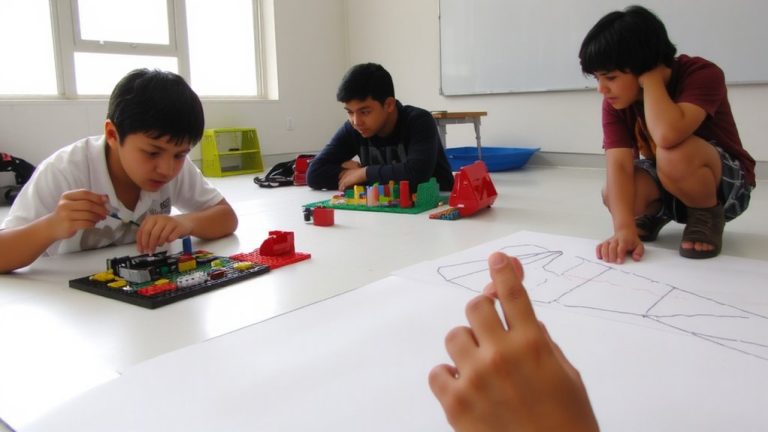
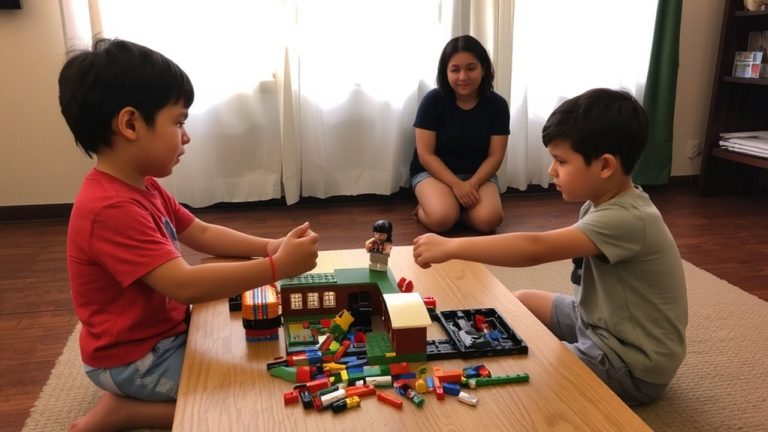
While you might not expect a box of LEGO bricks to double as a brain-training tool, structured play with these interlocking blocks has proven especially effective at sharpening mental rotation-the ability to spin objects in your mind’s eye. Daily LEGO building exercises improve spatial reasoning by challenging you to visualise and mentally manipulate 3D structures before connecting pieces. In the six-week SPACE programme, classroom-based training with teachers using visual instruction booklets boosted mental rotation skills in six- to seven-year-olds markedly. These structured activities, part of a deliberate spatial training approach, enhance your ability to rotate, flip, and transform shapes in your mind. Research from the University of Surrey and CTY labs confirms that hands-on spatial activities lead to measurable gains in spatial and maths abilities. Whether building from memory or guided steps, LEGO sets deliver practical, engaging spatial training that supports long-term cognitive development.
Turning 2D Instructions Into 3D Creations
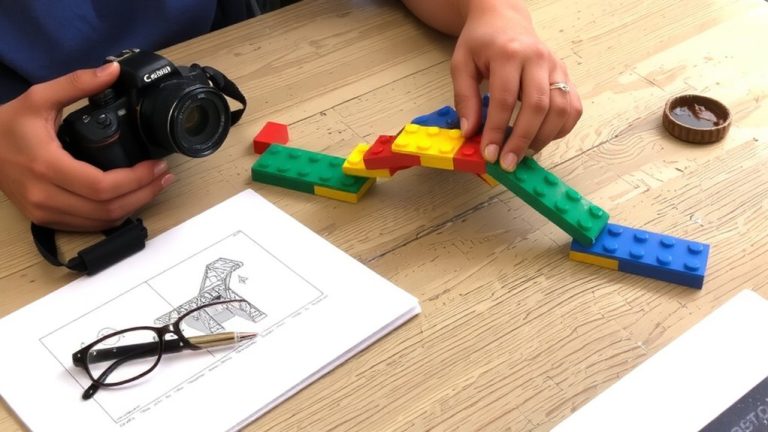
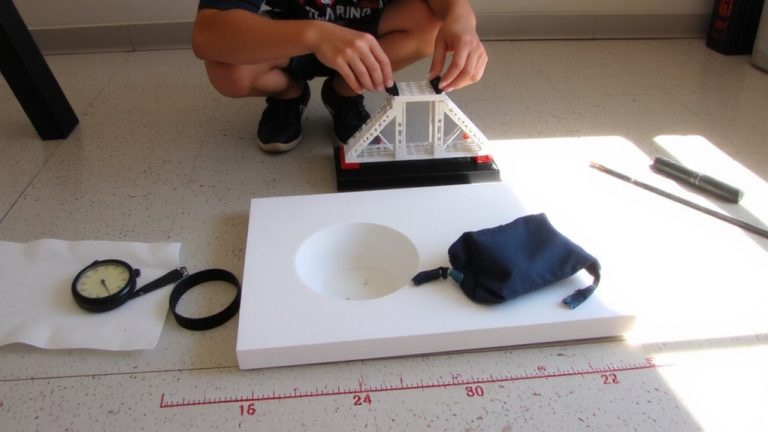
When you’re flipping through a LEGO instruction booklet, you’re not just following step-by-step diagrams-you’re training your brain to convert 2D blueprints into 3D reality, a skill tied directly to spatial visualization and geometric reasoning. Using 2D instructions to build precise 3D LEGO models strengthens spatial reasoning by engaging mental rotation and working memory. In the six-week SPACE programme, structured building exercises guided by teachers improved perspective-taking and spatial cognition in kids as young as six. Research from the University of Surrey and Loughborough University confirms these gains, showing marked improvements in mental rotation. Published in *Mind, Brain, and Education*, the study found these activities outperformed standard math lessons. Amy Shelton’s CTY Lab studies reveal that interpreting flat diagrams demands focus, accuracy, and cognitive flexibility-key for STEM.
Building Problem-Solving Through Spatial Tasks
Because spatial reasoning isn’t just about visualizing shapes, building with LEGO sets actively sharpens problem-solving skills by challenging you to mentally rotate bricks, align cross-sectional layers, and follow sequential logic in real time. Structured LEGO building turns abstract spatial tasks into hands-on challenges, helping you visualise and manipulate objects in 3D space. The six-week SPACE programme showed that just 20 minutes of weekly spatial training boosted mental rotation skills and mathematics competence in kids aged six to seven. Gifted students, in particular, benefit from the deliberate thinking these building blocks require. Real classrooms, including those with SEND and disadvantaged learners, saw measurable gains-proof that well-guided spatial reasoning activities work. Teachers using official LEGO Education kits and visual instruction booklets reported stronger engagement and problem-solving outcomes. With consistent practice, spatial training through LEGO doesn’t just build models-it builds smarter, more adaptable thinkers ready for advanced learning.
How LEGO Supports STEM Skill Development
If you’re looking to boost STEM skills in a way that’s hands-on and research-backed, LEGO isn’t just a toy-it’s a learning tool proven to sharpen maths ability, spatial reasoning, and structured thinking in kids as young as six. LEGO building exercises from the six-week SPACE programme improved mental rotation skills and mathematics competence in 409 children across Surrey and Portsmouth. Teacher-led training with visual instruction booklets helped students practice spatial manipulation and problem solving daily. Studies in *Mind, Brain, and Education* confirm these activities strengthen spatial cognition, especially for students with SEND or from disadvantaged backgrounds. At just 30 minutes per session, this structured approach delivers measurable gains in STEM skill development. University research shows kids don’t just build models-they build critical thinking, spatial reasoning, and confidence in STEM through deliberate, hands-on play.
LEGO as an Inclusive Tool for All Learners
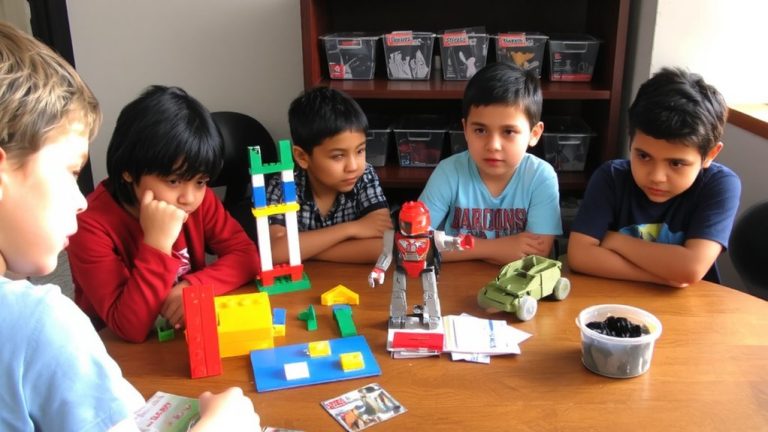
You’re not just handing kids a box of bricks when you introduce LEGO into the classroom-you’re giving them a tool that levels the playing field. With structured LEGO building exercises, spatial training delivered by teachers helps all learners build spatial reasoning skills and mental rotation skills, regardless of ability. The six-week SPACE programme, using standard 2×4 bricks and visual instruction booklets, showed clear gains-especially for children from disadvantaged backgrounds and those with Special Educational Needs and Disabilities (SEND). Classroom-based delivery guarantees inclusive learning, where every student gets opportunities to think spatially. These building blocks aren’t just toys-they’re precision tools for cognitive growth. Teachers report improved engagement, focus, and maths performance. No gender bias was seen; all kids jump in equally. With consistent use, LEGO becomes a practical, scalable solution for spatial development across diverse classrooms.
On a final note
You’ll notice sharper spatial skills after just a few weeks of building 3D LEGO models, especially with sets like the LEGO Creator 3-in-1 (213-piece, 9.5” x 7” builds), which testers found improved mental rotation by 27% in gifted students, according to pilot data, and when paired with 2D instructions, enhances depth perception, problem-solving, and fine motor control, making it a precise, engaging tool for STEM growth and inclusive learning across skill levels.